
 George Anjay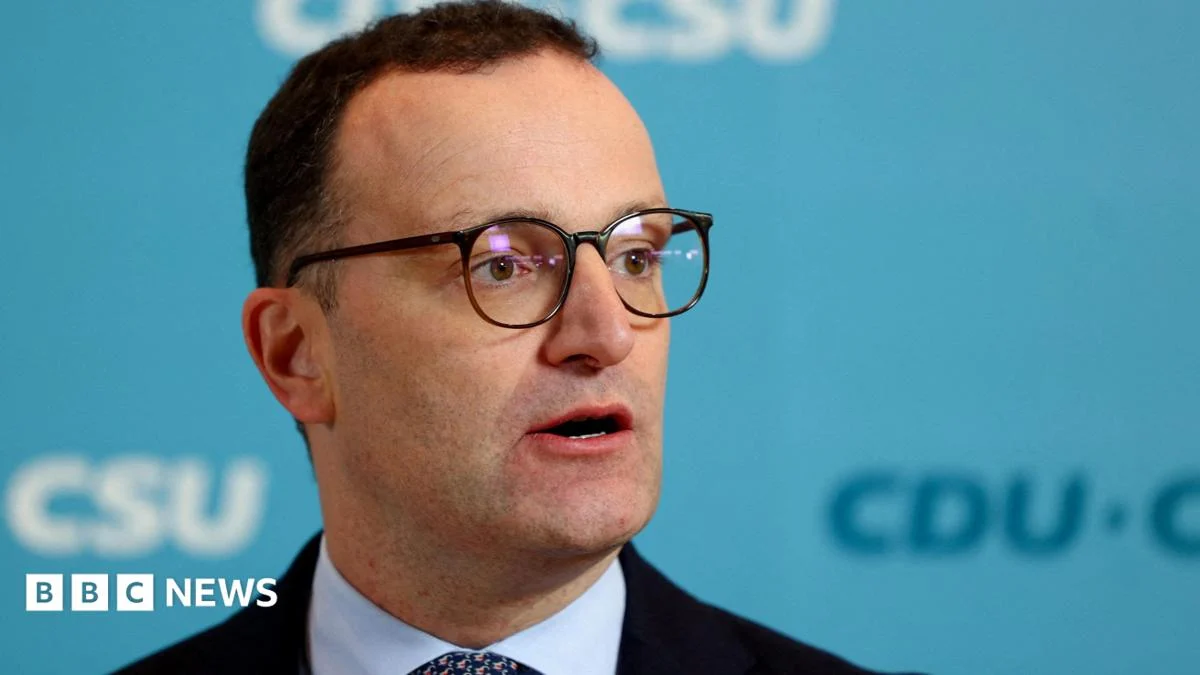
German centre-right politician Jens Spahn has resigned as parliamentary group leader of the country’s governing coalition after being accused of hypocrisy over his use of a surrogate mother in the US to have a child, a move that has sent ripples through the political landscape and highlighted the complex ethical and legal debates surrounding surrogacy in Germany and beyond. The controversy engulfs a prominent figure within the Christian Democrat Union (CDU), forcing a reckoning over personal choices and political stances at a critical juncture for the party.
Surrogacy is prohibited in Germany under strict legislation, a policy staunchly backed by Spahn’s own Christian Democrat party (CDU) and, notably, by Spahn himself in previous years. The Embryo Protection Act of 1990 criminalizes the practice within Germany, punishable by up to three years imprisonment or a substantial fine, aiming to prevent the commodification of human life and the exploitation of vulnerable women. While raising a child born to a surrogate mother abroad is not illegal, the disparity between the law and Spahn’s personal decision has fueled accusations of a profound disconnect between his public pronouncements and private actions.
In a statement released on Saturday, Spahn articulated his rationale for stepping down: "I have realised that my personal happiness – founding a family together with my husband and becoming a father – is not compatible with my political office." This admission underscores the immense pressure he faced, suggesting that the demands and scrutiny of his leadership role became untenable in light of the public’s reaction to his becoming a parent through surrogacy.
Chancellor Friedrich Merz, the leader of the CDU, publicly endorsed Spahn’s decision, calling it "right" and "inevitable." Merz emphasized the paramount importance of integrity in politics, stating on social media, "Credibility is the highest asset in politics." He further indicated that the process of appointing Spahn’s successor would commence immediately, signaling a swift response to the leadership vacuum created by the resignation.
The 46-year-old former health minister had revealed earlier in the week that he and his husband, Daniel Funke, had welcomed a child, a development that immediately ignited criticism from politicians across the political spectrum, including members of his own party. The ensuing public discourse exposed a deep division, with many questioning the moral consistency of a politician who had publicly supported a ban on surrogacy in Germany while privately utilizing the very same practice overseas.
Announcing his resignation, Spahn elaborated on the challenges he encountered, stating, "The balancing act between my private decision to have a child through surrogacy and the understandable expectations placed on me as Chairman of our parliamentary group has become greater than I anticipated." He also cited the "increasing relentlessness in public discourse" as a significant factor that had prompted "deep pause for thought." In a plea for a more humane approach to political debate, he added, "Despite all clarity and decisiveness regarding the issues, let us always remain human in our tone."
German media reports indicated that Alexander Hoffmann, the head of the Christian Social Union (CSU) parliamentary group, would assume Spahn’s duties on an interim basis until a permanent successor is appointed. Hoffmann expressed his respect for Spahn’s decision, stating, "Jens Spahn’s decision deserves the utmost respect."
Spahn, a figure of considerable influence within the CDU, had previously weathered other political storms. However, this particular controversy proved to be insurmountable for his position as parliamentary group leader. The timing of his resignation is particularly sensitive for the CDU, which is currently grappling with declining poll numbers under Merz’s leadership. The surrogacy scandal risked further damaging the party’s image, especially in the lead-up to crucial regional elections scheduled for the autumn.
In Saxony-Anhalt, a key eastern state, the far-right Alternative for Germany (AfD) party is poised to potentially secure an outright majority, a scenario that would mark the first time a far-right party has held power in a German state since the end of World War Two. Journalist Christian Wölfel, writing for Bavarian public broadcaster BR24, critically observed that Spahn, "one of the most powerful elected representatives, is flouting the very rights denied to childless couples in Germany." Wölfel argued that Spahn’s actions, occurring shortly before these pivotal state elections, "confirm precisely the narrative that fringe political groups are using to win votes."
Conversely, some observers suggest that Merz may find Spahn’s departure from the political arena beneficial. Journalist Eva Fischer reported in the Taz newspaper that Spahn "has made no secret of his ambitions to become chancellor," positioning him as a potential rival and "an increasingly dangerous threat to Merz." Fischer posited a cynical political calculation: "In politics, the rule is: if someone could pose a threat to you, it’s best to get rid of them. Now Merz still had the power to do that."
The legal framework surrounding surrogacy in Germany has long been a source of contention. The 1990 Embryo Protection Act’s stringent ban has driven many couples seeking to start a family to explore surrogacy options abroad. In February, the CDU itself signed a resolution reaffirming its commitment to maintaining the ban within Germany, citing concerns about the emergence of "commercial or neutral models that turn surrogacy into a business model."
Critics of Spahn have pointed to his past actions as health minister, particularly his rejection in 2020 of calls from the liberal FDP party to relax the surrogacy ban. Furthermore, his 2015 written statement, in which he declared, "as a gay man and a Christian I find it personally very hard to warm to the idea of a rented womb," has been widely cited as evidence of his inconsistent stance.
Prior to Spahn’s resignation, Daniel Peters, a prominent CDU politician in the northern state of Mecklenburg-Western Pomerania, had publicly declared Spahn’s position "no longer tenable and he must resign." Peters criticized Spahn for what he perceived as a disregard for German law and a double standard in acting one way as a private individual and advocating another for his party.
Surrogacy laws vary significantly across Europe. Other EU countries, including France, Spain, and Italy, also prohibit or heavily restrict the practice. France’s highest court, the Court of Cassation, recently ruled that babies born to surrogate mothers abroad should be legally recognized as the children of their intended parents, offering a potential pathway for recognition. However, Italy, under Giorgia Meloni’s right-wing government, took a contrasting stance in 2024, making it illegal for Italians to pursue surrogacy abroad, reflecting a conservative pushback against the practice. The complexities of these differing legal and ethical frameworks underscore the global nature of the surrogacy debate and its persistent entanglement with political careers.




 Nakalama John
 atisusanti
 Ramos Leo
 Roy Suryo
 Nana Banana