
 Nakalama John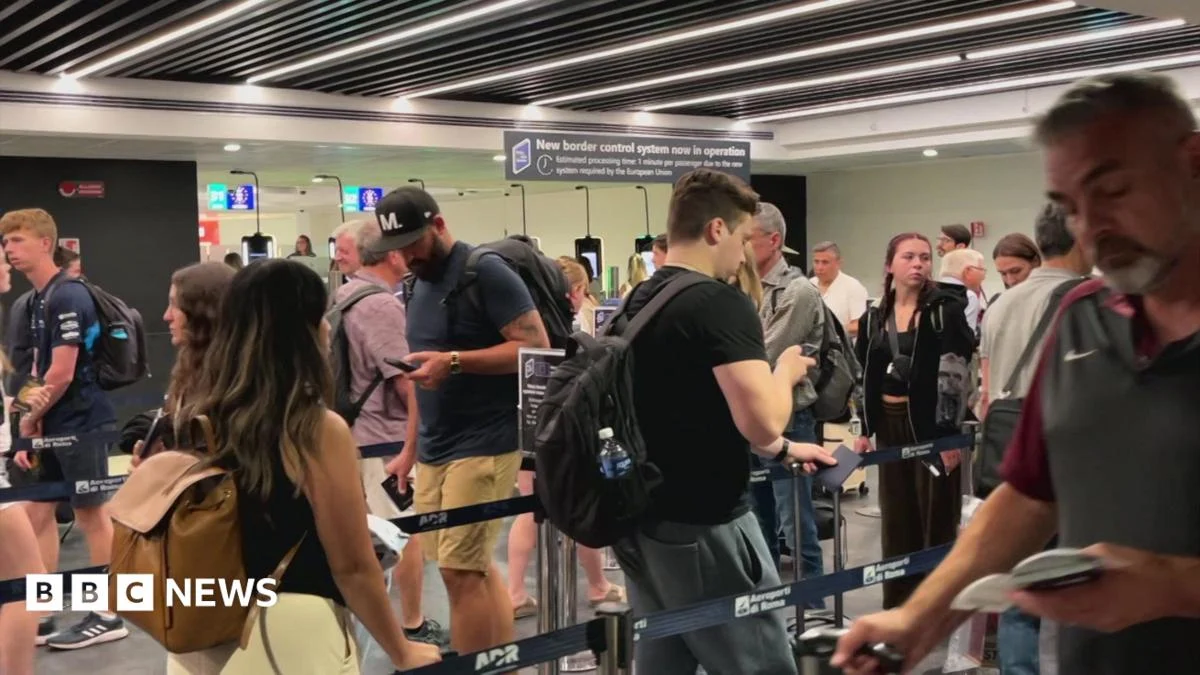
At the heart of the issue is the EES’s requirement for non-EU citizens entering the Schengen area – a vast zone encompassing 29 European countries where internal border controls have largely been abolished – to register biometric data. This includes providing fingerprints and a facial photograph upon their first entry. This information is then checked against subsequent entries and exits, creating a comprehensive digital record. The system is primarily managed through standalone, automated machines known as "kiosks" at many ports of entry, though some travelers, such as children under 12, still require processing by a human border officer. The sheer volume of data collection and the multi-step verification process inherently add layers of complexity to what was previously a relatively swift passport scan, particularly for frequent travelers.
Ivan Bassato, the Chief Aviation Officer at Rome’s Fiumicino Airport, a perpetually popular gateway for millions of tourists including a significant contingent from the UK, painted a stark picture of the system’s impact. He explained that despite the airport’s proactive investment of €12 million (approximately $13.7 million or £10.2 million) into these self-service kiosks, they proved impractical for handling the large volumes of passengers typical of a major international hub. While Fiumicino has since adapted its approach, integrating the biometric registration process with existing passport e-gates for UK nationals and some other non-EU citizens – a move Bassato conceded "improved things significantly" – the underlying complexity of the EES has still driven processing times for UK nationals from an average of seven minutes to a staggering 20 minutes. This nearly threefold increase, even with optimized procedures, underscores the fundamental challenges presented by the new system. Bassato expressed his dissatisfaction, stating, "We are not at the point where you have the same quality of the process [as] before the EES." He emphasized the airport’s pride in its technological capabilities and found waits of one or two hours, which have been reported elsewhere, "absolutely not okay." His unequivocal call for urgent fixes highlights the gravity of the situation for airports striving for efficiency and passenger satisfaction.
The operational difficulties are not isolated to Italy. In Portugal, a popular destination for British holidaymakers, border police at Faro Airport have acknowledged that the EES technology has suffered from "bugs." While officials there insisted that any resulting queues would dissipate quickly, such admissions confirm the widespread technical teething troubles. These "bugs" can range from software glitches that slow down biometric capture to network issues that impede data transfer, each contributing to bottlenecks. The European Commission (EC), the executive arm of the EU, has largely maintained that "in most EU airports disruption is limited" and has pledged to "continue to support member states in the system’s implementation to the fullest extent possible." However, this official stance appears to be at odds with the experiences reported by airport executives, airlines, and, crucially, the passengers themselves. The discrepancy suggests either an underestimation of the problem by the EC or a failure of communication regarding the scale of the challenges faced on the ground.
Ryanair, one of Europe’s largest airlines, has been particularly vocal in its criticism. The airline has attributed the extended waits and operational friction to "the failed EES rollout," placing the blame squarely on the system’s implementation. Their warning for UK passengers to "allow extra time for their journey and be prepared for extended waits at passport control" is not merely a courtesy but a critical operational advisory aimed at mitigating the risk of missed flights and subsequent disruptions to their tightly scheduled operations. For airlines, delays at border control have a cascading effect, impacting turn-around times, subsequent flight departures, and even crew duty hours, leading to significant financial penalties and damage to passenger trust. The call for passengers to "allow extra time" subtly shifts part of the burden of the system’s inefficiencies onto the traveler, who now must account for unpredictable delays.
For UK citizens, the introduction of EES carries particular weight in the post-Brexit landscape. No longer EU citizens, British travelers are now subject to the same biometric registration requirements as other third-country nationals, a stark reminder of the changed relationship. Prior to EES, UK passport holders could often pass through e-gates with a simple scan, a process that was largely as swift as that for EU citizens. Now, the added biometric steps mean a significant adjustment and a tangible increase in travel friction. This friction could potentially deter some travelers, impacting tourism industries across the EU that rely heavily on visitors from the UK. The anecdotal evidence from Rome’s Piazza di Spagna, where "everyone we spoke to… had an EES story," underscores the pervasive nature of these new travel realities. These stories often involve frustration, confusion, and the unexpected consumption of valuable holiday time spent in queues. Some passengers have even reported missing connecting flights or their journeys home due to hours-long waits at passport control, leading to additional expenses for rebooked flights and accommodation.
The EES, while presenting immediate challenges, is a precursor to an even more comprehensive system: the European Travel Information and Authorisation System (ETIAS), expected to be fully operational in mid-2025. ETIAS will require non-EU citizens who currently enjoy visa-free travel to the Schengen area, including Britons, to obtain an online travel authorization prior to their trip. While ETIAS is distinct from EES, the troubled rollout of the biometric system raises concerns about the implementation of future digital border management initiatives. The EES’s fundamental purpose is to record all entries and exits of non-EU citizens, accurately calculate authorized stays, and identify overstayers, thereby enhancing security and improving migration management. These are undeniably important objectives for the EU. However, the current execution risks undermining these goals by creating significant disincentives for legitimate travel and straining relations with key visitor markets.
To address the current predicament, a multi-faceted approach is urgently needed. This includes further refinement of the EES technology itself, ensuring seamless integration with diverse airport infrastructures across the 29 Schengen countries. Adequate staffing and comprehensive training for border personnel are crucial, especially for handling cases where automated kiosks fail or for assisting vulnerable travelers. Clearer communication to passengers, managed by both authorities and travel operators, is also vital, setting realistic expectations about potential wait times and the new procedures. Ultimately, the success of EES hinges not just on its technological prowess but on its ability to facilitate smooth, secure travel without creating undue burdens. As the peak summer travel season approaches, the pressure on EU member states and the European Commission to resolve these issues will only intensify, demanding urgent and effective solutions to ensure that border control enhancements do not come at the cost of efficient and enjoyable travel experiences.




 Roy Suryo

 atisusanti
 Ramos Leo
