
 Nana Banana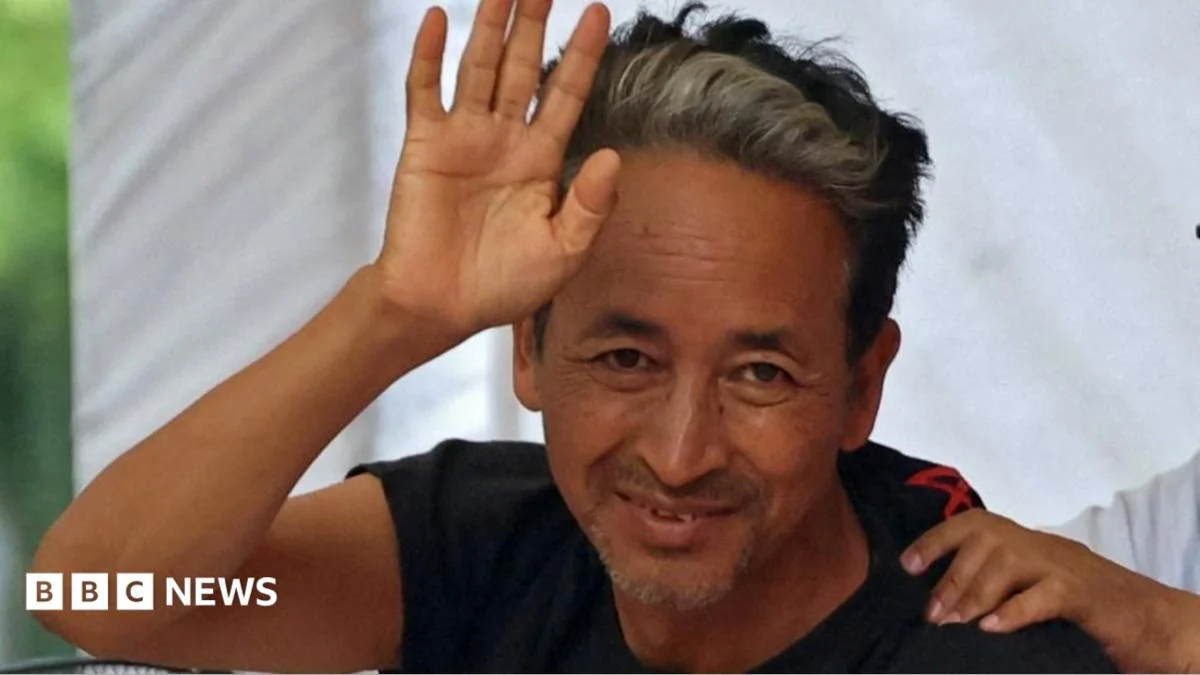
Sonam Wangchuk, a towering figure in Indian activism and education, has once again captured national attention, embarking on a hunger strike in Delhi to champion significant reforms within the country’s education system. His latest act of profound self-denial, which commenced on June 28, sees him consuming only salt and water, a stark demonstration of his unwavering commitment to the youth-led movement he supports. Since the strike began, concerns over his rapidly deteriorating health have mounted, particularly after he reportedly lost more than 9 kilograms, leading to a tense escalation on July 18 when police forcibly admitted him to a hospital, sparking widespread criticism and further intensifying the spotlight on his protest.
Wangchuk’s current fast is in solidarity with an unconventional yet potent online satirical movement known as the Cockroach Janta Party (CJP). The provocative name was adopted after a senior Indian judge infamously used the term "cockroaches" to describe unemployed young people, inadvertently galvanizing a generation feeling disenfranchised and unheard. The CJP, harnessing this collective frustration, has emerged as a vocal advocate for comprehensive educational reforms, spurred by a series of alarming controversies, most notably the pervasive issue of exam paper leaks that have repeatedly undermined the integrity of India’s competitive examination system. These leaks, which often lead to the cancellation of crucial exams and leave millions of students in limbo, represent a significant breakdown of trust in the system and a profound injustice to diligent aspirants. The CJP’s movement, therefore, is not merely a critique but a demand for accountability and systemic overhaul, resonating deeply with a populace increasingly disillusioned with the state of public institutions.
This burgeoning movement, championed by Wangchuk, is rapidly gaining recognition as one of the most significant public expressions of dissent against the government of Prime Minister Narendra Modi, which has held power since 2014. In a political landscape often characterized by centralized authority and a crackdown on dissenting voices, the CJP’s organic, youth-driven nature, combined with Wangchuk’s moral authority, presents a formidable challenge. Popularly revered as "Sonam sir," Wangchuk is not just a local hero in the disputed Indian-administered territory of Ladakh but a household name across India. His relentless pursuit of innovative and localized solutions to complex problems has earned him international acclaim, most notably the prestigious Ramon Magsaysay Award in 2018, an honour widely regarded as Asia’s equivalent of the Nobel Prize. This recognition underscores his global standing as a visionary leader and change-maker.
Beyond his direct activism, Wangchuk’s influence permeates popular culture. He served as the real-life inspiration for Phunsukh Wangdu, the eccentric and brilliant protagonist in "Three Idiots," the 2009 superhit Bollywood film that satirized India’s rote-learning education system and championed creative, practical learning. The film’s immense success cemented his image as a champion of unconventional thinking and a critique of outdated pedagogical methods. Further solidifying his celebrity status, Wangchuk appeared as a celebrity guest on "Kaun Banega Crorepati" – the Indian adaptation of "Who Wants to be a Millionaire," hosted by Bollywood superstar Amitabh Bachchan – in 2017, using the platform to advocate for his educational and environmental causes. This unique blend of academic rigour, grassroots activism, and popular appeal has granted him an unparalleled platform, making his current hunger strike a matter of national and even international concern.
The activist’s worsening health has triggered profound alarm among his vast network of supporters. As his physical condition has visibly deteriorated over the past few days, a chorus of influential voices has emerged, including prominent opposition leaders, fellow activists, celebrated Bollywood actors, and renowned musicians, all imploring Wangchuk to bring his fast to an end. However, Wangchuk, steadfast in his resolve, has articulated precise conditions under which he would consider discontinuing his protest. Firstly, he demands that the government publicly acknowledge and take accountability "for the recent failures in the education system," specifically addressing the systemic issues that have led to exam paper leaks and other irregularities. Secondly, he stipulates that he and the CJP leadership must be granted an audience in the Indian Parliament, where Members of Parliament would formally assure them of their commitment to address the critical issues raised. Failing these, his final condition is that lawmakers visit him in the hospital, providing a direct and personal assurance that their concerns would be genuinely taken up and acted upon. These demands highlight his focus on securing concrete commitments rather than mere platitudes.
Fasting, as a form of political protest, is deeply interwoven into the fabric of Indian public life, drawing significant moral and spiritual weight from the nation’s diverse religious traditions. In India, where many faiths embrace voluntary self-denial as a path to spiritual enlightenment and moral purification, a hunger strike transcends mere political theatre, resonating profoundly with the collective conscience. It harks back to Mahatma Gandhi’s iconic fasts during the independence movement, which often galvanized public opinion and pressured the British colonial administration. Wangchuk, at 59, is certainly no stranger to leveraging this potent form of dissent. His current strike is not an isolated incident but part of a consistent pattern of using his body as a medium for protest and advocacy.
Indeed, just last year, Wangchuk undertook two separate hunger strikes, each lasting several weeks, specifically to draw urgent attention to the precarious and fragile ecology of his beloved hometown. Ladakh, an icy cold desert nestled in the high Himalayas, is a region of breathtaking natural beauty but also immense environmental vulnerability. It is also, crucially, at the geopolitical epicentre of long-standing border disputes between India and China, adding another layer of complexity to its development challenges. Before commencing his current Delhi fast, Wangchuk and his dedicated supporters embarked on an arduous journey, walking hundreds of kilometres from Ladakh to the capital, symbolically bringing their regional concerns to the national stage. Their core argument revolved around the urgent need for greater autonomy for Ladakh, positing that such self-governance would serve as a vital safeguard against the unchecked exploitation of the region’s delicate natural resources.
Wangchuk and his supporters passionately contend that Ladakh’s unique and fragile Himalayan ecology is gravely imperiled without robust constitutional safeguards. Their concerns are not abstract; they stem directly from the federal government’s accelerating pace of infrastructure development in these strategically vital border regions. Ladakh holds immense strategic significance for India, sharing sensitive borders with both China and Pakistan, making it a critical zone for national security. Consequently, the federal government has sanctioned numerous large-scale projects, including new highways, ambitious power projects, and extensive military-related infrastructure. While acknowledging the imperative of national security, Wangchuk argues that this rapid, top-down development, executed without adequate consultation with local representatives and bypassing indigenous knowledge, poses an existential threat to Ladakh’s delicate environmental balance and unique cultural heritage.
"We don’t oppose development," Wangchuk has consistently clarified, articulating a nuanced position. "We want sustainable growth." This statement encapsulates his philosophy: a call for development that is ecologically sensitive, culturally appropriate, and genuinely beneficial to local communities, rather than imposing external models that disregard regional specificities. Wangchuk and his supporters emphasize that Ladakh’s extreme climate, sparse vegetation, and unique biodiversity mean that it simply cannot follow the same development paradigms as other Indian states, particularly those in the fertile plains. They advocate for models of progress that respect the region’s carrying capacity, preserve its pristine glaciers – crucial water sources for millions – and protect its indigenous populations from displacement and cultural erosion. Their plea is for a development strategy that is bottom-up, informed by local wisdom, and truly sustainable in the long term.
Wangchuk’s current advocacy for education reform is deeply rooted in his own life experiences and a career characterized by an unwavering commitment to engineering and innovation, often challenging the established order. His early life was marked by an educational system that alienated rather than empowered him. As a child, he spent three years studying in Srinagar, then the capital of Jammu and Kashmir state, where lessons were delivered in English, Urdu, and Hindi. He vividly recalled being the "butt of jokes" in class, feeling profoundly out of place. "In Srinagar, I was a dumb boy from Ladakh who could not speak Hindi or English," he recounted in an interview, a poignant reflection of how a standardized education system can marginalize those from diverse linguistic and cultural backgrounds.
These formative experiences profoundly shaped his perspective, leading him in the 1980s to question the very foundations of the education system in Ladakh, which he rightly perceived as failing to address local needs or realities. He became a vocal protester against the imposition of textbooks in English and Urdu in a region where the vast majority of people spoke the Ladakhi language. A note on the website of a school he co-founded succinctly captures the absurdity: "All the textbooks, even in early primary classes, came from Delhi. The examples were of unfamiliar cultures and environments like ships, oceans, coconut trees and monsoon rains." These "alien examples in alien languages," as he termed them, did not just confuse Ladakhi children; they actively disconnected them from their own rich environment and heritage, fostering a sense of inadequacy rather than curiosity. Since then, a cornerstone of his life’s work has been to collaborate with local authorities and communities to meticulously re-engineer the education system, ensuring it authentically addresses the unique needs and aspirations of children in Ladakh, making learning relevant and empowering.
His ingenuity extends beyond pedagogy into practical, sustainable engineering solutions that have also garnered significant attention. Wangchuk’s path to mechanical engineering was sparked by a relative who noticed his youthful experiments with concave mirrors, using them to brighten dark buildings and cook food, an early indication of his problem-solving acumen. In more recent years, his innovative spirit has led to the development of a low-cost, passive solar mud house. This remarkable structure is designed to maintain a comfortable internal temperature of 15°C, even when the external temperature plummets to a frigid -15°C, providing vital warmth and shelter in extreme cold.
Perhaps his most celebrated innovation is the "ice stupa." Inspired by the hemispherical structures common in Buddhist cultures, Wangchuk designed an artificial glacier in the shape of a stupa that effectively stores vast quantities of downstream meltwater during the winter. This stored ice then slowly melts during the late spring and early summer, providing a crucial and reliable water source for farmers during the planting season, precisely when agricultural communities in arid Ladakh face severe water scarcity. These ice stupas are not just engineering marvels but symbols of sustainable living, blending ancient wisdom with modern science to address pressing environmental challenges. Sonam Wangchuk’s life, therefore, stands as a testament to the power of localized solutions, whether in education, environmental protection, or engineering, making his current hunger strike a powerful continuation of his lifelong mission to empower communities and challenge the status quo for a more just and sustainable future.




 George Anjay
 Nakalama John
 atisusanti
 Ramos Leo
 Roy Suryo