
 Roy Suryo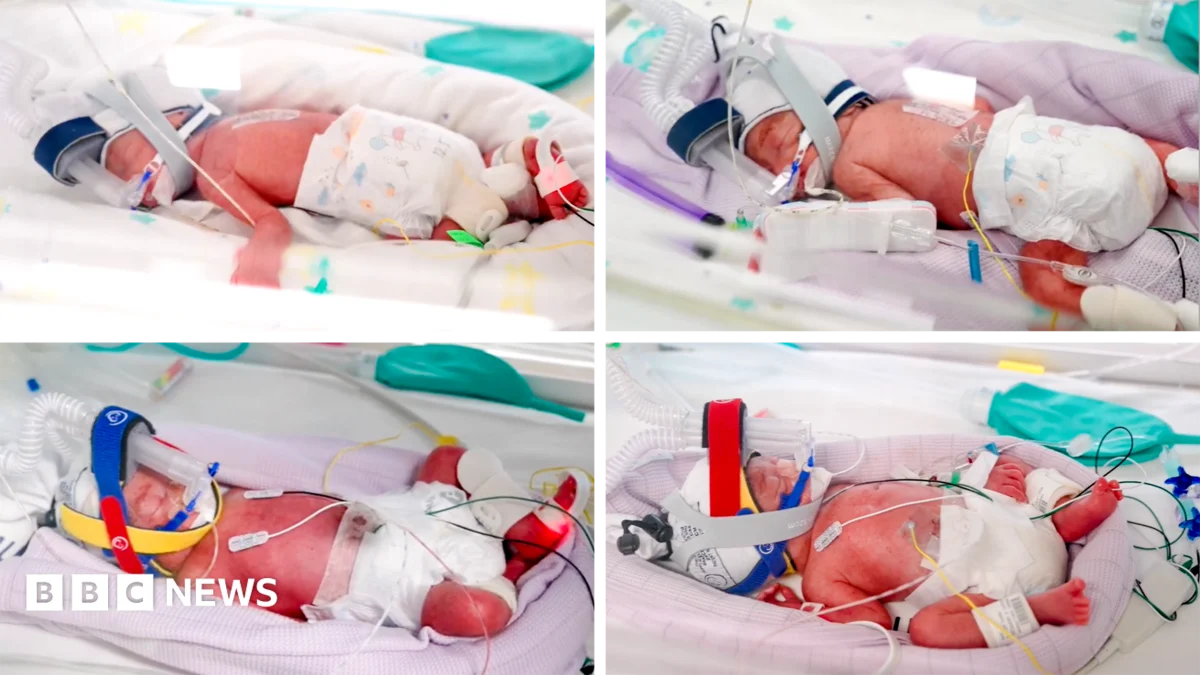
In an extraordinary medical feat, an Australian woman has given birth to a set of rare, naturally-conceived identical quadruplets, a pregnancy that was meticulously managed under the watchful eyes of the Royal Brisbane and Women’s Hospital due to its "extremely high risk" designation. The four precious girls, each a mirror image of the others, entered the world via caesarean section at precisely 28 weeks and four days gestation, a significant milestone achieved on July 14th. These infants are classified as monozygotic quadruplets, a phenomenon where a single fertilised egg, through an unfathomably rare division, splits into four distinct embryos, all sharing an identical genetic blueprint.
The parents, 34-year-old Jenitar Na’amoana and her husband Jortham, were already proud parents to four children, making the news of expecting quadruplets a moment of "immense surprise" that truly defied expectations. The sheer improbability of their situation was further underscored by the medical assessment of Dr. Alexa Bendall, a distinguished maternal-foetal medicine specialist and obstetrician who guided Jenitar through her challenging pregnancy. Dr. Bendall, drawing on extensive medical knowledge, estimated the occurrence of identical quadruplets to be an astonishing "one in every 15 million pregnancies." However, she added a crucial detail that amplified the rarity: "but to share the same placenta – this is unheard of." This shared placental environment, while facilitating the connection between the developing fetuses, also significantly elevated the inherent risks of the pregnancy.
The profound implications of such a high-risk pregnancy necessitated a proactive and intensive approach to care. Recognizing the delicate nature of Jenitar’s condition, the Royal Brisbane and Women’s Hospital made the decision to admit her as an inpatient at the 25-week mark. This early admission was not an arbitrary measure but a strategic imperative, allowing for continuous and meticulous monitoring of both mother and fetuses. The medical team’s primary objective was to safeguard the health and well-being of all involved, a complex undertaking given the unprecedented circumstances.
"We always said that if we could get her to 28 weeks, we would be doing well," Dr. Bendall candidly stated, reflecting the significant challenges and uncertainties that had accompanied Jenitar’s journey. The medical community often regards premature births before 28 weeks as extremely critical, with survival rates and potential long-term health complications being significant concerns. Therefore, reaching this gestational milestone was viewed as a substantial victory in itself, a testament to the dedication of the medical team and the resilience of Jenitar and her unborn children.
The culmination of weeks of vigilant care and unwavering hope arrived with the successful delivery of the quadruplets. "So the fact that we’ve got four beautiful, healthy babies born at 28 weeks and four days is incredible and we’re very happy to be a part of it," Dr. Bendall exclaimed, her voice resonating with the joy and relief shared by the entire hospital staff. The term "healthy" in this context is a profound statement, highlighting the exceptional outcome given the extreme prematurity and the inherent risks associated with multiple gestations, particularly monochorionic quadruplets (sharing the same placenta).
The birth of identical quadruplets is an event so rare that it often captivates the public imagination. This particular case, however, amplifies that fascination due to the naturally conceived aspect and the shared placental environment. Identical quadruplets arise when a single fertilised egg undergoes an extremely rare division, splitting into four separate embryos. The timing and nature of this division determine the subsequent placental arrangement. In cases of quadruplets, the possibility of them sharing a placenta, known as monochorionic quadruplets, is even rarer than the quadruplets themselves. This shared placental situation presents unique challenges for fetal development and pregnancy management. The vascular connections between the fetuses within the placenta can lead to complications such as twin-to-twin transfusion syndrome (TTTS), where one twin receives too much blood flow and the other too little. Other risks include discordant growth, where fetuses develop at different rates, and an increased risk of cord entanglement, where the umbilical cords become intertwined, potentially restricting blood flow.
The journey for Jenitar and Jortham, from the initial shock of discovering they were expecting quadruplets to navigating a high-risk pregnancy, is a narrative of immense strength and unwavering commitment. The decision to proceed with such a pregnancy, even with the inherent risks, speaks volumes about their desire for a larger family and their trust in the medical professionals guiding them. The discovery of multiple fetuses, especially quadruplets, often prompts extensive genetic counselling and detailed discussions about the potential outcomes and the intensive medical interventions required. For Jenitar, this meant a profound physical and emotional undertaking. Carrying four developing babies puts an immense strain on the mother’s body. Nutritional demands skyrocket, the uterus expands to an extraordinary size, and the risk of complications like pre-eclampsia, gestational diabetes, and premature labour increases significantly.
The hospital’s proactive approach to admitting Jenitar at 25 weeks was a critical factor in achieving the successful outcome. This allowed the medical team to implement a comprehensive monitoring plan, which likely included frequent ultrasounds to assess fetal growth and well-being, monitor amniotic fluid levels, and check for any signs of placental insufficiency or fetal distress. Close observation of Jenitar’s blood pressure, urine protein levels, and overall health was also paramount in detecting and managing any maternal complications that could arise. The availability of advanced neonatal intensive care unit (NICU) facilities at the Royal Brisbane and Women’s Hospital would have been an essential component of their preparedness. Even at 28 weeks and four days, the quadruplets would be considered extremely premature and would require specialized care to support their breathing, feeding, and temperature regulation.
The medical team’s elation at the birth of four "beautiful, healthy babies" at this gestational age is entirely understandable. It represents a triumph of medical science, meticulous planning, and the incredible resilience of both mother and children. The birth of identical quadruplets is a rare event that occurs spontaneously in approximately 1 in 15 million pregnancies. The additional rarity of them being monochorionic, meaning they share a single placenta, further elevates the statistical improbability. This specific placental arrangement presents a unique set of challenges and risks. While it indicates that the single fertilised egg split into four embryos, the interconnectedness of their blood supply within the shared placenta can lead to complications. The most significant of these is twin-to-twin transfusion syndrome (TTTS), a serious condition where blood flows unevenly between the fetuses, potentially leading to severe health problems or even fetal demise for one or more of the babies. Other risks associated with monochorionic pregnancies include growth discordance, where fetuses develop at significantly different rates, and an increased likelihood of cord entanglement.
Jenitar and Jortham’s journey to this point has been an extraordinary testament to their strength and the remarkable capabilities of modern medicine. The "immense surprise" that turned into a meticulously managed high-risk pregnancy highlights the unpredictable nature of life and the dedication of healthcare professionals who work tirelessly to ensure the best possible outcomes for their patients. The story of these rare identical quadruplets serves as a beacon of hope and a powerful reminder of the wonders that can unfold when science, dedication, and a bit of luck converge. The future for these four little girls promises to be filled with love, support, and undoubtedly, a unique and cherished bond that will extend far beyond their remarkable beginnings. The hospital’s commitment to providing exceptional care in such complex situations underscores Australia’s advanced medical infrastructure and its ability to handle some of the most challenging obstetric cases. The successful delivery of these quadruplets is not just a personal triumph for the Na’amoana family but a significant event in the annals of Australian medical history.




 Nakalama John
 atisusanti
 Ramos Leo
