atisusanti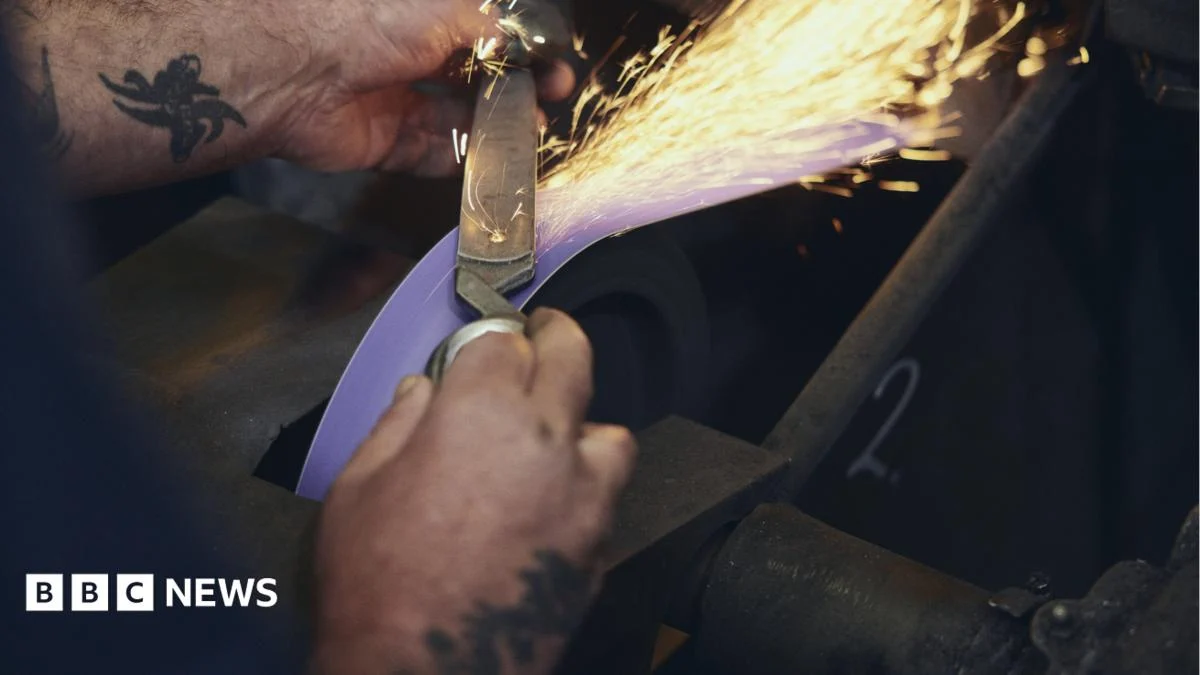
Ollie Priestley is not just doing any mechanical apprenticeship; he’s embarking on a "heritage vehicle technician" apprenticeship at specialist car restoration business Tolman. At 29, Priestley is honing the skills necessary to meticulously restore modern classic cars, a process that demands a sophisticated blend of time-honored techniques and cutting-edge technology. This integration is made possible by advancements like computer-aided design (CAD) for crafting bespoke vehicle components, 3D printing for their precise fabrication, and a deep understanding of a car’s intricate electronic control units. "I wanted to develop the skills that allowed me to work on the cars that I love and excite me, like the Peugeot 205 GTi," Priestley explains from his base in Leicestershire. "Getting to know how to make things keeps me focused and engaged. I’ve just fabricated a gearbox mount for a classic BMW. It’s cool to know that the things I create will bring the car back to life."
Chris Tolman, the founder of Tolman, emphasizes how Priestley’s training sets him apart from apprentices in mainstream car dealerships. In these environments, he observes, digital tools often reduce technicians to mere "fitters" who simply replace parts identified by diagnostic software. "The computer identifies the issue and they swap the part. For specialist car businesses, our technicians need to identify and understand a problem, and then be creative and innovative to find the answer," Tolman states, highlighting a crucial shift occurring in the landscape of trade apprenticeships as technology becomes increasingly pervasive. This evolution is pushing apprenticeships up the educational value chain.
Priestley’s three-year apprenticeship, undertaken through the Heritage Skills Academy (HSA) in Bicester, is a prime example of this upward trajectory. Introduced in 2018, it deliberately incorporates digital skills such as 3D printing and CAD alongside fundamental crafts like welding and glazing. This Level three apprenticeship is equivalent to three A-levels, replacing the previous Level two and three "classic vehicle framework" apprenticeship. John Pitchforth, Managing Director of HSA, attests to its "radical improvement," citing its successful fusion of "modern technology with engineering fundamentals." This trend is mirrored in government apprenticeship data, which reveals a significant decline in Level two intermediate apprenticeships – a drop of nearly a quarter in the past year – in favor of higher-level apprenticeships (Levels four to seven), which equate to bachelor’s and master’s degrees. While Level three apprenticeship numbers have remained stable, the growing influence of technology on curricula raises a pertinent question: are apprentices becoming solely proficient in operating software at the expense of mastering the core skills of their trades?
Pitchforth of HSA strongly refutes this notion, asserting that their apprentices emerge as highly skilled individuals, potentially surpassing those from other programs. "When modern engineers come to us to transfer into our sector, they often lack the basic engineering principles and are unable to diagnose and repair vehicle systems without a computer telling them what’s wrong," he observes.
Chris Iveson, CEO of FourJaw Manufacturing Analytics, a platform that provides industrial businesses with production monitoring data, offers a perspective from Sheffield, a city with a strong manufacturing heritage. "The modern apprentice is increasingly learning two things at once: the practical skill of making, and the digital skill of using technology to understand what is happening in production," Iveson explains. He elaborates that this dual learning often encompasses CNC programming, CAD, robotics, additive manufacturing, quality control systems, and production monitoring, all of which are now integral to modern engineering and manufacturing apprenticeship pathways. However, he cautions against an overly narrow focus, warning that it can lead to apprentices lacking a comprehensive understanding of materials, methods, tooling, quality, and overall process.
In Sheffield city centre, not far from FourJaw, lies Ernest Wright, a scissor-maker established in 1902. It stands as one of the last two scissor manufacturers in a city that once housed over 100 workshops dedicated to blade manufacturing. Today, only Ernest Wright and William Whiteley, located on the other side of town, remain. Ernest Wright, while proud of its rich history, has strategically leveraged the latest manufacturing technology to carve out a distinct niche in the market for its scissors and shears. Collaborating with the University of Sheffield, the firm introduced 3D metal printing, significantly accelerating and reducing the cost of new product development. This allows for the creation of highly accurate prototypes that can then be refined through traditional manufacturing methods. This innovative approach enabled the company to revive its 1960s "nurseryman scissors" and now facilitates the creation of a new product annually, often drawing inspiration from vintage designs. "Now we can make just six pairs of scissors through metal printing [as tests]. Then if we want to change things, we don’t have to do it on 6,000 pairs," explains Paul Jacobs, who co-acquired the company in 2018 with fellow Dutchman Jan-Bart Fanoy.
For Elliott Nurcombe, a trainee who has worked part-time at Ernest Wright for the past three years while pursuing an aerospace engineering degree, the opportunity to engage with such advanced technology has added an exhilarating dimension to his already keen interest in the trade. "Maintenance wise, a lot of the parts for our machines simply don’t exist anymore, so using modern technologies like CAD and 3D printing, we’ve been able to replicate some," says the 21-year-old. However, he remains grounded in the realities of craftsmanship: "But I don’t think that technology will take over or overshadow what goes on in this workshop. In terms of actual production of what we make here and what we do day to day, there’s no real opportunity for technology to take that over from the people that work here."
At William Whiteley, a company with roots stretching back to 1760, 3D printing has also played a role in revitalizing the business, particularly following a change in ownership in 2024. Sally Ward, an 11th-generation member of the Whiteley family, and her husband Jeremy retired, selling the business to manufacturing company Kaymich. Mark White, the managing director, is exploring the use of new materials such as reclaimed titanium. However, he is adopting a cautious approach to further technological integration, prioritizing the preservation of the craftsmanship inherent in Whiteley scissors. "At the moment I’m looking to recruit trainee scissor manufacturers, as opposed to looking to put people out of work by investing in more technology," White states. "What we’re not about is loading something on a machine and pressing a button."
Returning to Sheffield city centre, Platts & Nisbett, a manufacturer of surgical instruments, has integrated CNC machining into the initial stage of its production process, where software directs machinery to cut components. These components are then meticulously fitted and finished by hand. Furthermore, each instrument is now laser-tagged, ensuring traceability back to Platts & Nisbett, irrespective of the hospital it ultimately serves. However, recruiting the next generation of craftspeople has proven challenging, with the rise of technology diverting many individuals’ interests. "There will be an abundance of people who want to press buttons. It’s getting someone who likes to work with their hands, other than computers," remarks Julie Topham, the business development manager.




 George Anjay
 Nakalama John
 Ramos Leo
 Nana Banana