
 George Anjay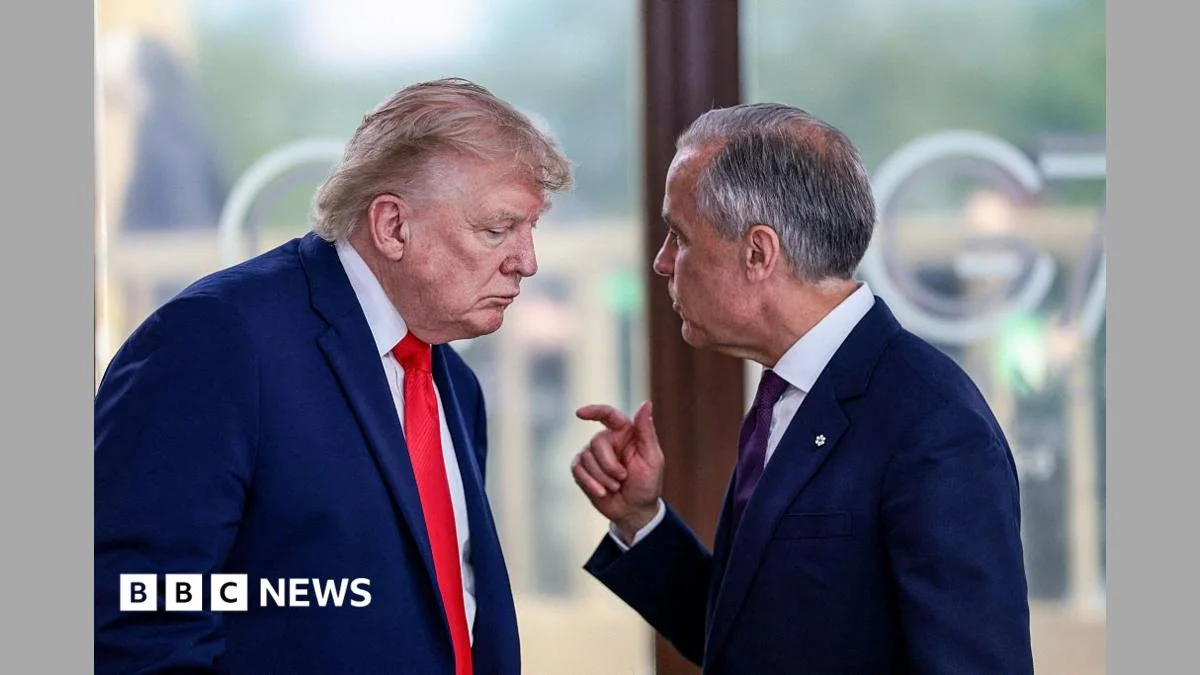
In a dramatic escalation of transcontinental trade hostilities, U.S. President Donald Trump has unilaterally imposed a sweeping 50% tariff on a vast array of goods imported from Canada. This punitive measure, framed by the President as a direct retort to what he characterized as "unequal treatment" of American automobiles, dairy products, and alcoholic beverages, is slated to take effect within a mere 30 days. The move signals a significant deterioration in the often-fraught trade relationship between the two North American neighbors, with the White House asserting the tariffs are a necessary bulwark for American businesses.
The scope of these newly levied duties is extensive, encompassing everything from common consumer items such as wine and hockey sticks to vital industrial commodities like commercial cement. However, in a strategic concession, several key Canadian exports have been deliberately excluded from this tariff barrage. These include energy products, potash, critical minerals, and fish, suggesting a calculated approach to targeting specific sectors deemed problematic by the administration. Crucially, the new import taxes apply universally to all designated goods, irrespective of whether they were previously governed by the existing free trade agreement between Canada, the United States, and Mexico, known as the United States-Mexico-Canada Agreement (USMCA).
These Monday-announced import taxes are not an isolated incident but rather build upon a foundation of pre-existing trade barriers that have increasingly defined the economic interactions between the two nations. The United States has, for some time, maintained active tariffs ranging from 15% to a formidable 50% on Canadian steel, aluminum, and copper. Furthermore, Washington has levied a substantial 35% tariff on Canadian softwood lumber, in addition to a 25% tax imposed on automotive parts not manufactured in the U.S. Canada, in turn, has retaliated with its own set of counter-tariffs, including a 25% levy on selected imports of American steel, aluminum, and vehicles.
The timing of these latest duties is particularly noteworthy, arriving on the heels of President Trump’s previous public threat to impose tariffs in response to the pervasive Canadian wildfire smoke that had drifted into U.S. cities. However, a careful perusal of the executive orders signed by President Trump on Monday reveals no mention of environmental concerns or wildfire smoke. Instead, the three proclamations meticulously detail a list of U.S. trade irritants that have been previously communicated to Canada, specifically focusing on issues related to automobiles, dairy, and alcohol. This selective focus strongly suggests a definitive breakdown in ongoing trade negotiations between the two countries, shifting the dynamic from dialogue to punitive action.
The crux of the automotive dispute, as articulated by the Trump administration, centers on accusations that Canada imposes a tax on U.S. motor vehicles and parts that fall outside the purview of the USMCA. President Trump argues that this practice is "unreasonable" and constitutes a form of discrimination against the United States, particularly given that Canada does not impose similar taxes on other trading partners. The interconnectedness of automotive manufacturing across North America, spanning Canada, the United States, and Mexico, makes this a particularly sensitive area. Previous statements from Trump’s Commerce Secretary, Howard Lutnick, have underscored a belief that Canada should indeed "come second" to the United States in this integrated industry, further illuminating the administration’s perspective. Indeed, President Trump has historically identified automobiles as a key area where the two nations have fundamentally competing interests.
The issue of dairy has long been a persistent source of contention for the United States. Canada’s intricate supply management system, which strictly limits foreign dairy imports, has drawn significant ire. For imports that exceed these stipulated limits, Canada imposes tariffs that can reach upwards of 300%. This protective measure is seen by the U.S. as a significant barrier to American dairy producers.
Complementing these established grievances is the enduring boycott of American alcoholic beverages by most Canadian provinces, a situation that has festered as a major sore point for the U.S. since its imposition last year. Canadian premiers have, on numerous occasions, explicitly stated that this boycott would be rescinded if the United States were to remove its existing tariffs on critical Canadian sectors, notably metals and automobiles. This linkage suggests a quid pro quo that has thus far remained elusive.
Against this backdrop of escalating tensions and unfulfilled demands, Canadian trade negotiators have been diligently working to secure a resolution that would, at the very least, lead to a reduction in some of the current U.S. tariffs. The BBC has reached out to both the White House and the Canadian government for official comment on these latest developments, awaiting responses that could provide further clarity or indicate potential paths forward.
This latest move by President Trump also comes in the wake of a significant legal challenge to his trade policies. In February of this year, the U.S. Supreme Court delivered a blow to the President’s extensive international tariff impositions, striking down duties enacted through the International Emergency Economic Powers Act of 1977. The justices ruled that the President had overstepped his constitutional authority by invoking a law primarily reserved for national emergencies to implement these broad tariffs. At the time, the White House signaled its intent to explore alternative legal mechanisms for imposing import taxes, a promise that appears to have been fulfilled with Monday’s proclamations.
Unlike the previous tariffs that were challenged on grounds of national emergency, the duties announced on Monday have been introduced under Section 338 of the 1930 Tariff Act. This particular section of U.S. trade law is specifically designed to address instances of trade discrimination, rather than national security concerns. This legal distinction provides a different statutory basis for the administration’s actions.
The reaction from the Canadian business community has been swift and largely critical. Candace Laing, the head of the Canadian Chamber of Commerce, characterized the move as a "regrettable decision." However, she also issued a call to action, urging officials from both sides to engage in "meaningful progress" in their ongoing talks before the new duties come into force in the coming month. This sentiment reflects a desire for de-escalation and a return to constructive dialogue.
From the U.S. side, Chris Swonger, the president and CEO of the Distilled Spirits Council of the United States, also voiced concerns, advocating for a resolution to the dispute. He warned that the decision "deepens trade tensions and raises the risk of further retaliation," highlighting the potential for a cascading effect of negative economic consequences.
Adding another layer of complexity to the trade landscape, the United States earlier this year chose not to renew the USMCA in its current, unchanged form. Both Canada and Mexico have expressed their desire for the pact to be renewed as is, but the U.S. administration is seeking to implement significant modifications to the agreement that was originally negotiated during President Trump’s first term in office. As the situation currently stands, the treaty is set to continue governing North American trade over the next decade on a rolling, year-to-year basis, necessitating annual reviews. This ongoing uncertainty surrounding the future of the USMCA further underscores the precarious state of trade relations between these two pivotal North American economies.



 Nakalama John
 atisusanti
 Ramos Leo
 Roy Suryo
 Nana Banana