
 Nana Banana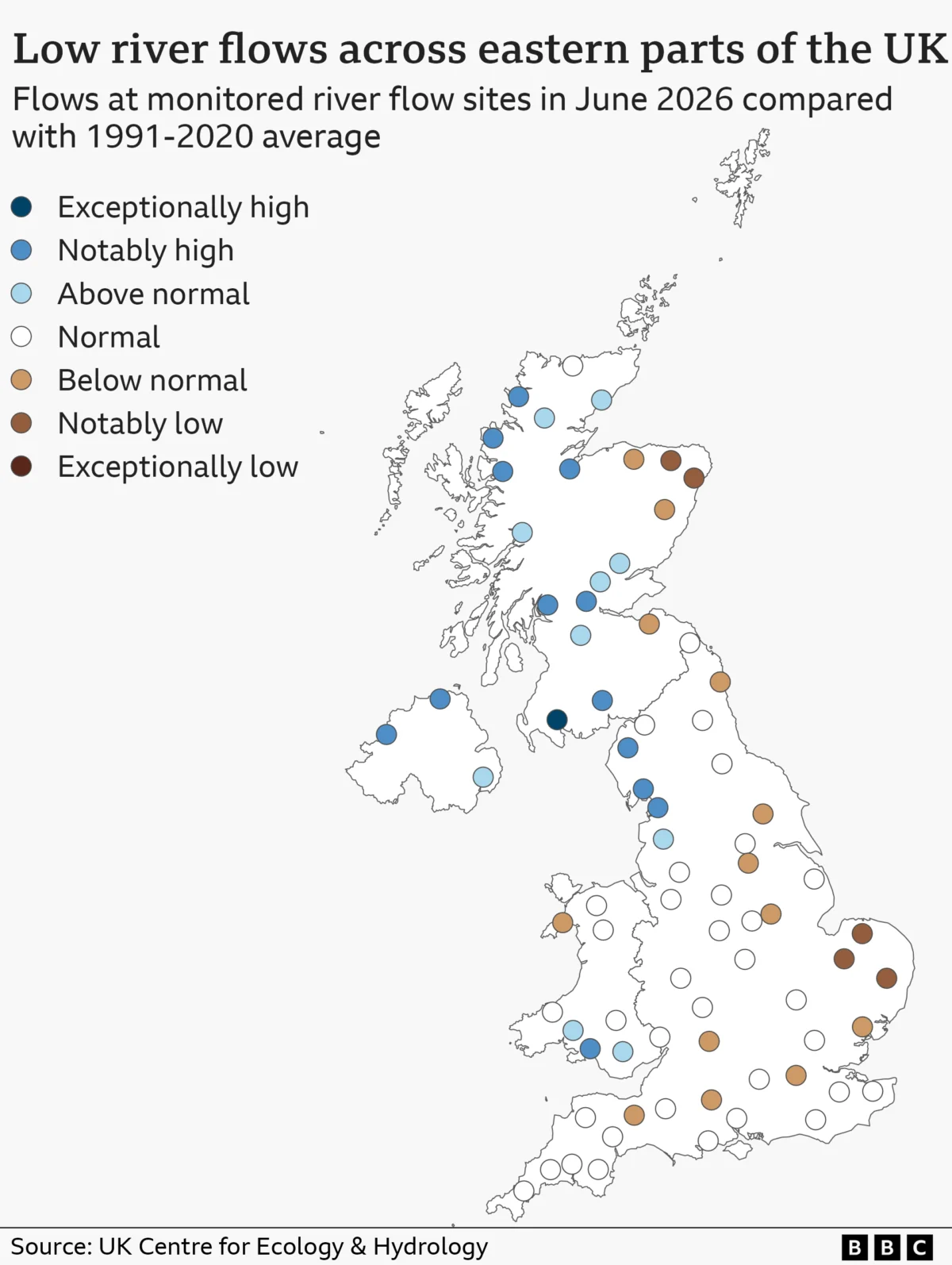
The concept of drought lacks a singular, universal definition, yet it fundamentally originates from a prolonged period of insufficient rainfall, leading to detrimental impacts on ecosystems, agricultural productivity, and the availability of water for human consumption. In the UK, environmental bodies in each constituent nation – such as the Environment Agency in England, Natural Resources Wales, and the Scottish Environment Protection Agency (SEPA) – are tasked with assessing current water levels and long-term weather forecasts to determine whether a drought or water scarcity event should be declared. Both these states serve as critical triggers for implementing measures like hosepipe bans. While a drought specifically refers to a deficit in precipitation over an extended period, water scarcity describes a fundamental imbalance between the available water supply and the demand for it, meaning it’s not solely a meteorological phenomenon. This summer’s bans, therefore, are primarily a response to manage exceptionally high water demand exacerbated by the dry conditions, rather than a direct consequence of a national drought declaration in every affected area.
The hydrological landscape across the country presents a mixed and complex picture. In England, the majority of areas are currently categorised as being in a "normal" status by the Environment Agency, indicating that while conditions are dry, they haven’t yet reached the most severe drought thresholds. However, specific regions are facing more acute challenges. In East Anglia, the Cam and Ely Ouse, North West Norfolk, and North Norfolk catchments have been elevated to "prolonged dry weather" status – the immediate precursor category to a full drought declaration. Similarly, Devon, Cornwall, and the Isles of Scilly are experiencing prolonged dry weather, as are the crucial Hampshire and Isle of Wight sections of the Solent and South Downs Area. So far, eight UK water companies, predominantly serving these southern and eastern regions, have been compelled to introduce hosepipe bans to conserve dwindling resources. Across the border, North and south-east Wales have also seen their status shifted from "normal" to prolonged dry weather by Natural Resources Wales, reflecting similar pressures. In contrast, Northern Ireland currently reports no official droughts, while Scotland, which employs a "water scarcity" monitoring system instead of drought declarations, has several areas in its eastern regions under "moderate scarcity" – though none have reached the most critical "significant scarcity" level.
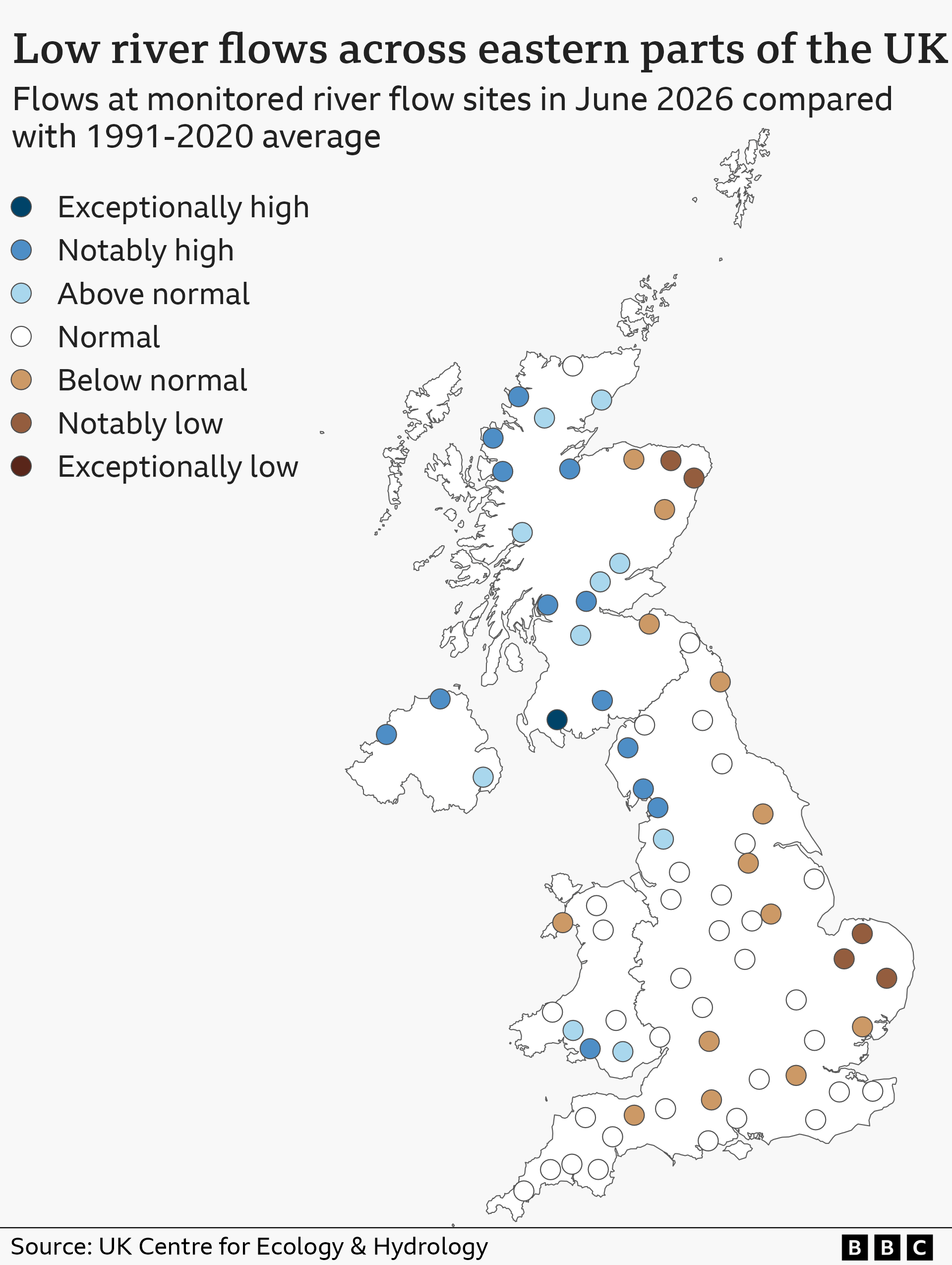
The nation’s water supply relies on a tripartite system: rivers, reservoirs, and groundwater. Each source responds differently to climatic variations, contributing to the complex challenge of water management. Following the recent hot and dry spell, river flows have been significantly reduced across parts of the UK, particularly evident in June. Steve Turner, a hydrologist at the UK Centre for Ecology & Hydrology (UKCEH), warned that "without significant rainfall we could see increasing impacts on wildlife, agriculture and water resources as the summer progresses," highlighting the ecological and economic ramifications of diminished river levels. Reduced flows can stress aquatic ecosystems, impede abstraction for irrigation and public supply, and increase pollutant concentrations.
Reservoirs, vital man-made storage facilities, represent another critical component of the water network. While reservoir levels in Northern Ireland, Wales, and Scotland are generally described as "healthy" and comfortably above expected averages for this time of year, England’s reservoirs present a more varied picture. On average, they are at roughly expected levels, but this masks significant regional disparities. Reservoirs in the south-east, which face higher population density and demand, often show lower levels, necessitating more stringent conservation measures.
Groundwater, stored deep beneath the earth’s surface within the porous spaces and fractures of rocks, serves as a crucial natural buffer against surface water shortages. Originating from rainfall, these subterranean reserves are recharged slowly. In June, groundwater levels across the UK were broadly at or slightly below normal, having benefited from winter rainfall but subsequently depleted by a drier spring in most regions. Professor Alan MacDonald of the British Geological Survey explains that groundwater stores "respond more slowly to changes in the climate than rivers, which is why they provide a useful buffer during periods of drought." This slower response mechanism means that while groundwater droughts in the south of England take longer to manifest, they can also be considerably more prolonged and challenging to recover from once established, impacting long-term water security.
The question of whether climate change is to blame for these conditions is multifaceted. Droughts are intricate phenomena, driven by a confluence of natural climatic variability and anthropogenic factors. The Met Office’s projections consistently indicate that the UK is likely to experience drier summers on average in the future as global temperatures continue to rise, although a clear trend of increasingly dry summers has not yet been definitively established in historical data. However, rising temperatures play a direct and undeniable role by intensifying the rate at which moisture is drawn from the soil through evaporation. Richard Allan, professor of climate science at the University of Reading, elucidates this, stating, "A warmer atmosphere is thirstier for moisture and this can mean water in the soil, rivers and reservoirs are depleted more effectively, leading to more rapidly onsetting droughts, heatwaves and wildfires." This "atmospheric thirst" accelerates the drying process, making water resources more vulnerable even with comparable rainfall levels.
Beyond meteorological factors, human activities and infrastructure management significantly influence whether dry conditions escalate into full-blown water shortages. A landmark review into the water sector of England and Wales severely criticised water companies for what was deemed historic underinvestment in water infrastructure. This neglect has manifested in issues such as significant water leakage rates from aging pipe networks and insufficient development of new storage solutions. To address these systemic shortcomings and bolster future water security, the government and water companies have outlined ambitious plans, including the construction of nine new reservoirs across England by 2050. One such project is already underway at Havant Thicket in Hampshire. Nevertheless, the Environment Agency has issued stark warnings that these large-scale infrastructure projects alone may not suffice. They stress that comprehensive measures to tackle water leaks and control overall water demand – potentially including the continued imposition of hosepipe bans and the wider rollout of smart meters – will also be indispensable in England. Meanwhile, water companies in Scotland, Wales, and Northern Ireland, which primarily operate as public bodies or non-profit entities, have also affirmed their commitment to taking proactive steps to safeguard future water supplies through strategic planning and investment. The current situation serves as a potent reminder of the interconnectedness of climate, infrastructure, and human behaviour in managing this most vital resource.




 Roy Suryo

 Nakalama John
 atisusanti
 Ramos Leo
