Ramos Leo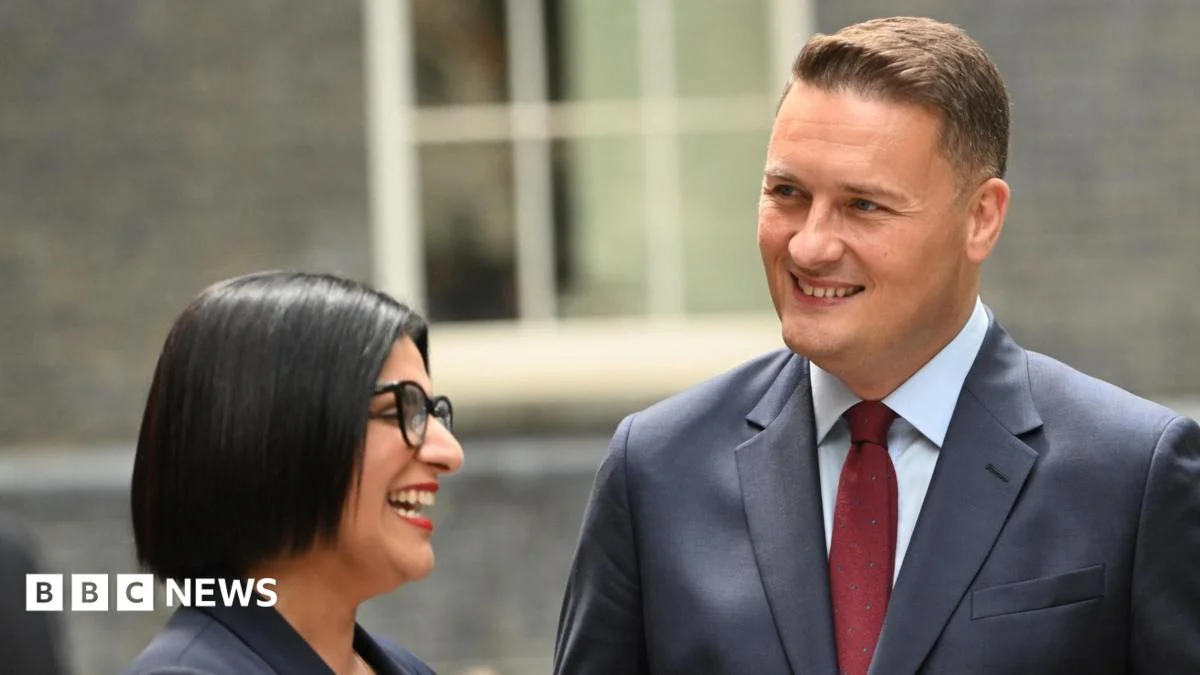
Prime Minister Andy Burnham delivered a sharp rebuke to several of his cabinet ministers this week, following the emergence of footage that captured them sharing a lighthearted joke about the contentious policy of early prisoner releases. The incident, which quickly ignited a political firestorm, saw Defence Secretary Wes Streeting engage in a seemingly jocular exchange with Home Secretary Shabana Mahmood, remarking that the newly appointed Justice Secretary, Alex Norris, "wants to let them all out."
The controversial moment was captured on Tuesday morning, just as broadcasters were granted access to film members of Burnham’s cabinet engaging in informal conversation ahead of their inaugural meeting following a recent government reshuffle. The cameras, intended to offer a glimpse into the camaraderie and functioning of the new team, instead recorded a gaffe that swiftly overshadowed the government’s carefully curated narrative of renewal and focus.
In the widely circulated footage, Shabana Mahmood, a veteran Labour frontbencher and former Justice Secretary herself, can be seen chatting amiably with Wes Streeting, a prominent figure known for his media presence and often outspoken views, before breaking off to greet Alex Norris. Norris, who had previously served as a minister at the Home Office, had only been promoted to the critical role of Justice Secretary by Prime Minister Burnham the previous day. As Norris approached, Streeting can be heard quipping to Mahmood, "he’s the enemy now," a remark that Mahmood playfully dismissed with "no he’s not." Streeting then escalated the jest, declaring, "he wants to let them all out," to which Mahmood responded with a laugh and the retort, "You know who’s boss!" The exchange, lasting mere seconds, culminated in the two senior ministers sharing a laugh, seemingly oblivious to the gravity of the subject matter in the public eye.
The remarks were first brought to public attention by Metro journalist Craig Munro, whose swift reporting ensured the footage became a viral sensation across social media platforms. Critics immediately seized upon the exchange, interpreting it as a flippant dismissal of the government’s early prisoner release scheme – a policy that has been a source of significant public concern and political contention since its inception.
Responding to a barrage of questions from reporters regarding the appropriateness of his ministers joking about such a sensitive policy, Prime Minister Burnham did not mince words. "No it’s not," he stated emphatically, his tone betraying a clear displeasure. "And certainly that’s been acknowledged and apologies have been made." Burnham, a former Mayor of Greater Manchester with a reputation for directness and a strong focus on public services, made it clear that while the apologies were noted, the incident itself was unacceptable. His swift and firm response aimed to draw a line under the matter, projecting an image of a leader who takes issues of justice and public safety with the utmost seriousness.
Wes Streeting, recognizing the immediate backlash, issued a public apology via a post on X (formerly Twitter). In his statement, he sought to contextualize the joke, claiming it was an intentional reference to a long-standing jest made by former Conservative Prime Minister Theresa May. May, during her tenure as Home Secretary, famously used to quip about her then-Justice Secretary, Ken Clarke: "I locked ’em up and he let ’em out." Streeting elaborated, "I hope everyone can see there was no ill intent behind this ribbing of the new justice secretary. But I appreciate these are very serious issues and am sorry for any offence inadvertently caused by this moment of levity."
Shabana Mahmood, a barrister by profession and a politician known for her diligent approach to policy, followed suit with a similar statement. "I appreciate this is an extremely serious issue and do not want anyone to mistake this moment of levity for a lack of serious intent," she commented, attempting to reassure the public that her professional commitment to justice remained unwavering despite the lighthearted exchange. Both ministers emphasized that their intention was merely to engage in good-natured banter with their new colleague, Alex Norris, whose promotion to Justice Secretary naturally placed him in a role often seen as being in tension with the Home Office’s "tough on crime" mandate. Norris himself, a former police officer and a figure generally regarded as serious and measured, has yet to publicly comment on the exchange, though sources close to the government indicated he was privately embarrassed by the incident.
However, these apologies did little to quell the outrage from the opposition. Conservative leader Kemi Badenoch, a rising star within her party and a vocal critic of the Labour government’s approach to law and order, launched a scathing attack. "While Andy Burnham’s cabinet are joking about letting criminals out of prison early, Conservatives are listening to victims and will continue to fight this disgusting policy," she wrote on X. Badenoch’s comments underscored a key political battleground, as the Conservatives have consistently sought to portray Labour as "soft on crime," particularly in light of the early release scheme. Her remarks resonated with a segment of the electorate deeply concerned about public safety and the perceived erosion of traditional sentencing principles. Victim advocacy groups, too, voiced their dismay, with one prominent charity describing the joke as "a slap in the face" to those affected by crime.
Adding to the government’s internal response, Transport Secretary Heidi Alexander, a respected voice within the Labour Party, publicly affirmed that it was "right" that Streeting had apologised. She went on to stress, "Those remarks don’t reflect the seriousness with which all of them will approach matters relating to public safety and the prison system." Alexander’s measured intervention served to reinforce the government’s official stance while acknowledging the misstep, attempting to steer the narrative back towards a message of collective responsibility and seriousness.
The "early prisoner release scheme" at the heart of the controversy is a pivotal, and often unpopular, policy implemented by the Labour government shortly after coming to power in 2024. Faced with a severe and escalating crisis of prison overcrowding in England and Wales, the government announced emergency measures to alleviate pressure on the penal system. The initial scheme, dubbed End of Custody Supervised Licence (ECSL), allowed certain prisoners to be released up to 18 days early, under strict supervision. However, due to the persistent and worsening overcrowding, this scheme was later expanded, increasing the maximum early release period for eligible prisoners.
Further legislative changes are on the horizon with the Sentencing Act, which is due to come into effect in September. This Act will introduce significant reforms to sentencing guidelines and release mechanisms. Under the new provisions, some prisoners who would previously have served two-thirds of their sentence before being considered for release will instead be released after serving half of their sentence. Additionally, certain categories of prisoners will be eligible for release after serving just one-third of their sentence. The rationale behind these changes, as articulated by the government, is to create a more rehabilitative and efficient justice system, while simultaneously addressing the unsustainable pressures on prison capacity. Critics, however, argue that these measures undermine public confidence in the justice system and may compromise public safety.
The incident with Streeting and Mahmood served to highlight the delicate balance the Labour government must strike between implementing necessary, albeit unpopular, reforms and maintaining public trust. Political analysts were quick to point out the potential damage this gaffe could inflict on the government’s image, particularly on an issue as sensitive as law and order. Dr. Eleanor Vance, a political communications expert at the University of London, observed, "In an era of instant news and social media scrutiny, every word and gesture from ministers is amplified. A joke, however innocuous its intent, about something as serious as prisoner release, can quickly be weaponized by the opposition and erode public confidence in the government’s competence and empathy."
Indeed, the reaction on social media was swift and largely condemnatory, with hashtags trending that questioned the ministers’ judgment and commitment to victims. Many users juxtaposed the ministers’ laughter with harrowing statistics about crime and prison conditions, fostering a narrative of out-of-touch politicians. The incident also reignited debates about the role of media access in government, with some commentators suggesting that allowing cameras into informal cabinet moments, while offering transparency, also carries inherent risks for gaffes.
For Prime Minister Burnham, the incident presents an early test of his leadership in managing cabinet discipline and public perception. While his immediate rebuke was decisive, the lingering question remains whether this "moment of levity" will contribute to a broader narrative that undermines his government’s credibility on crucial policy areas. The challenge for Burnham and his cabinet will be to demonstrate, unequivocally, that despite a momentary lapse in judgment, their commitment to a fair, safe, and effective justice system remains paramount, and that the complex realities of prison reform are not, and never will be, a laughing matter. The political cost of such missteps, particularly on issues touching the public’s sense of security, can often be far greater than the fleeting amusement they might initially generate.



 Roy Suryo
 Nakalama John
 atisusanti