
 Nana Banana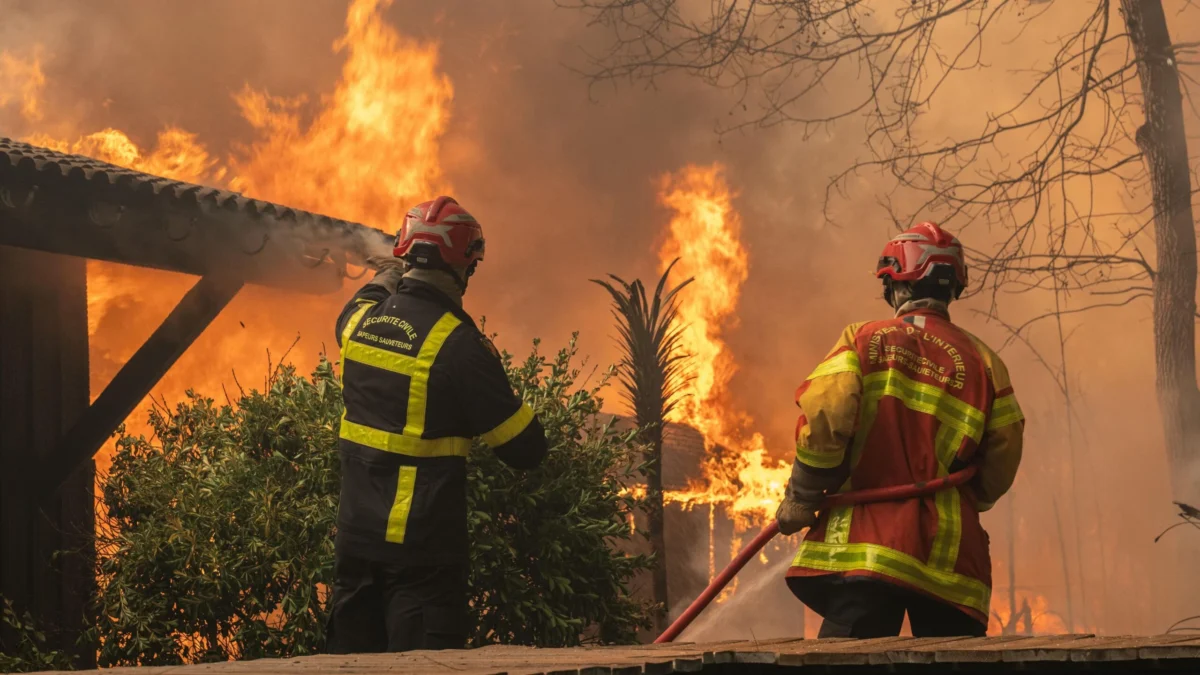
Firefighters are locked in a desperate struggle to contain ferocious wildfires sweeping across south-west France and central Spain, forcing the evacuation of over a quarter of a million people as relentless winds and scorching temperatures exacerbate the infernos. One French official grimly stated that they "are far from having the fire under control," highlighting the immense challenge faced by emergency services. The twin crises underscore the escalating impact of extreme weather events across Southern Europe, with authorities bracing for further devastation.
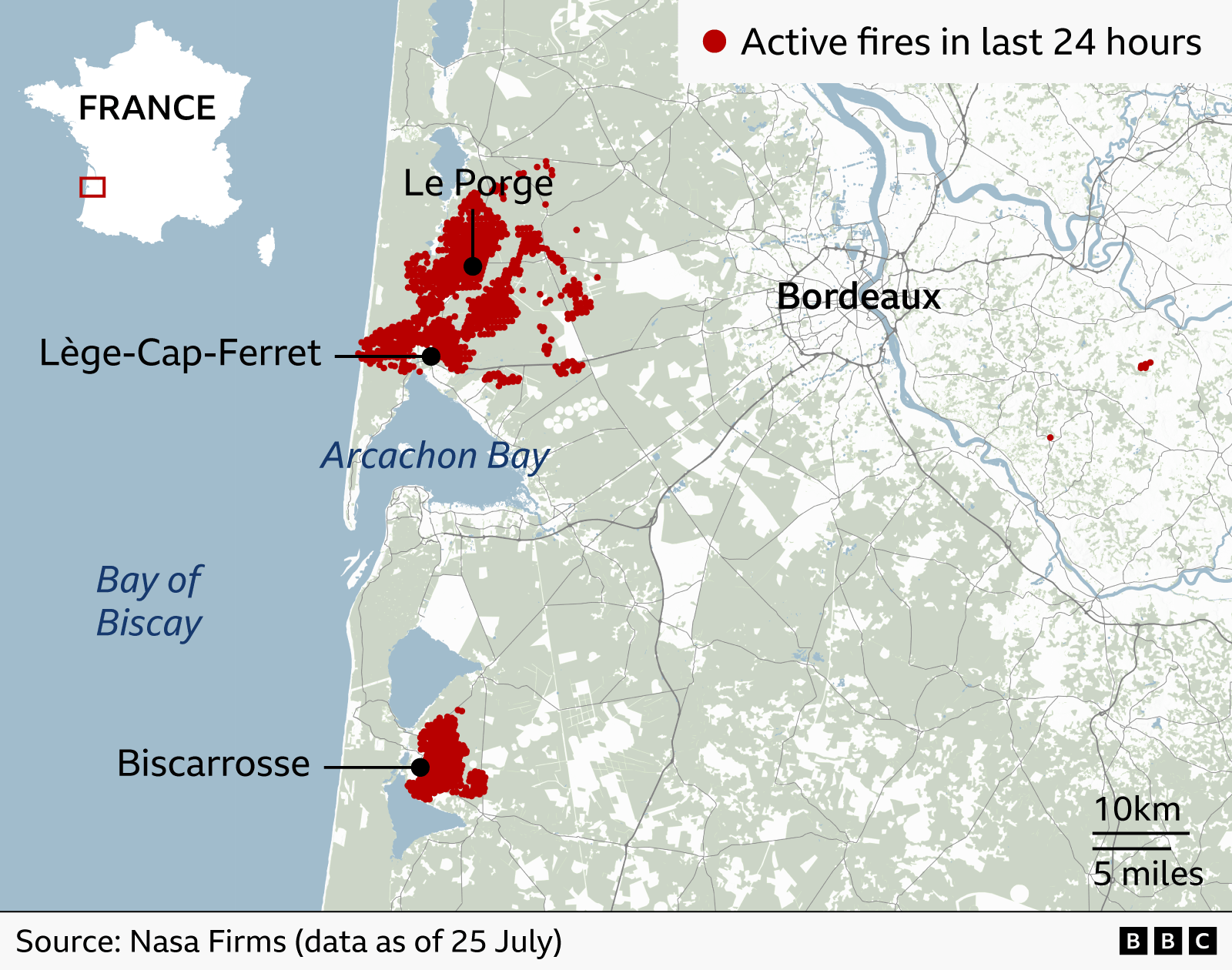
In France, the Gironde and Landes regions have been particularly hard-hit, with approximately 200,000 residents and tourists forced to flee their homes and holiday accommodations. The wildfires, which have been raging for days, gained new, dangerous momentum overnight, prompting evacuation orders for seven towns situated west of the bustling city of Bordeaux. The fires in Gironde alone have consumed vast swathes of ancient pine forests, estimated to be tens of thousands of hectares, creating an apocalyptic landscape of smoke and ash. The sheer scale and intensity of these blazes are taxing emergency resources to their limits.
The threat to Bordeaux, a major urban centre and a UNESCO World Heritage site, remains a serious concern. Although the wildfire was reported to be some 40km to 50km (25 to 30 miles) away from the city on Saturday morning, strong winds were consistently blowing smoke towards it. Residents described an acrid, choking smell permeating the air, a constant reminder of the encroaching danger. The sky over the region has often turned an eerie orange, a testament to the immense amount of particulate matter released into the atmosphere.
The human toll of these evacuations is immense. Spencer Randall, a tourist who fled an approaching wildfire near Bordeaux with his family, recounted the "frightening" scale of the blaze. His family evacuated in the early hours of Saturday to an area 100 miles east, yet the pervasive smell of wildfires lingered, a stark indicator of the fires’ reach. "It’s quite strong winds fanning the flames, just terrifying," he told the BBC, painting a vivid picture of the chaotic escape.
British couple Maisie and Caleb, holidaying in Bordeaux, described how the situation rapidly deteriorated on Friday night. "At about seven o’clock you could smell smoke. We thought someone was having a barbecue," Maisie initially recalled. However, by the next morning, their holiday rental’s pool was covered in ash, and their feet turned black from walking outside. Caleb added that the smoke "really hits your lungs right away," illustrating the immediate physical impact of the airborne pollutants. In Saint-Aubin-de-Médoc, a town directly affected by evacuation orders, residents expressed their profound stress and described the situation as nothing short of a "disaster."
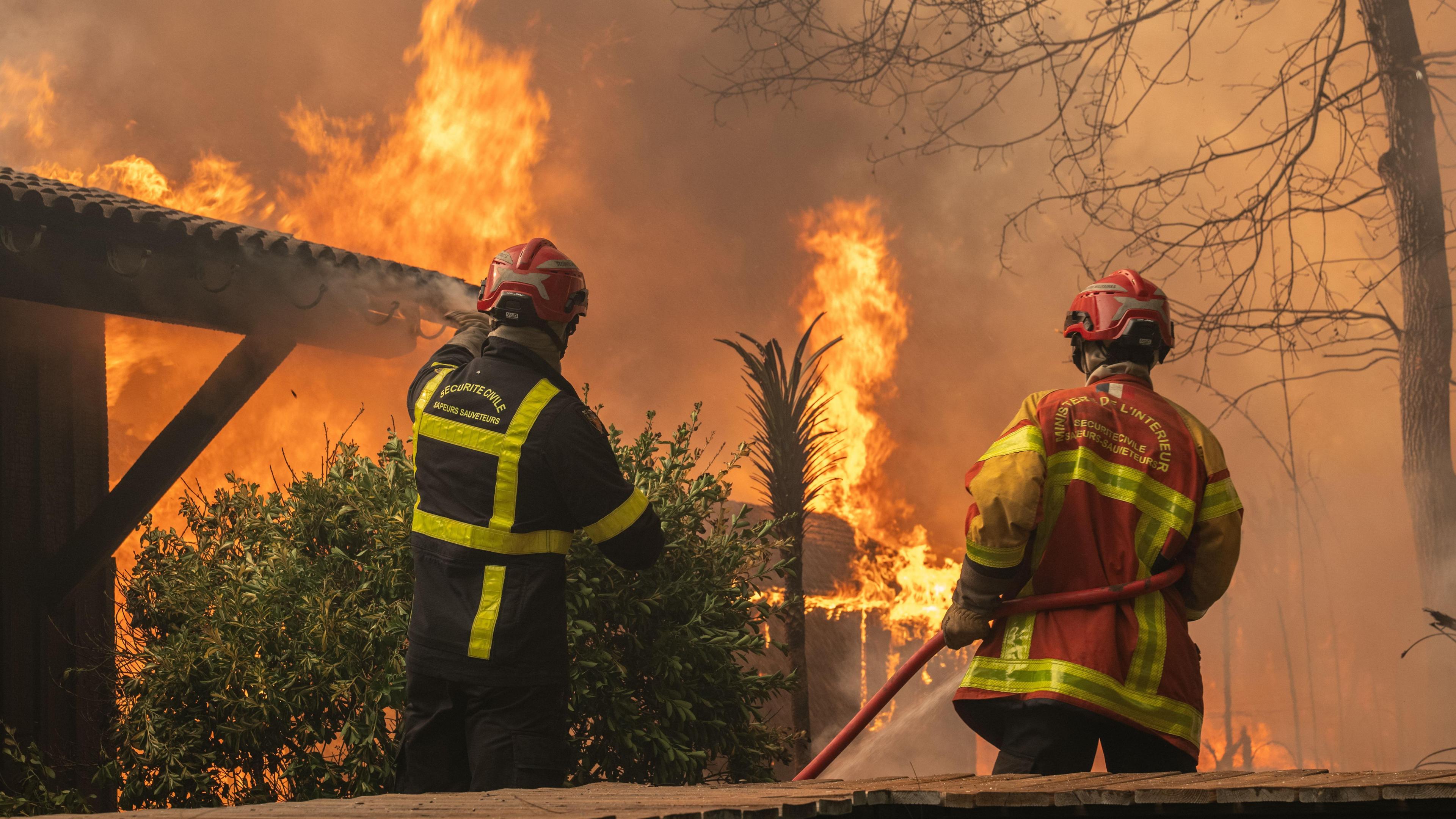
In a move reflecting the national emergency, France has mobilised its military, sending extra reinforcements to assist firefighters. These army personnel are crucial in clearing brush and creating vital fire breaks, strategies designed to slow the relentless advance of the flames. The government, acknowledging the gravity of the situation, described the occurrence of some 30 major fires across the country as "totally unprecedented." French President Emmanuel Macron is scheduled to hold an emergency meeting with ministers to coordinate the national response. Even the sporting world has felt the impact, with the final leg of the Tour de France, slated for Sunday, being shortened from 133km (83 miles) to 89km (55 miles) to free up security forces for redeployment to fire-affected areas.
Meanwhile, Spain has also been grappling with devastating wildfires, with a state of emergency declared in several regions. Near Madrid, fires continued to burn, though the regional government reported some progress thanks to a welcome change in weather conditions. "The change in weather conditions – less wind, higher humidity and lower temperature – has greatly benefited the fight against the forest fires, which have advanced little and decreased in intensity," the regional government posted on X, offering a glimmer of hope amidst the crisis.
However, the situation remains perilous. Spanish Prime Minister Pedro Sánchez, speaking from Cenicientos, a town south-west of Madrid severely affected by the fires, acknowledged the "complex times ahead." While noting the slight drop in temperatures, he cautioned that "still the wind is making it difficult and there may be thunderstorms as well," indicating the unpredictable nature of the battle. The human cost in Spain has been tragically underscored by the death of a man in Valencia. Believed to be in his 70s, he was found dead in his car by firefighters while they were extinguishing a blaze in the Salt de l’Aigua ravine in Manises, according to local media reports, a grim reminder of the fires’ lethal potential.
Since the wildfires erupted in Spain, nearly 60,000 people have been evacuated from the Madrid and Ávila regions. Furthermore, more than 28,000 residents remain confined to their homes, living under a cloud of uncertainty and fear, as reported by Spain’s Interior Ministry. Isabel Díaz Ayuso, Madrid’s regional president, did not mince words, describing the current crisis as the "worst fire in the history of the region," a stark assessment of the environmental catastrophe unfolding. The numbers are equally alarming on a national scale; Prime Minister Sánchez revealed that 130,000 hectares of land have already been burned in Spain this year, significantly exceeding the annual average of 100,000 hectares for the country over the last decade. This early and extensive destruction points to a worrying trend exacerbated by climate change.
The crisis is not isolated to the Iberian Peninsula and France. The entire European continent is grappling with an unprecedented fire season. France’s Interior Minister Laurent Nuñez reported that a staggering 98,000 hectares have burned across the country since the beginning of 2026, a figure that continues to climb. In Italy, the island of Sicily has also been battling severe blazes, with more than 350 fires, including 10 major incidents, breaking out, leading to further evacuations. Even Scotland declared a major incident as emergency services continued to tackle a wildfire in the Cairngorms National Park that had been burning for ten days.
Hadja Lahbib, the EU’s Commissioner for Crisis Management, painted a bleak picture, stating that it is highly probable that the damage from wildfires across Europe this year will surpass all previous records. She noted the unusually early start to the fire season, with the Netherlands activating the EU’s civil protection mechanism as early as April, triggering support and reinforcements from other countries. "Last year, one million hectares burned during the summer and so we are expecting to face another historical, sad record because the season has started earlier in the year," Lahbib told the BBC. She further warned that "forecasters are predicting, unfortunately, another heatwave so we can expect other wildfires," emphasizing the grim outlook for the remainder of the summer.
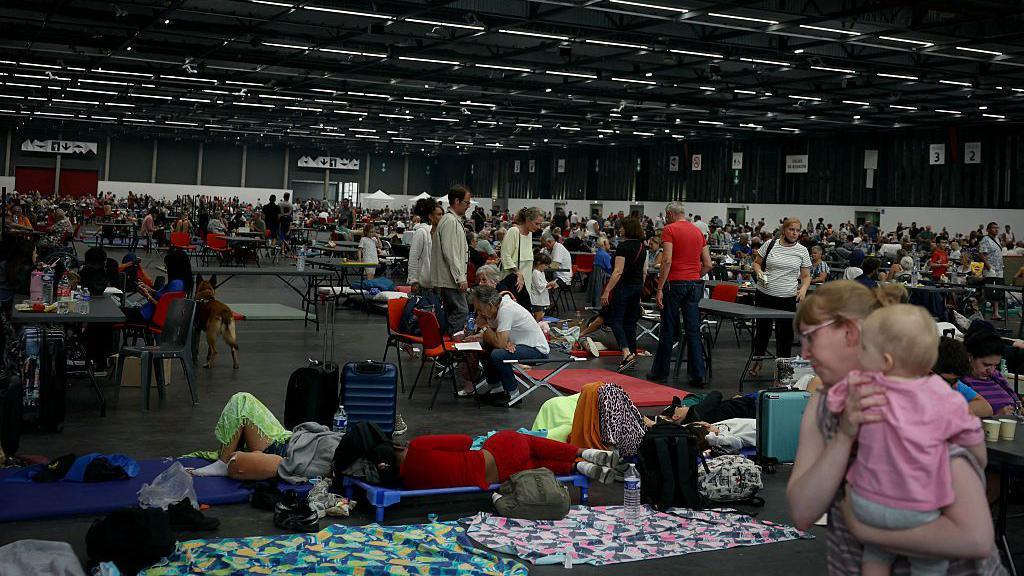
In a display of pan-European solidarity, the EU’s civil protection mechanism has been activated to provide critical support. France will receive five water bombers – three Canadair planes from Croatia and two Air Tractors from Portugal – along with Black Hawk helicopters from the Czech Republic and Slovakia. Additionally, a 40-member Romanian forest fire team has been dispatched to aid French efforts. EU Commission President Ursula von der Leyen confirmed that a total of 11 planes and helicopters have been deployed to France and Spain from the EU’s collective firefighting fleet, demonstrating a united front against the raging infernos.
These devastating wildfires highlight the escalating climate crisis, with hotter, drier conditions and stronger winds creating perfect storm scenarios for rapid fire spread. The immediate priority remains the protection of human lives and property, but the long-term implications for ecosystems, economies, and public health are profound. As the smoke continues to hang heavy over parts of France and Spain, the resolve of firefighters and the resilience of affected communities are being tested to their absolute limits in what is rapidly becoming a defining environmental disaster of the era.



 Roy Suryo

 Nakalama John
 atisusanti
 Ramos Leo
