George Anjay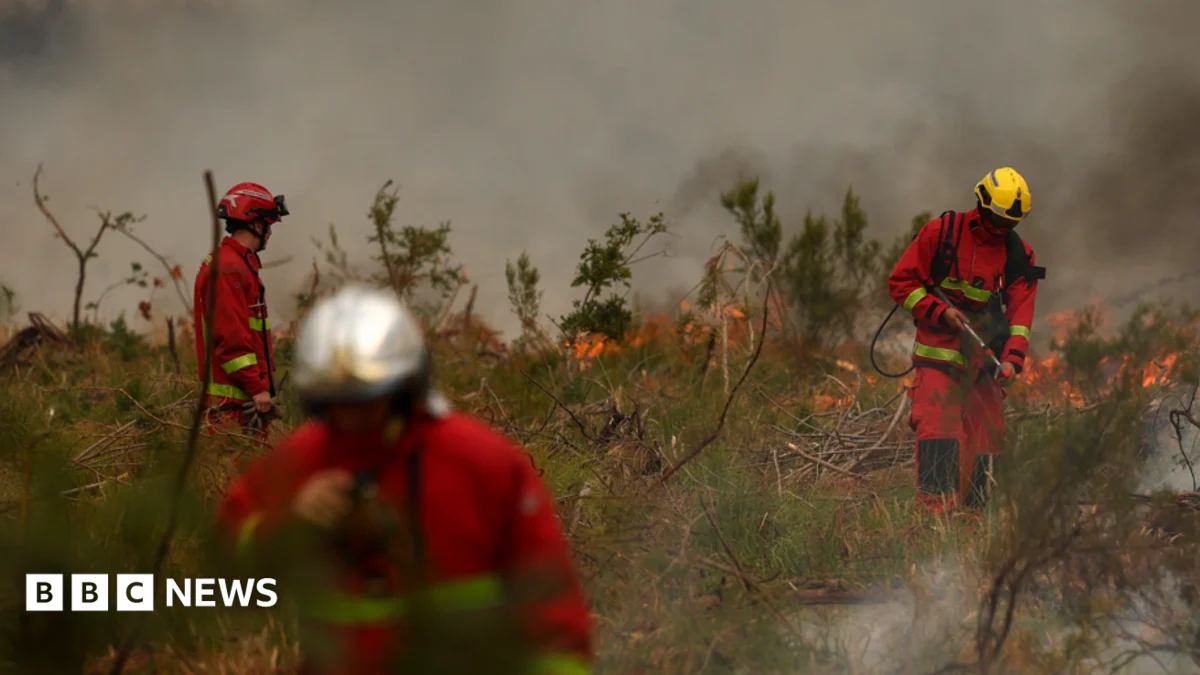
Firefighters are engaged in a desperate and challenging battle to contain a significant wildfire raging perilously close to the major city of Bordeaux, prompting the evacuation of tens of thousands of residents from the surrounding Gironde region. The inferno, which has been fueled by dry conditions and persistent winds, has already scorched vast tracts of land and is moving erratically, raising fears of further escalation.
Speaking on Sunday, the city’s Mayor, Thomas Cazenave, provided a sobering assessment of the fire’s proximity, stating it was approximately 15 kilometers (9 miles) from the outskirts of Bordeaux’s wider metropolitan area and a more distant 25 to 30 kilometers (15 to 19 miles) from its city center. While downplaying the immediate threat to Bordeaux itself, Cazenave acknowledged the gravity of the situation and the immense efforts underway to protect the region. The overnight hours into Sunday saw a massive evacuation effort, with around 55,000 people being compelled to flee their homes in villages located to the south of the city, in the heart of the Gironde region, an area globally renowned for its prestigious vineyards.
This devastating fire in France is part of a broader and alarming trend of wildfires that have swept across Europe over the past week, with France and Spain bearing the brunt of the destruction. Collectively, these blazes have forced the evacuation of over 330,000 people across the continent, highlighting the severe impact of the ongoing heatwaves and dry weather conditions.
France has emerged as the most severely affected nation, with an astonishing 42,000 hectares of land consumed by flames. This figure represents one of the largest forest fires recorded in the country since the end of World War Two, a stark testament to the intensity of the current crisis. Since the beginning of the year, approximately 98,000 hectares have been burnt across France, underscoring a consistent pattern of increasing wildfire activity. In the southwest of the country alone, more than 220,000 individuals have been forced to evacuate their homes due to the encroaching flames.
The sheer scale and ferocity of the wildfire near Bordeaux have presented firefighters with unprecedented challenges. Captain Nicolas Braz, one of the leaders of the firefighting operation, described the fire’s alarming behavior, stating that it had created "its own winds – complete with whirlwinds." He characterized the blaze as "erratic and unmanageable," emphasizing the extreme difficulty in predicting its movement and implementing effective containment strategies.
France’s Interior Minister, Laurent Nunez, echoed these concerns on Sunday, reporting that the situation in the region remained "very unfavorable." He warned that the wildfire was "moving erratically towards the Bordeaux metropolitan area," adding a layer of urgency to the ongoing rescue and firefighting efforts. The response in the Gironde region is a monumental undertaking, involving a formidable deployment of resources. Approximately 2,500 firefighters, bolstered by a specialized Swiss team, are on the front lines, supported by 1,500 military personnel and nearly 1,200 police and gendarmes. These personnel are not only engaged in combating the flames but are also actively involved in conducting evacuations and ensuring the security of affected areas.
The rapid spread of the fire is attributed to a confluence of factors, primarily the abundance of dry vegetation and the presence of brisk winds, which act as accelerants. This has led to significant disruptions to transportation infrastructure, with 60 kilometers (37 miles) of the A63 motorway, a crucial artery connecting France to Spain, being closed to traffic.
In a measure to redeploy essential personnel to the critical firefighting efforts, the final stage of the prestigious Tour de France, scheduled to conclude in Paris on Sunday, has been significantly shortened. The race’s route was reduced from 133 kilometers to 89 kilometers (from 82 miles to 55 miles), a decision made to allow security forces to assist in the fight against the wildfires. President Emmanuel Macron has pledged the nation’s unwavering support, stating that France would "rebuild" and that his government would "be there for as long as is needed."
Meanwhile, the wildfire crisis continues to grip Spain, with fires relentlessly spreading and forcing the evacuation of over 90,000 people from regions surrounding Madrid and Ávila. The situation has been particularly dire in the region of Valencia, where a new fire front emerged overnight into Sunday near the coastal city. Valencia’s regional President, Juanfran Pérez Llorca, conveyed the severity of the situation late on Saturday, stating, "The fire is beyond our capacity to extinguish." Pilar Bernabe, the central government’s delegate to Valencia, warned that conditions in the region were likely to deteriorate throughout Sunday, with high temperatures and low humidity expected to further exacerbate the fire’s spread.
Tragically, the wildfire crisis has claimed civilian lives. One civilian was killed in a smaller fire in the Valencia region on Saturday, marking the only civilian fatality reported thus far. Earlier in the week, the immense bravery of firefighters was underscored by the loss of two of their own who perished while battling the blaze near Bordeaux.
The evacuations in Spain have been widespread. Late on Saturday, at least eight municipalities near Toledo were ordered to evacuate, although the exact number of people involved remained unclear. During a visit to an area west of Madrid affected by wildfires on Sunday, Spain’s Prime Minister Pedro Sánchez acknowledged that "difficult hours lie ahead." However, he also noted "positive" indications emerging overnight regarding containment efforts. Sánchez emphasized the urgent need for a "major public pact on the climate emergency," highlighting the interconnectedness of extreme weather events and climate change. Isabel Díaz Ayuso, Madrid’s regional president, described the ongoing situation as the "worst fire in the history of the region," underscoring the scale of the disaster. The combined efforts of firefighters, military personnel, and civilian authorities across both France and Spain are a testament to the profound challenge posed by these devastating wildfires, a crisis that demands urgent attention and long-term solutions to address the underlying factors contributing to their increasing frequency and intensity.




 Roy Suryo

 Nakalama John
 atisusanti
 Ramos Leo