
 Roy Suryo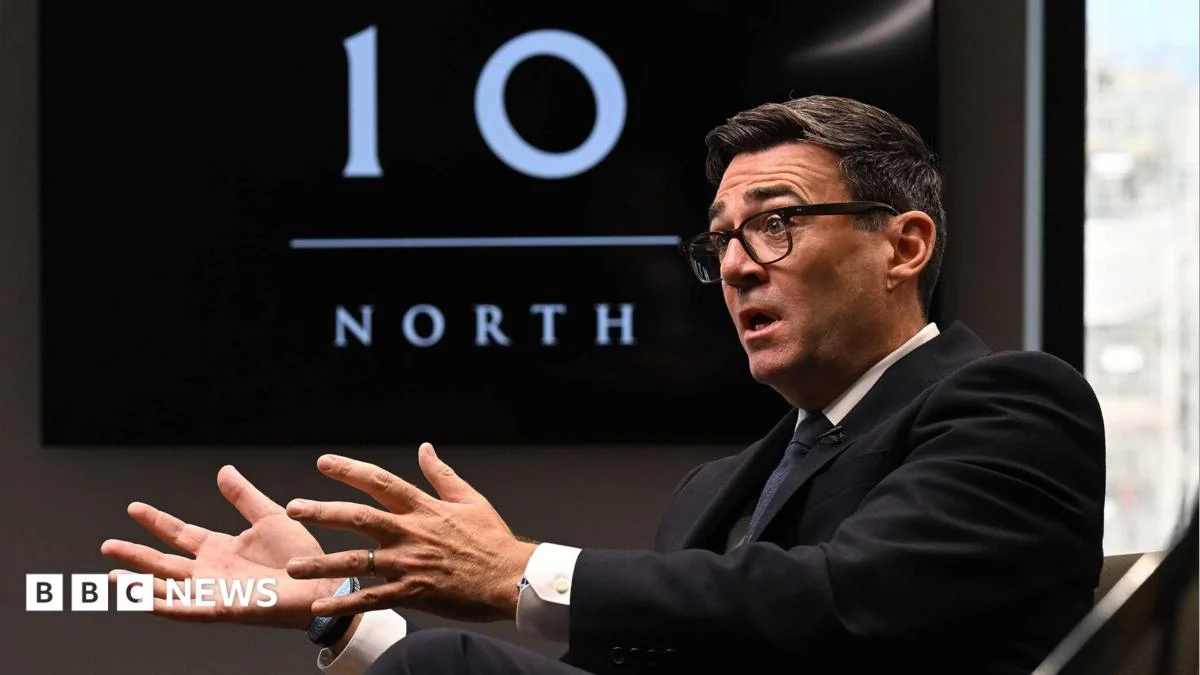
Prime Minister Andy Burnham has issued a stark warning that the National Health Service (NHS) faces imminent collapse if the deeply entrenched crisis in social care is not urgently addressed through comprehensive reform. In his first major interview since assuming the premiership, Burnham articulated a profound personal commitment to overhauling the social care system, expressing a resolute desire not to leave office without enacting "substantial change." This ambitious agenda, however, is juxtaposed with a pragmatic acknowledgement of the complexities involved, as Burnham admitted he could not yet provide a definitive timeline for the implementation of these crucial reforms.
Adding another layer to the intricate political landscape surrounding social care, Burnham also signaled a potential shift in welfare policy, suggesting that measures to make claiming benefits more stringent could be explored. This proposition underscores a broader national imperative, as he stated, "the country had to get serious about getting the welfare bill down." This sentiment appears to be part of a wider governmental push for fiscal responsibility, a theme that resonates with a letter sent by Kemi Badenoch to the Prime Minister. Badenoch, in her correspondence, explicitly urged Burnham to rule out any tax increases or further borrowing as mechanisms to fund social care reform, emphasizing the need for fiscal prudence and alternative solutions.
The Prime Minister’s core argument, delivered with palpable concern, is that the continued strain on the NHS is a direct consequence of a failing social care infrastructure. He elaborated on this point, stating, "if the government did not reform social care, the NHS would ‘collapse under the weight of trying to care for people who’ve really not needed to end up in the NHS system.’" This highlights a critical bottleneck: individuals who could and should be supported within a robust social care framework are instead occupying valuable NHS resources, exacerbating an already critical situation.
When pressed on the feasibility of establishing a new social care system before the next general election, Burnham’s response, while firm in his commitment, was tempered by realism. He confessed, "I couldn’t put a timeline on it right here, right now," but immediately followed this with a powerful pledge: he would dedicate "whatever political capital I have into fixing broken social care." This declaration signals a significant personal investment and a strategic prioritization of this long-neglected issue.
Burnham’s engagement with social care reform is not a new phenomenon; his initial proposal for a universal social care system in England dates back to 2009, when he served as Health Secretary under the Gordon Brown government. This history underscores a sustained, long-term concern for the sector, demonstrating that his current focus as Prime Minister is built upon years of policy development and advocacy.
The immediate future of his social care agenda is set to be further illuminated with a scheduled speech on adult social care on Wednesday. However, it is understood that this speech will not unveil concrete plans for a completely new system. Instead, the focus will be on accelerating the work of the Casey Commission, an independent body tasked with examining and proposing solutions for the multifaceted challenges of social care. Currently, Baroness Louise Casey’s final recommendations are not anticipated until 2028. Burnham’s intention is to significantly bring forward this timeline, as he explicitly stated to the BBC, "Social care was on longer path and I have brought it straight forward." This move indicates a desire to expedite the process of finding viable solutions and to imbue the reform efforts with a greater sense of urgency.
To fully appreciate the gravity of Burnham’s warnings, it is essential to understand the nature of adult social care and its current limitations. Adult social care encompasses a broad spectrum of support services designed to enable individuals to maintain their independence and quality of life. These services can range from fundamental personal care, such as assistance with washing and dressing, to essential household tasks like meal preparation and domestic chores.
A crucial distinction between social care and the NHS lies in their funding models. While the NHS operates on the principle of being free at the point of use, social care services in England and Northern Ireland are subject to financial eligibility criteria. Individuals with savings exceeding a threshold of £23,250 are generally not entitled to receive financial assistance from their local council to cover care costs. This means that a significant portion of the population must self-fund their care, a prospect that can be financially ruinous. It is important to note that different eligibility rules apply in Wales and Scotland, reflecting the devolved nature of these services.
The complexity of tackling adult social care has proven to be an intractable problem for successive governments, with numerous attempts at reform yielding limited or unsustainable results. The issue has been a persistent thorn in the side of political leaders, often leading to public dissatisfaction and a sense of unfinished business.
A notable recent example of the challenges involved was the Labour Party’s decision, under Sir Keir Starmer’s leadership, to scrap plans for an £86,000 cap on the lifetime cost of social care for individuals in England. This policy, intended to provide greater financial security, was ultimately abandoned, leading to criticism and highlighting the difficulty in finding a universally acceptable and financially viable solution.
Kemi Badenoch’s letter to Prime Minister Burnham further emphasizes the sensitivity of this issue, particularly concerning individuals who have diligently saved for their future. She articulated this concern by stating, "any solution to the issues around social care must also be fair to those who have made provisions and saved up over the course of their lives." This highlights the delicate balancing act required to reform social care, ensuring that it is both sustainable and equitable, without penalizing those who have planned responsibly for their later years. The Prime Minister’s commitment to addressing the NHS crisis through social care reform, therefore, is not just a matter of public health but also a complex economic and social challenge that demands careful consideration and decisive action. The coming weeks and months will be critical in determining the direction and efficacy of his proposed changes.




 Nakalama John
 atisusanti
 Ramos Leo
