
 George Anjay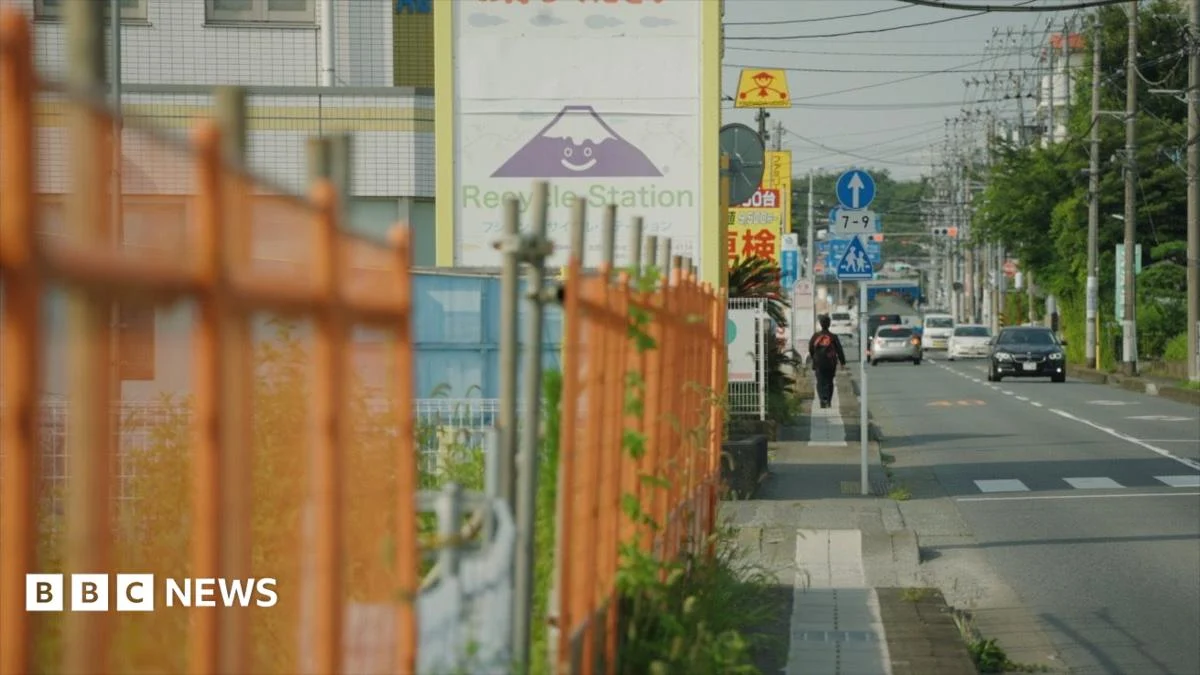
Fujisawa, a tranquil seaside town an hour south of Tokyo, is poised to welcome its first mosque, a development that has ignited a complex tapestry of emotions within the community. While a grassy field currently occupies the future site of this Islamic religious center, the impending construction has stirred not only anticipation but also apprehension among its long-time residents. "It makes me worry about how our community might change," expresses Noriko Izumizawa, a resident of many years, articulating a sentiment shared by many who are grappling with the implications of this significant cultural and religious addition. The burgeoning anxieties surrounding immigration and societal transformation, exacerbated by Japan’s persistent labor shortage stemming from a declining and aging population, are palpable in Fujisawa.
Despite a national inclination towards restrictive immigration policies, Japan’s economic realities increasingly necessitate reliance on foreign workers to bridge employment gaps. This demographic shift brings an influx of individuals from diverse cultural, linguistic, religious, and social backgrounds, prompting a nationwide re-evaluation of national identity. The debate unfolding in Fujisawa mirrors similar discussions occurring across Japan, probing the very essence of how the nation perceives itself in an evolving global landscape. Izumizawa’s concerns are not isolated; she is part of a contingent of Fujisawa residents who voice unease regarding the growing visibility of the Muslim community. The polarizing discourse on immigration in Western nations, particularly in the US and Europe, has, in her view, amplified these apprehensions.
Earlier this year, tensions escalated as anti-mosque protests erupted at the local train station, drawing thousands who voiced opposition to the proposed construction. Some critics deemed the planned mosque, significantly larger than the nearby Shinto shrine, as an act of disrespect. Compounding these concerns, Japanese social media platforms have become fertile ground for hate speech and the dissemination of misinformation. Local reports indicate a surge in abusive phone calls and emails directed at mosques, spurring anti-hate advocacy groups to organize counter-demonstrations championing inclusivity and condemning intolerance.
Hiroki Suzuka, proprietor of a coffee shop situated across from the mosque’s future location, advocates for increased understanding and open dialogue. "I’m not particularly opposed, but I wouldn’t say I’m strongly in favour either," Suzuka stated, reflecting a stance of cautious neutrality. "I think the first step is to learn about them, what Islam is, what kind of people they are, and what values and perspectives they hold. It begins with having an open mind and a desire to understand each other."
Mohamed Mohideen, a businessman who has resided in Osaka for the past 39 years, relocated from his native Sri Lanka in 1987, seeking enhanced professional opportunities during Japan’s economic boom. His career initially involved gemstone dealing and subsequently shifted to international trade, exporting used cars to countries like Sri Lanka and Pakistan. He arrived in Japan during a period when the foreign resident population was considerably smaller. However, Mohideen observes a marked shift in societal attitudes, noting an increase in hostility and hurtful remarks directed at Muslims, both online and in person. "On social media, there are countless comments like, ‘Get out of Japan’ and ‘Go back to your own country,’" Mohideen recounted. "People have also started coming to the mosque and shouting abuse."
Despite his daily attendance at the Osaka mosque for prayers and community engagement, Mohideen asserts he has never felt his life to be in danger. While he maintained positive relationships with his neighbors for many years, he has recently perceived a discernible change in the disposition towards Muslims. "Now, I feel that people are afraid of us," he lamented. The verbal abuse has intensified in recent years. He recalled instances where members of his Muslim community were labeled terrorists, falsely accused of manufacturing explosives, and ordered to leave Japan. "When that happens, the only thing we can do is be patient. They’re trying to provoke a fight or create a confrontation. They want to see how long we’ll tolerate it," Mohideen explained. "So we stay calm, speak gently, and treat them kindly, because Japanese people generally don’t know much about Islam."
Nevertheless, he acknowledges a degree of shared responsibility for the growing divide. "We focused only on our work and, for a long time, didn’t make enough effort to help people understand who we are. We also didn’t do enough to become part of the society," he admitted. "From now on, I want to work harder to increase dialogue and build better mutual understanding."
Shakeel Mohamed, 61, has served as a representative for the Yashio mosque in Saitama Prefecture for the past decade. Prior to this role, he spent 26 years as a construction site supervisor after migrating from Pakistan and is fluent in Japanese. Mohamed emphasizes the paramount importance of adhering to Japanese regulations, including meticulous waste sorting, compliance with parking ordinances, and the mandatory use of helmets while cycling. "We make every effort to respect the way things are done in Japan and to follow the rules," he stated. "Courtesy is important too, even something as simple as greeting people." He notes that local Japanese residents in Yashio refer to the area’s Pakistani community as "Yashio-stan." "Of course, there are some Pakistanis who behave badly, but they’re only a small minority. And the same is true of Japanese people," he added, advocating for a balanced perspective.
Japan is currently navigating a profound existential crisis concerning its national identity amidst significant demographic transformations. According to Hirofumi Tanada, a professor emeritus at Waseda University specializing in the study of Islam in Japan, the nation’s Muslim population, encompassing both foreign residents and Japanese converts, stood at approximately 420,000 by the end of 2024, a notable increase from 230,000 in 2019. This growth in the Muslim community mirrors a broader national trend: the foreign resident population, primarily composed of individuals from China, Vietnam, South Korea, and the Philippines, surpassed four million in 2025. Government data reveals that a record 2.57 million of these individuals are employed in Japan. Concurrently, Japan’s overall population experienced a decline of nearly one million in the same year.
For years, Japanese government officials have eschewed the label of an "immigration country," opting instead for visa categories perceived as more temporary than permanent, a strategy critics have characterized as a "stealth" immigration system. Notwithstanding this approach, Prime Minister Sanae Takaichi has maintained a staunchly conservative stance against large-scale immigration. In June 2026, the Japanese government enacted a fivefold increase in visa fees for foreign nationals, marking the first such adjustment in nearly fifty years. Furthermore, the government is planning to augment the workforce at the Immigration Services Agency by approximately 230 personnel, with the objective of intensifying enforcement against foreigners residing in the country illegally. Officials are also contemplating the introduction of quotas to manage the overall number of foreign residents.
As immigrant communities become increasingly visible, Japan is compelled to confront a question it has long sidestepped: can the nation embrace greater diversity while simultaneously preserving its cherished sense of identity and social cohesion? Back in Fujisawa, Izumizawa concedes that she has personally never experienced any negative interactions with Muslim neighbors. "The truth is, maybe I just fear the unknown," she admitted with a shrug, underscoring the profound impact of apprehension stemming from unfamiliarity.
Additional reporting by Chie Kobayashi.




 Roy Suryo

 Nakalama John
 atisusanti
 Ramos Leo
