Nana Banana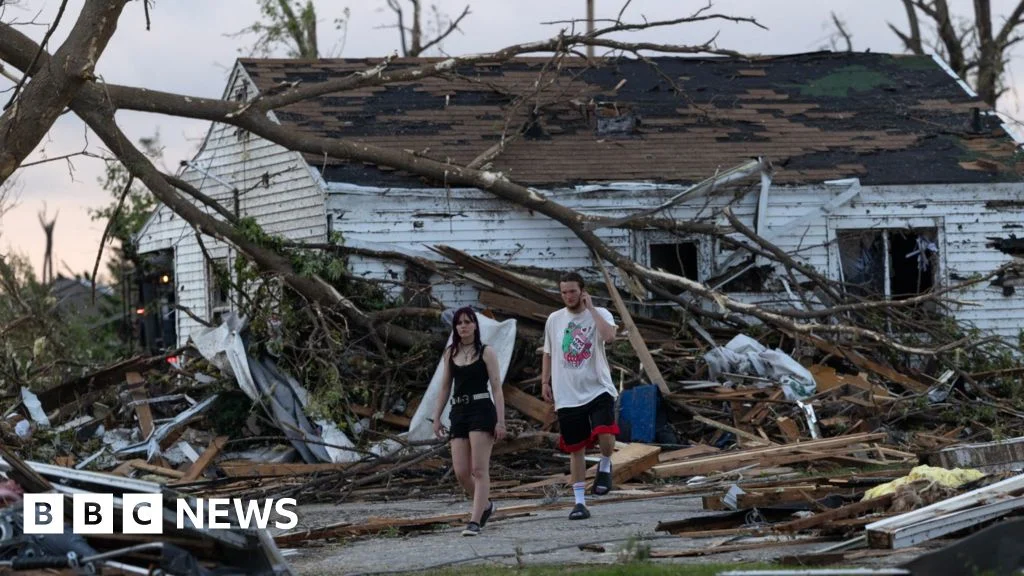
The tornado, which struck late Tuesday evening, carved a path approximately a quarter-mile wide and several miles long, primarily impacting the rural and semi-rural landscapes of Marquette and Waushara counties. While initial ground reports painted a grim picture, it was the drone footage, released Wednesday morning by local emergency management agencies and news outlets, that truly illustrated the sheer power and destructive reach of the cyclonic event. From above, the landscape was transformed, showcasing homes reduced to splinters, barns completely obliterated, and ancient trees snapped like twigs or denuded of their branches and leaves, standing as skeletal reminders of the storm’s fury. Fields that once held nascent crops were now scarred with debris, and the clear lines of roadways were obscured by fallen trees and power poles.
An EF-2 tornado, categorized on the Enhanced Fujita scale, typically brings wind speeds between 111 and 135 miles per hour. This level of intensity is capable of considerable damage, including tearing roofs off well-constructed homes, moving cars, and snapping or uprooting large trees, all of which were vividly captured in the drone’s aerial reconnaissance. The footage provided critical intelligence to emergency responders, allowing them to pinpoint the most severely damaged areas, prioritize search efforts, and strategize the most efficient routes for clearing operations. Its ability to survey vast, otherwise inaccessible areas quickly and safely proved invaluable in the immediate post-disaster phase, guiding both ground teams and utility repair crews to the most critical points of need.
The declaration of a state of disaster by Governor Evers immediately unlocked state resources, including the deployment of Wisconsin National Guard units to assist with debris removal, traffic control, and humanitarian aid. This declaration also paves the way for potential federal assistance from agencies like FEMA, which could provide crucial funding for infrastructure repair, individual assistance programs, and long-term recovery efforts. Utility companies, including We Energies and Alliant Energy, reported thousands of customers without power, with some rural areas facing outages that could last for days, possibly even weeks, given the extensive damage to transmission lines and substations. Crews from across the state, and even neighboring states, have converged on the affected region to accelerate restoration efforts, working around the clock to re-establish essential services.
Beyond the immediate physical damage, the human element of the disaster is profound. While miraculously no serious injuries or fatalities were reported, dozens of residents have been displaced, their homes rendered uninhabitable. Local community centers, churches, and school gymnasiums quickly transformed into temporary shelters, providing food, water, and a safe haven for those who lost everything. The American Red Cross, Salvation Army, and numerous local volunteer organizations swiftly mobilized, offering comfort, hot meals, and essential supplies to affected families. Many residents described harrowing experiences, recounting mere minutes to seek shelter after receiving emergency alerts on their phones or hearing tornado sirens blare. Their stories are a testament to the effectiveness of modern warning systems and the importance of having a pre-planned safety strategy.
The hazards in the aftermath extend far beyond downed power lines. Compromised structures pose significant collapse risks, making entry extremely dangerous. Gas leaks from damaged lines necessitated immediate shut-offs in certain neighborhoods, adding to the list of safety concerns. Debris, ranging from splintered wood to twisted metal, littered properties and roadways, creating treacherous conditions for both residents and emergency personnel. Officials urged extreme caution when navigating damaged areas, advising against sifting through debris without proper protective gear and warning against the use of open flames or spark-producing equipment where gas leaks were suspected. The local health department also issued advisories regarding potential contamination of private well water systems and the safe handling of perishable food items in homes without power.
The weather conditions leading up to the tornado were characteristic of severe spring storm systems in the Midwest. Meteorologists had been tracking a potent supercell thunderstorm for several hours as it developed along a strong cold front interacting with warm, moist air from the Gulf of Mexico. This atmospheric recipe created an unstable environment ripe for tornadic activity. The National Weather Service had issued a series of tornado watches and warnings throughout the day, giving communities crucial lead time to prepare. These warnings, disseminated through broadcast media, weather radio, and smartphone alerts, are credited with saving lives by prompting residents to take immediate shelter, highlighting the critical role of meteorological forecasting and public communication in disaster mitigation.
The long-term recovery effort will be a monumental undertaking. Rebuilding homes, businesses, and public infrastructure will require significant financial investment and sustained community effort. Mental health professionals are also preparing for the psychological toll the disaster will take on residents, offering counseling and support services to those grappling with trauma, loss, and the stress of rebuilding their lives. Agricultural producers, a cornerstone of Wisconsin’s economy, face significant losses from damaged farm buildings, equipment, and potential impacts on livestock and future harvests. State and federal agricultural agencies are expected to provide assistance programs to help farmers recover from these devastating setbacks.
In the coming weeks and months, the focus will shift from immediate search and rescue and debris clearance to long-term reconstruction. The drone footage, initially a tool for immediate assessment, will likely serve as a historical record, documenting the sheer scale of the event and the journey of recovery. It underscores the fragility of human settlements against the raw power of nature, but also the enduring spirit of communities that come together in the face of adversity. As the initial shock subsides, the resilience of Wisconsin residents will be tested, but officials and community leaders are confident that through collective effort and external support, the affected areas will eventually rebuild, emerging stronger from the extensive damage wrought by the EF-2 tornado. The road to recovery will be long and challenging, but the collective resolve to restore homes, livelihoods, and a sense of normalcy remains unwavering.



 Roy Suryo

 Nakalama John
 atisusanti
 Ramos Leo