
 Nakalama John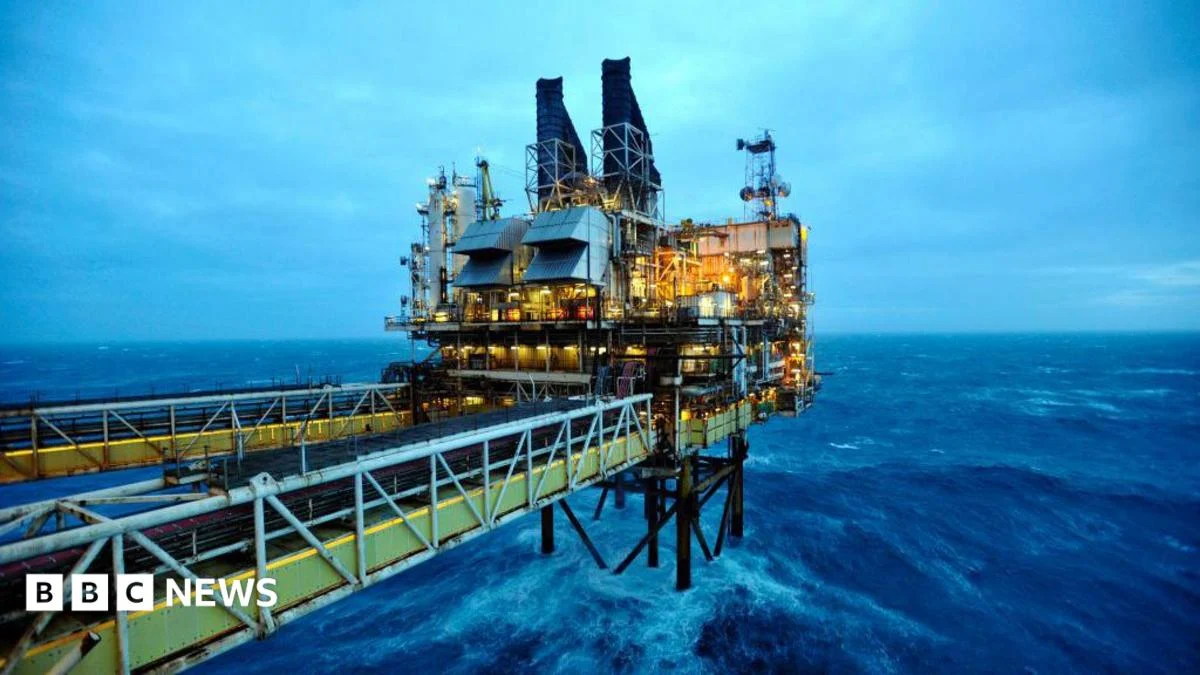
BP’s North Sea footprint is substantial, encompassing five key production hubs. Two of these are situated in the central North Sea, a mature but still productive area, while the remaining three are located west of Shetland, a frontier region known for its challenging conditions but also significant reserves. These operations collectively employ approximately 1,100 dedicated personnel, whose futures now face uncertainty amidst the sale process. The sale is not merely a transaction but a profound shift for BP, which has been an integral part of the North Sea’s energy landscape since the first discoveries in the mid-1960s, playing a pioneering role in developing complex offshore technologies and infrastructure.
The announcement arrives at a politically charged moment for North Sea oil and gas. Earlier this week, Prime Minister Andy Burnham indicated a shift in government tone, stating he had informed US President Donald Trump of his intention to adopt a "pragmatic approach" to the future of North Sea exploration and extraction. This signals a potential departure from the Labour party’s earlier, more restrictive stance. Trump, a staunch advocate for fossil fuel production, has consistently called for increased drilling, a position echoed by various UK trade unions concerned about job security, industry figures highlighting energy security, and even a faction of Labour MPs who prioritize economic stability and affordable energy bills.
BP Chief Executive Meg O’Neill, who assumed her role in April, offered a nuanced perspective on the divestment. While acknowledging the "untapped potential" in the North Sea earlier in the year, her recent statement underscored a pivot: "As we focus our portfolio and direct capital to our highest-value opportunities, we believe our North Sea business will be better positioned as part of another company." O’Neill emphasized the quality of the assets and workforce, stating, "It has world-class people, resilient assets and a proud heritage, and it is precisely these qualities that can attract an owner ready to back its next chapter. We are seeking an outcome that recognises that value." This strategic re-evaluation suggests BP is seeking to optimize its capital allocation globally, potentially freeing up funds for investments in renewable energy and lower-carbon solutions, even if the North Sea assets remain profitable.
The potential sale could fetch BP approximately £2 billion. Reports last month from the Financial Times indicated that BP had been in discussions with Ithaca Energy regarding the sale of these very assets for a similar valuation, though those talks ultimately fell through. This suggests a competitive market for mature North Sea assets, often attracting independent oil companies or private equity firms looking for stable cash flow and opportunities for operational efficiencies in established fields. BP’s global headquarters will remain in the UK, where the company still employs around 13,960 people across various divisions, including its growing renewables and EV charging businesses. The divestment, therefore, represents a focused shedding of a specific part of its UK portfolio rather than a broader withdrawal.
Energy Secretary Miatta Fahnbulleh swiftly responded to the news, confirming close contact with BP and asserting that her paramount priority was to "ensure that the workers and local community are protected during this sale process." This commitment likely entails discussions with potential buyers about employment terms and ensuring a smooth transition for the highly skilled workforce, many of whom possess decades of invaluable experience in offshore operations.
The future of North Sea oil and gas has become an increasingly contentious and complex topic in the UK’s political discourse. Labour’s 2024 general election manifesto had pledged not to issue new licences for drilling, while honouring existing ones – a policy designed to align with climate change targets and promote a transition to green energy. However, recent global events, particularly the Iran war, have dramatically pushed up oil prices, reigniting calls for increased domestic production. The Conservatives and Reform UK have been vocal in advocating for new drilling approvals, arguing for enhanced energy security, job creation, and economic benefits. President Trump’s recent interventions further amplify these demands, putting pressure on the UK government to reassess its energy strategy.
The issue has also created significant internal divisions within the Labour party. Some Labour MPs have urged the government to adopt a more "liberal approach," emphasizing the need to safeguard jobs in the oil and gas sector and mitigate the impact of high energy bills on households. They argue that a rapid, unmanaged transition could lead to economic disruption. Conversely, other Labour members steadfastly back the government’s existing commitment to expanding renewable energy, viewing it as the most effective long-term solution for energy security and a crucial step in combating climate change.
Ed Miliband, who served as Energy Secretary in Sir Keir Starmer’s shadow cabinet, was a staunch proponent of the manifesto’s position against new licences. His current role as Foreign Secretary in Prime Minister Burnham’s government suggests that while his direct influence on energy policy may have shifted, the underlying ideological tension within the party persists. Prime Minister Burnham himself, however, has seemingly left the door open to future drilling, telling President Trump this week, "There is a resource there. When people are struggling – you can’t ignore that." This statement, coupled with Labour’s deputy leader Lucy Powell’s earlier comment to the BBC about a "change of emphasis" on North Sea oil and gas, strongly indicates a pragmatic softening of the party’s previous hardline stance in response to current geopolitical and economic realities.
Adding to the complexity, oil and gas companies have repeatedly criticized the UK’s windfall tax, officially known as the Energy Profits Levy. They argue that this tax has significantly eroded the North Sea’s appeal as an investment destination, discouraging capital expenditure and potentially accelerating the decline of production. This levy, introduced to capture some of the supernormal profits generated by high commodity prices, is seen by the industry as a disincentive for long-term investment needed to maintain production and explore new fields.
The Scottish government has also voiced its concerns. Stephen Gethins, Scotland’s energy minister, expressed apprehension about the uncertainty the BP decision would cause for workers. He underscored Scotland’s reliance on North Sea energy production for its prosperity and contribution to energy security, emphasizing the invaluable skills and experience of the workforce. Gethins further criticized "reserved policies" – policies controlled by the Westminster government, such as the Energy Profits Levy – for driving an accelerated decline of North Sea oil and gas before renewable energy sources were fully capable of meeting national energy demands.
Andrew Bowie MP, the Scottish Conservatives’ energy spokesman, seized on the news to reiterate calls for the Labour government to approve new offshore sites like Jackdaw and Rosebank, cancel plans to ban new licences, and scrap the Energy Profits Levy entirely. His position aligns with the broader Conservative argument that maximizing domestic production is essential for both energy security and economic growth. Reform MSP Duncan Massey echoed concerns for the 1,100 workers, arguing that politicians should not prioritize ideology over jobs and economic reality, a common refrain from parties advocating for continued fossil fuel production.
In contrast, the Scottish Greens presented a counter-argument, asserting that 80% of the oil extracted from the North Sea is shipped overseas, thereby doing "very little to improve our energy security." This perspective challenges the core rationale often put forward for increased drilling and highlights the global nature of oil markets, suggesting that domestic extraction does not automatically translate into domestic energy independence.
BP’s decision to exit the North Sea marks a symbolic and strategic inflection point. For an energy giant that helped define the region’s oil and gas industry, this divestment signals a clear intent to reallocate resources in line with a global energy transition. While it creates immediate uncertainty for workers and sparks intense political debate, it also opens a new chapter for the North Sea, potentially attracting a new generation of operators with different investment strategies, and further intensifying the national discussion about the UK’s energy future and its pathway to net-zero.



 atisusanti
 Nana Banana
 George Anjay

 Ramos Leo