
 Nana Banana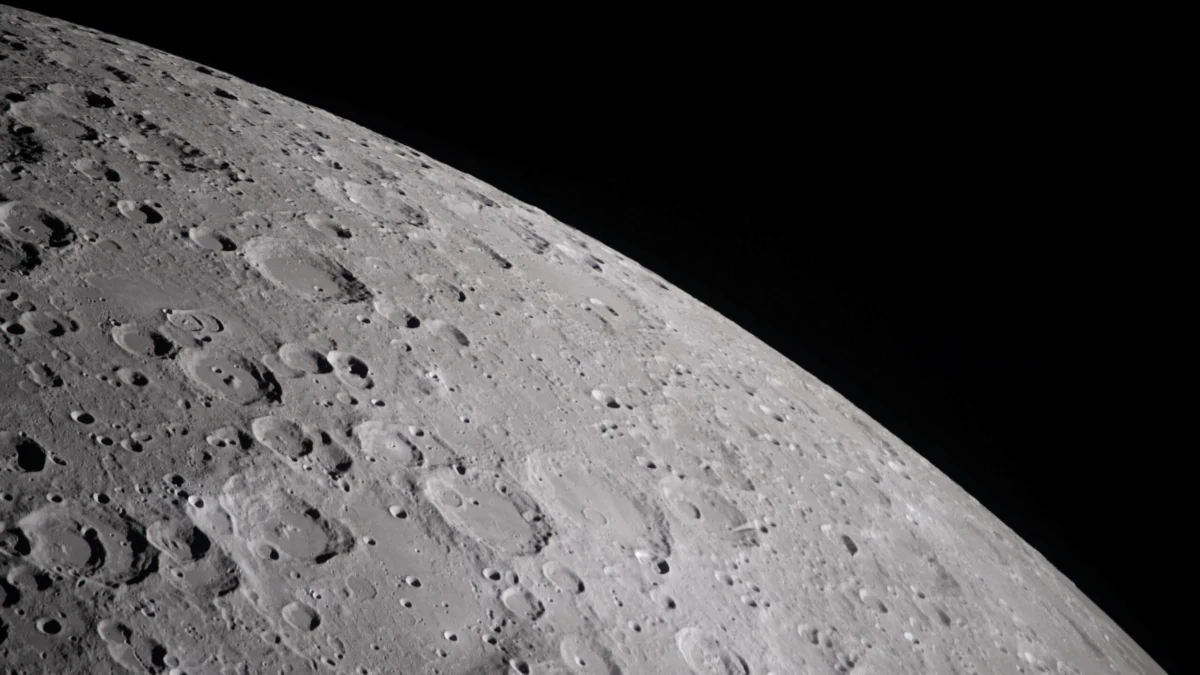
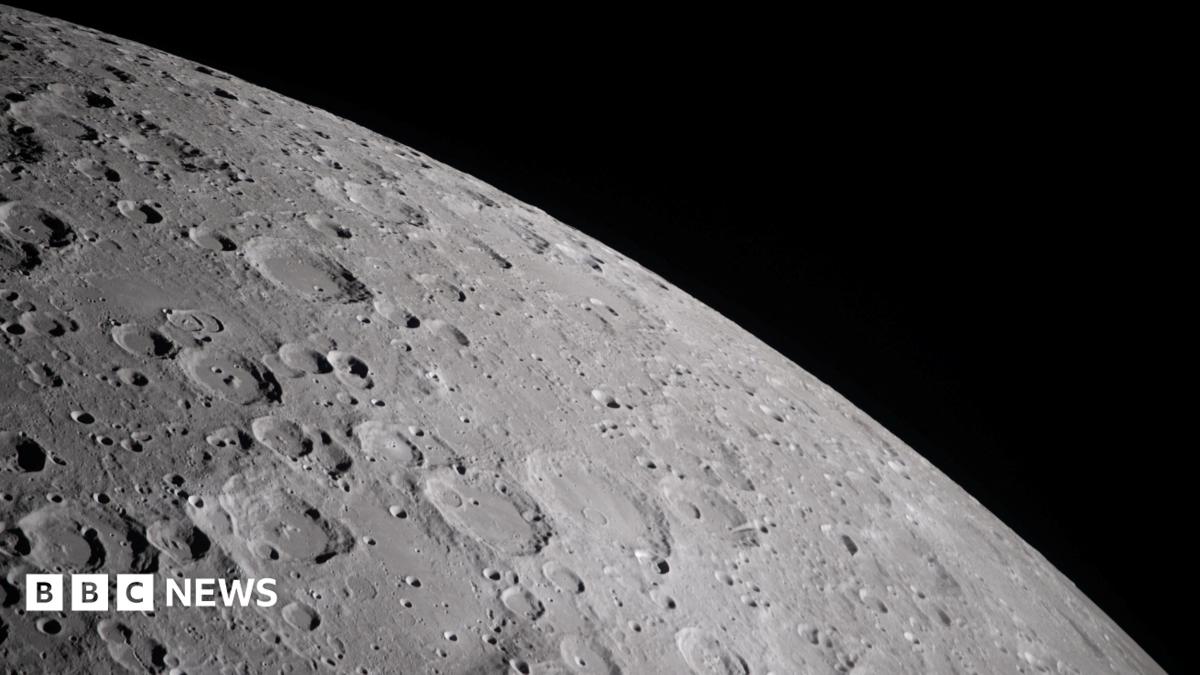
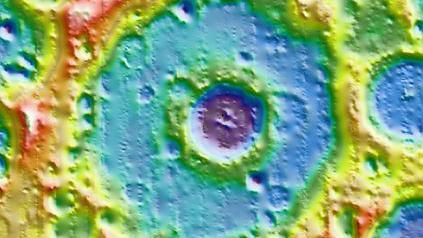
A stray SpaceX rocket stage made an unexpected and dramatic impact with the Moon on March 4, 2022, near the significant lunar landmark of the Einstein crater. This accidental collision, while initially a point of curiosity and concern regarding space debris, quickly transformed into a rare and invaluable research opportunity for planetary scientists, offering insights that could significantly inform future lunar missions and our understanding of the Moon’s geology. The empty upper stage of a Falcon 9 rocket, traveling at an astonishing speed of approximately 5,400 mph (8,700 km/h), created a new crater on the lunar surface, providing a unique "controlled experiment" without any prior planning.
The event, though a short and dramatic flash, was incredibly challenging for amateur astronomers to observe, even with high-end telescopes, due to its fleeting nature and the precise timing and location requirements. However, larger professional observatories across the Americas, where the Moon was illuminated and visible, immediately began analyzing data, alongside various lunar orbiters. It took days, and even weeks, for the full picture of the impact and its scientific implications to emerge, but for planetary geologists, this unplanned celestial event was nothing short of a scientific gift.
The rocket stage in question was not, as initially misidentified by some, from a recent launch, but rather the second stage of a Falcon 9 rocket launched in February 2015. Its original mission was to deploy the Deep Space Climate Observatory (DSCOVR) satellite, a joint NASA and NOAA mission designed to monitor solar winds and provide early warnings of geomagnetic storms. After successfully deploying DSCOVR, which then headed to the L1 Lagrangian point, this particular Falcon 9 second stage had insufficient fuel to return to Earth’s atmosphere for a controlled re-entry or to achieve a stable orbit around Earth. Consequently, it was left adrift in a chaotic, highly elliptical orbit that swung out far beyond Earth and back again.
Over the subsequent seven years, the subtle yet persistent gravitational tugs from the Earth, Moon, and Sun, combined with the minute but continuous pressure from solar radiation, gradually perturbed its trajectory. These seemingly insignificant nudges accumulated over time, slowly but surely shaping its path until astronomers tracking space debris, most notably Bill Gray of Project Pluto, realized the derelict booster was on an unavoidable collision course with the Moon. This 14-meter-long cylinder, roughly the size of a five-story building and weighing over 4,000 kg (8,800 lbs), was now picking up speed daily as it neared its lunar rendezvous.
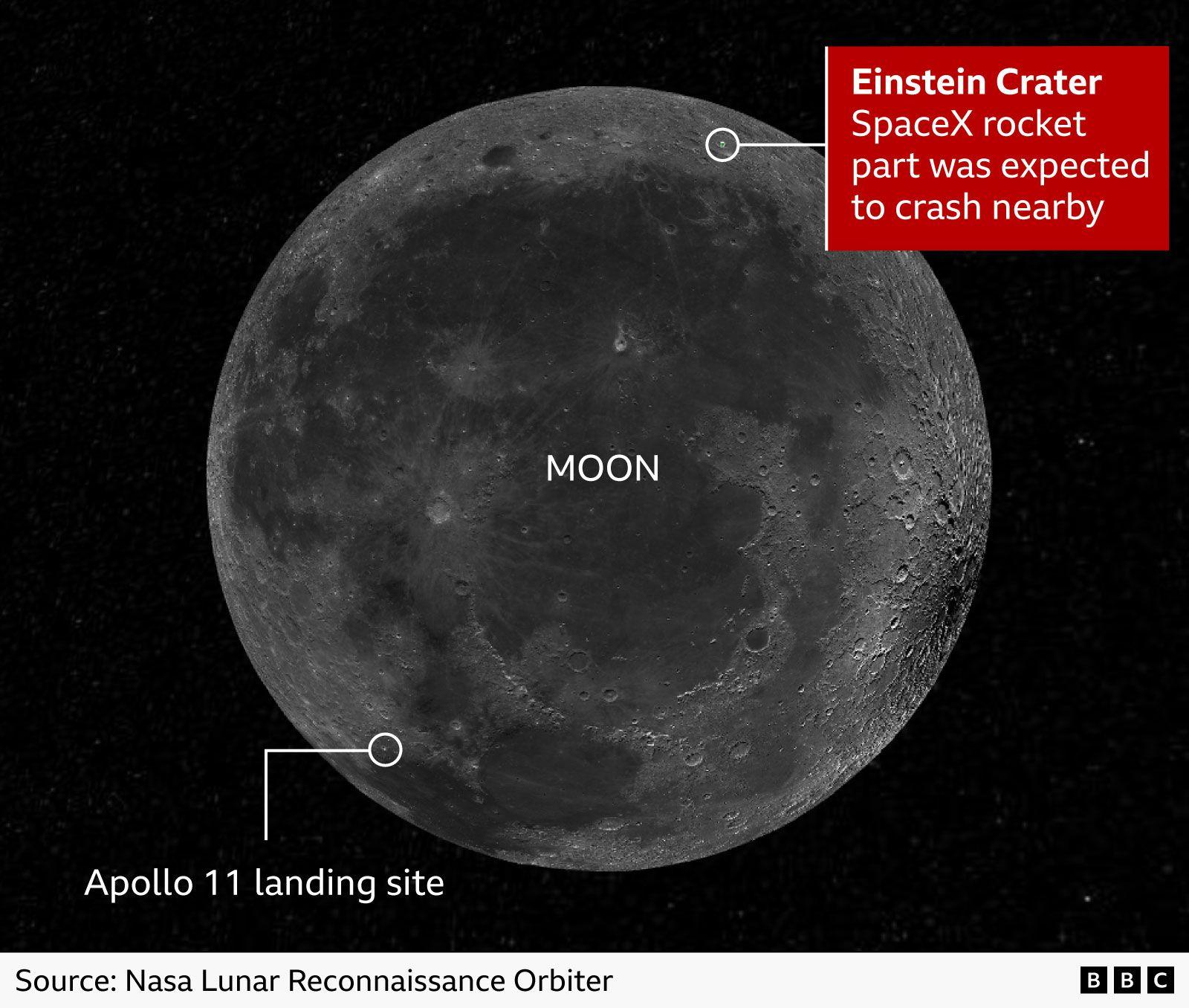
The impact itself occurred at approximately 12:25 UTC (07:25 EST) on March 4, 2022, on the far side of the Moon, near the Schrödinger basin, but close enough to the western rim of the much larger Einstein crater that it was initially reported as "near Einstein." The specific coordinates of the impact were later confirmed by NASA’s Lunar Reconnaissance Orbiter (LRO) as 29.16 degrees N latitude, 257.66 degrees E longitude. This location was not ideal for direct terrestrial observation due to the timing and geometry, meaning the brief flash produced by the impact would have been far too faint and quick to be seen by most ground-based telescopes. Even spacecraft orbiting the Moon were not perfectly positioned to capture the event live. South Korea’s Danuri orbiter, which passed near the crash site shortly beforehand, had the best chance, and its team later released preliminary findings, though extensive analysis was required.
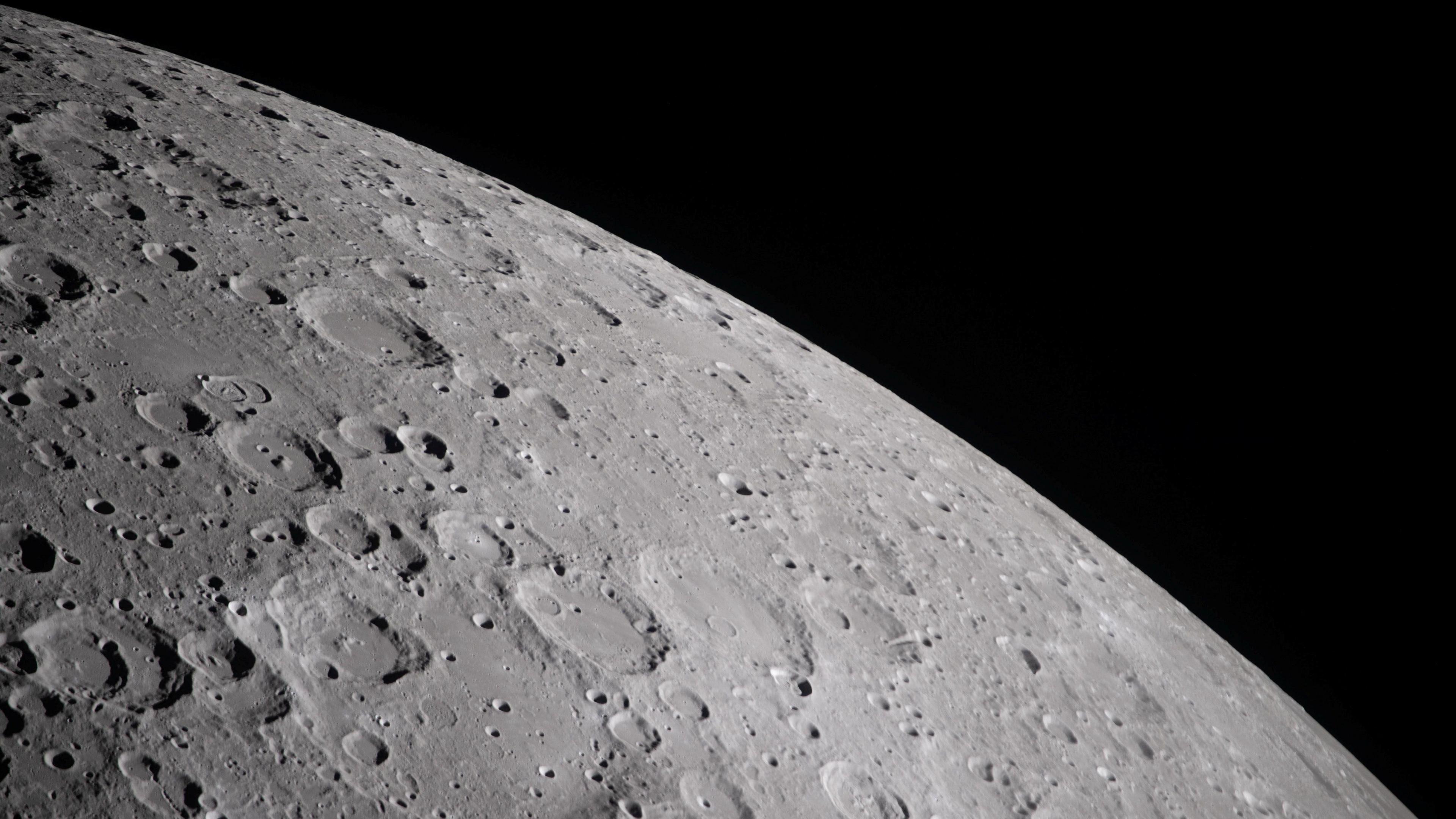
The true scientific bounty of this event began with post-impact imaging. NASA’s Lunar Reconnaissance Orbiter (LRO), along with India’s Chandrayaan-2 and other international lunar missions, were tasked with locating and photographing the new crater. By comparing images taken before and after the impact, scientists were able to precisely identify the crater’s size, shape, and morphology. This "before and after" comparison is crucial because, unlike natural impacts whose exact parameters (mass, velocity, composition of the impacting object) are unknown, the characteristics of the Falcon 9 second stage were well-documented.
This wealth of known data transformed the accidental collision into a quasi-controlled experiment, a dream scenario for planetary scientists. It allowed them to test and refine their models of how impacts dig out craters, how debris is ejected across the surface, and how tremors propagate through the Moon’s interior. The impact provided a unique opportunity to:
-
Study Crater Formation Mechanics: With precise knowledge of the impactor’s mass (4,000 kg), velocity (2.58 km/s), and approximate composition (mostly aluminum, titanium, and residual propellant), scientists could accurately predict the expected crater size and compare it to the actual observed crater. The LRO images later revealed not one, but a double crater, approximately 28 meters (92 feet) wide in its largest dimension. This unexpected double crater suggested that the rocket stage, though empty, might have retained significant structural integrity at its ends, leading to two distinct impact points rather than a single, coherent blast. This observation provided new data for understanding how non-spherical, hollow objects behave during high-velocity impacts, which differs significantly from the solid rock or ice impacts typically modeled.
-
Analyze Subsurface Material Ejection: The high-velocity impact excavated not only the lunar regolith (the loose surface material) but potentially deeper layers of the Moon’s crust. The plume of dust and debris, estimated to have stretched as far as 100 km (62 miles) and lasted for several minutes, offered a temporary window into the Moon’s subsurface composition. Spectroscopic analysis of this ejecta plume, had it been observable, could have provided fresh clues about the types of rocks, minerals, and even volatiles (like water ice, if present in that region) hidden beneath the surface. This data is vital for understanding the Moon’s geological history, how the Earth-Moon system formed some 4.5 billion years ago, and the distribution of potential resources for future human exploration.
-
Investigate Lunar Seismology: While the Moon lacks plate tectonics, it experiences "moonquakes" caused by tidal stresses from Earth, thermal contractions, and meteoroid impacts. Previous deliberate impacts, such as those from Apollo-era S-IVB rocket stages (Saturn V third stages) between 1969 and 1972, generated artificial moonquakes that were detected by seismometers left on the lunar surface by Apollo astronauts. These events provided invaluable data about the Moon’s internal structure, revealing a partially molten core. While there were no active seismometers near the Falcon 9 impact site, the data from this event still contributes to impact modeling, allowing scientists to refine predictions about the energy transfer and seismic waves generated by known impacts. This helps differentiate between natural and artificial seismic events and improves our understanding of the Moon’s crust and mantle properties.
-
Inform Future Lunar Missions and Engineering: The practical value of this accidental experiment is immense. Understanding precisely how much rock and dust an impact of a known object throws up, and how far it travels, helps engineers design safer lunar landers and future Moon bases. It allows them to calculate the risks posed by flying debris to sensitive equipment and habitats, and to predict how much the ground might shake in nearby areas. This knowledge is critical for the Artemis program and commercial lunar missions, which aim to establish a sustained human presence on the Moon.
This was not the first time a human-made object had struck the Moon. Since the Soviet Union’s Luna 2 probe became the first object to intentionally impact the Moon in 1959, dozens of spacecraft have followed, some by accident and many deliberately for scientific purposes. NASA’s Ranger probes in the 1960s, the aforementioned Apollo S-IVB stages, and more recently the LCROSS (Lunar Crater Observation and Sensing Satellite) mission in 2009, which deliberately crashed into a permanently shadowed crater to search for water ice, all contributed to our understanding of lunar geology. The Falcon 9 impact was notable not just for its accidental nature, but also because its trajectory had been accurately tracked for years prior to the collision, making it a unique data point among unintentional impacts. The last confirmed accidental impact prior to the SpaceX event was in early 2022, identified as the leftover booster from a Chinese lunar mission (the Long March 3C rocket body from the Chang’e 5-T1 mission) launched in 2014, highlighting the growing issue of space debris extending beyond Earth’s immediate vicinity.
The data gathered from the Falcon 9 impact, from the precise tracking of its trajectory to the detailed imaging of the resulting crater, serves as a crucial case study in space traffic management and debris mitigation. It underscores the importance of monitoring objects in deep space and understanding their long-term orbital behavior. As humanity ventures further into space, with more private companies like SpaceX playing a pivotal role, the need for international guidelines and technologies to manage orbital debris and prevent uncontrolled impacts will only intensify. This unexpected lunar scar, therefore, provides not only fresh scientific insights into our nearest celestial neighbor but also a poignant reminder of our growing footprint in the cosmos.




 atisusanti
 George Anjay
 Nakalama John

 Ramos Leo