George Anjay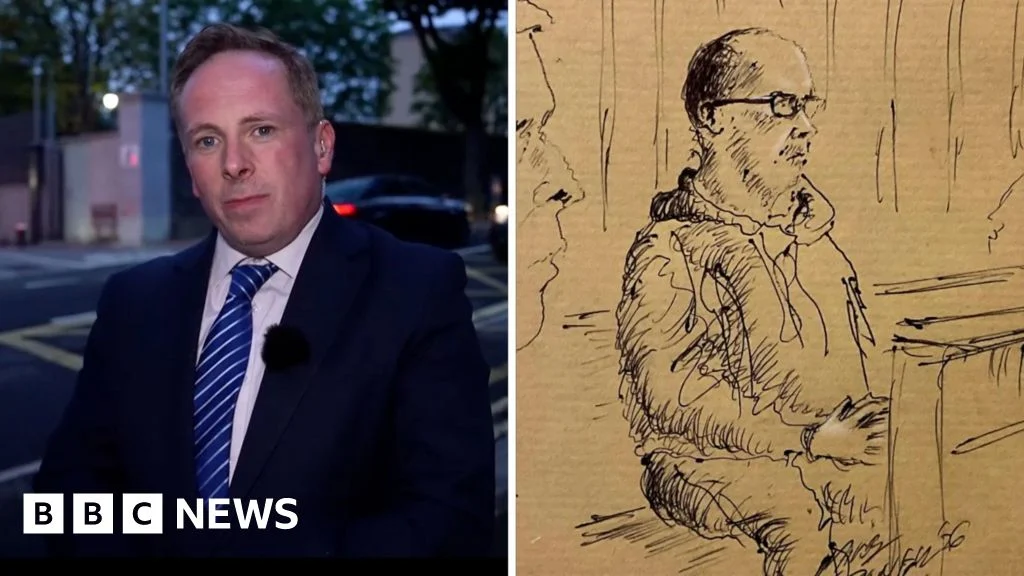
The air in the Special Criminal Court in Dublin on Sunday was thick with anticipation, a palpable tension that had been building since news broke of Daniel Kinahan’s extradition from Dubai. The suspected crime boss, a figure who had long operated in the shadows of international criminal enterprise, now stood in the stark reality of an Irish courtroom, his presence a seismic event that reverberated far beyond the four walls of the building. His appearance followed a dramatic arrest in Dubai in April, a development that signaled a significant shift in the long-running pursuit of the Kinahan cartel.
The charges laid against the 49-year-old were grave and far-reaching: directing the activities of a criminal organisation between October 2015 and April 2017. This period, according to extensive intelligence gathered by law enforcement agencies across multiple continents, was a critical juncture in the cartel’s reign of terror. It was a time when the organization, under Kinahan’s purported leadership, solidified its grip on the illicit drug and firearms trade, expanding its reach and influence with chilling efficiency. The indictment painted a picture of a sophisticated, transnational network, its tentacles extending into every corner of the globe.
As the proceedings commenced, Kinahan, a man accustomed to wielding power from afar, displayed a stoic demeanor. He was brought before the non-jury Special Criminal Court, a judicial body established to deal with the most serious and complex criminal cases, often those involving paramilitary or organized crime. The courtroom itself, a bastion of Irish justice, felt both imposing and strangely intimate as the legal machinery began to grind. Kinahan’s own assessment of his situation was stark and remarkably direct, a moment that underscored the gravity of his predicament. "I think we all know I won’t be getting bail," he stated, his voice resonating with an air of resignation, or perhaps a calculated understanding of the overwhelming evidence arrayed against him. This pronouncement, delivered with a matter-of-fact tone, immediately set the stage for what was to come, a legal battle of immense proportions.
The Kinahan cartel, a name synonymous with violence and illicit trade, has been a persistent thorn in the side of global law enforcement for over two decades. The UK’s National Crime Agency, a key player in the international effort to dismantle the organization, has meticulously documented its activities. Their reports paint a grim picture: the trafficking of tonnes of drugs and firearms, a relentless pursuit of profit that has fueled violence, corruption, and instability worldwide. From the streets of Ireland to the underbellies of Europe and beyond, the cartel’s influence has been a corrosive force, leaving a trail of devastation in its wake. The sheer scale of their operations, characterized by sophisticated logistics and a ruthless disregard for human life, has made them a formidable adversary.
The BBC’s Ireland correspondent, Chris Page, was present in the courtroom, a privileged observer tasked with relaying the unfolding drama to a global audience. His presence inside the hallowed halls of justice offered a unique vantage point, allowing for an immediate and unfiltered account of the proceedings. The atmosphere within the court was electric, a microcosm of the international manhunt that had culminated in Kinahan’s arrest. Every movement, every utterance, every subtle shift in expression was scrutinized, as legal teams, law enforcement officials, and journalists alike sought to decipher the implications of this pivotal moment.
The extradition of Daniel Kinahan from Dubai was itself a triumph of international cooperation and persistent investigation. For years, he had been a phantom, a shadowy figure whose whereabouts were a constant subject of speculation and a source of frustration for those seeking to bring him to justice. Dubai, a city often seen as a haven for wealth and discretion, had become his sanctuary. However, the persistent efforts of agencies like the US Drug Enforcement Administration (DEA), the National Crime Agency (NCA) in the UK, and the Irish police force, An Garda Síochána, eventually bore fruit. The designation of Kinahan and his associates as a transnational criminal organization by the US Treasury Department in 2021, accompanied by significant reward offers for information leading to their convictions, marked a turning point, intensifying the pressure and narrowing the avenues of escape.
Inside the Special Criminal Court, the legal proceedings were a carefully orchestrated dance. Prosecutors, armed with a wealth of evidence gathered over years of painstaking investigation, laid out the prosecution’s case. The indictment, detailing specific instances and patterns of alleged criminal direction, aimed to demonstrate Kinahan’s central role in the cartel’s operations. This included allegations of involvement in money laundering, drug importation on a massive scale, and orchestrating violent feuds that had plagued Ireland for years. The prosecution’s arguments would have focused on establishing a direct link between Kinahan and the criminal activities of the organization, painting a picture of a leader who, while perhaps not directly involved in every transaction, was undeniably the architect and enforcer of its illicit enterprise.
The defense, on the other hand, would have been tasked with challenging the prosecution’s narrative, seeking to create reasonable doubt. This could involve questioning the strength of the evidence, the reliability of witnesses, or the interpretation of events. The absence of a jury in the Special Criminal Court meant that the judges themselves would be responsible for weighing the evidence and making a determination on guilt or innocence. This often leads to a more focused and legalistic presentation of arguments, with less emphasis on emotional appeals and more on the precise application of the law.
Kinahan’s statement about not expecting bail was particularly telling. It suggested an awareness of the overwhelming nature of the evidence against him, or perhaps a strategic decision not to pursue a bail application that was likely to be unsuccessful. In cases of this magnitude, involving alleged involvement in serious organized crime, bail is rarely granted, especially when there is a significant risk of flight or further criminal activity. His remand in custody, therefore, was an expected outcome, a legal consequence of the charges he faces.
The Kinahan cartel’s impact extends far beyond the seizure of drugs and firearms. Their activities have been linked to brutal violence, including murders and attempted murders, as rival factions have battled for control of lucrative drug routes. The gang’s alleged involvement in the Regency Hotel attack in Dublin in 2016, a brazen assassination attempt that resulted in a fatality, highlighted the extreme violence associated with their operations and the threat they posed to public safety. The subsequent feuds and retaliatory attacks had a devastating effect on communities across Ireland, fostering an atmosphere of fear and insecurity.
The court hearing on Sunday was not the end of the legal process, but rather the beginning of a potentially lengthy and complex trial. The evidence presented, the arguments made by both the prosecution and the defense, and the ultimate decision of the judges will have significant implications, not only for Daniel Kinahan personally but also for the ongoing efforts to dismantle the global criminal network he is accused of leading. The international law enforcement community will be watching closely, recognizing that a conviction in this case would represent a major victory in the protracted war against organized crime.
The presence of Chris Page, the BBC’s correspondent, ensured that the world would be kept abreast of every development. His reports would have conveyed the solemnity of the occasion, the gravity of the charges, and the historical significance of Daniel Kinahan’s appearance in an Irish courtroom. The narrative that unfolded within the Special Criminal Court on Sunday was more than just a legal proceeding; it was a chapter in a global saga of crime, justice, and the relentless pursuit of accountability. The questions that loomed large were manifold: how much evidence would be presented, how would the defense counter it, and what would be the ultimate verdict in this high-stakes legal drama? The answers to these questions would undoubtedly shape the future of the Kinahan cartel and send a clear message to other criminal organizations operating with impunity across the globe. The eyes of the world, it seemed, were fixed on that courtroom in Dublin.

 Nakalama John
 Ramos Leo
 Nana Banana