George Anjay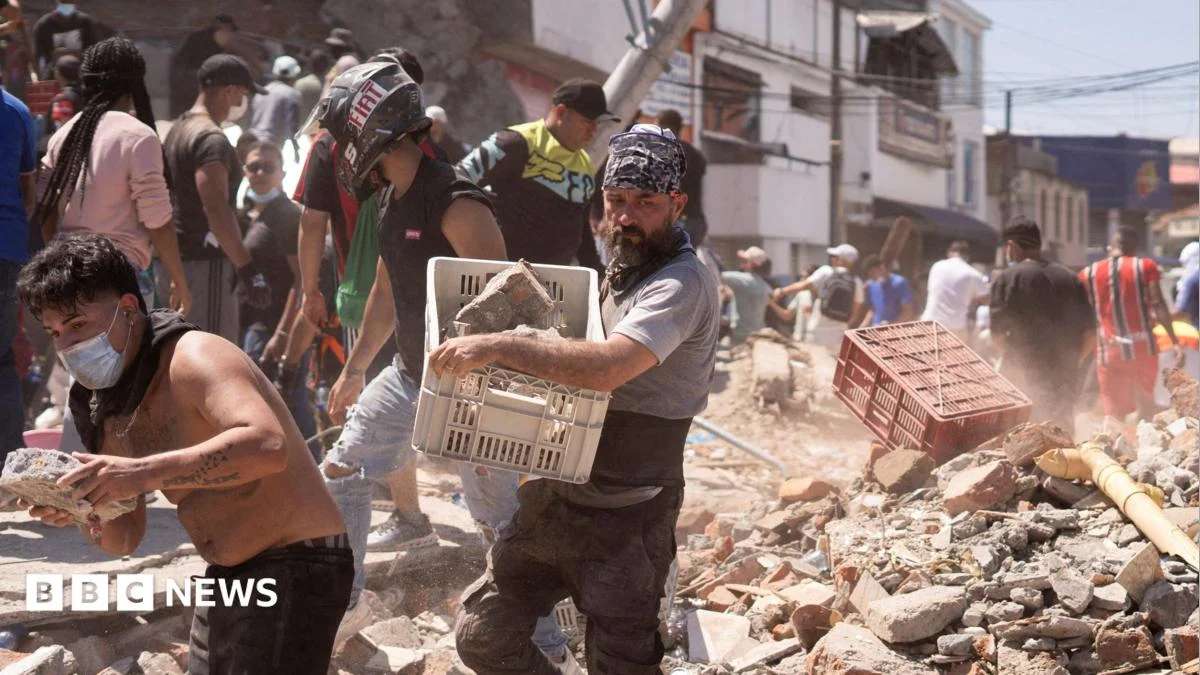
At least 132 people are confirmed dead and a national state of disaster has been declared following one of Colombia’s most powerful earthquakes in recent memory. The devastating magnitude 7.4 tremor, which struck at a significant depth of 103 kilometers (64 miles), has left an indelible mark on the nation, with authorities bracing for the possibility that the death toll will continue to climb as rescue efforts intensify and more individuals are feared to be trapped beneath the rubble of collapsed structures. The geological service reported the quake occurred at 07:34 local time (12:34 GMT), sending powerful seismic waves across an expansive area of western Colombia, stretching for hundreds of miles and being felt from the bustling capital of Bogotá to neighboring countries.
The brunt of the fatalities has been concentrated in the city of Pereira, a vital hub within Colombia’s renowned coffee-growing region, but the impact has been widespread, with surrounding cities and the Valle del Cauca region also experiencing severe damage and loss of life. While the earthquake’s epicenter was located near the remote village of San José del Palmar in Chocó province, local authorities reported a remarkable absence of casualties or injuries in the immediate vicinity, despite significant damage to the roads providing access to the area. However, the wider impact has been catastrophic, with Colombia’s Association of Capital Cities updating figures to indicate over 480 people sustained injuries in the aftermath of the seismic event.
The city of Pereira, situated approximately 55 kilometers (34 miles) from the earthquake’s epicenter, bore witness to some of the most harrowing scenes of destruction. Verified footage shared with the BBC vividly depicts the terrifying moment a building crumbled in Plaza Bolívar, the city’s central square, blanketing the open space in a thick cloud of dust and debris where many had gathered. Local officials have confirmed at least 40 deaths within Pereira’s metropolitan area alone, alongside the devastating collapse of 65 buildings. The grim reality of the situation is underscored by the belief that people remain trapped within at least 15 of these pancaked structures. In response to the escalating crisis, a curfew has been imposed in several parts of the city, scheduled to remain in effect until 05:00 local time on Tuesday, aiming to facilitate rescue operations and maintain order.
Further south, the city of Cali, located approximately 160 kilometers (100 miles) from Pereira and about 200 kilometers (124 miles) from the epicenter, reported the collapse of thirty-two buildings. Amidst the chaos, Dan Cutler, a 29-year-old Londoner on an extended trip with his partner, recounted his terrifying experience in Cali. "I’ve never experienced anything like it," he told the BBC, describing how he and his partner "sprinted outside in our pyjamas" when the earth began to shake. While his hotel sustained no major structural damage, he noted visible surface cracks in the walls and peeling paint and plaster, stark reminders of the immense force that had been unleashed.
Tragically, reports of fatalities have also emerged from other significant urban centers, including Manizales, Quibdó, and Medellín, as well as across the Chocó and Valle del Cauca regions. In Manizales, at least two people have lost their lives. Angélica Ávila, who was staying in a hotel in the city, shared her harrowing account with BBC World Service, describing how cracks snaked across the walls as the earthquake struck. "Everyone was screaming… I saw dust coming out of the neighbouring buildings, and bricks were falling off the walls," she recounted, painting a vivid picture of the panic and terror.
Luis Felipe Molina, a journalist and meteorologist based in Manizales, was at his home, roughly 150 kilometers from the epicenter, when the earthquake hit. He explained that due to the city’s history with seismic activity, "very strict seismic-resistant building regulations" are in place, which likely contributed to his building’s ability to withstand the impact. Despite this, the sheer force of the tremor was undeniable. "I have 450 books and only a few were left standing on the shelves. You could hear glass breaking and people screaming," he told BBC Mundo, summarizing the experience as "a terrible and terrifying experience."
The country’s aviation authority has confirmed damage to several regional airports, including those in Pereira, Manizales, Quibdó, Armenia, Cartago, and Buenaventura, further complicating relief efforts and essential travel. In the capital, Bogotá, the shaking was palpable, with trees and traffic lights swaying violently. While reports indicated cracks in some buildings, there have been no immediate reports of significant damage to the city’s critical infrastructure. The tremors were so powerful that they were felt as far away as neighboring Venezuela, Ecuador, and Panama, underscoring the immense scale of the seismic event. This devastating earthquake comes less than two months after twin quakes ravaged the north of Venezuela, resulting in a tragic loss of over 6,300 lives, a stark reminder of the region’s vulnerability to seismic activity.
In response to the unfolding crisis, Colombia’s President Abelardo de la Espriella has declared a national disaster situation. This declaration grants the government special powers to effectively manage the emergency response, including the authority to reallocate budgets as needed. For President de la Espriella, who only assumed office on Friday, this earthquake presents an immediate and potentially legacy-defining challenge. Beyond the tragic loss of life, he confirmed that over 1,500 homes have been damaged, adding to the immense scale of the humanitarian crisis.
As the full extent of the devastation begins to emerge, international leaders have swiftly come forward to offer their support and solidarity. U.S. Secretary of State Marco Rubio stated that his government is "closely monitoring" the earthquake and stands "ready to support," while EU chief Ursula von der Leyen confirmed that the EU’s Copernicus satellite is being deployed to assist in the rescue and assessment operations. The President of El Salvador, Nayib Bukele, extended a message of solidarity to the Colombian people and generously offered personnel and equipment to aid in rescue efforts.
According to the U.S. Geological Survey, an estimated 1.5 million people experienced shaking close to magnitude seven. The agency noted that while deep earthquakes, such as the one that struck Colombia, are generally less destructive than those occurring closer to the Earth’s surface, they can still release immense energy in a manner that severely damages buildings. These deeper quakes can also result in fewer, but potentially stronger, aftershocks, posing a continued threat to affected regions. The resilience and spirit of the Colombian people will undoubtedly be tested in the coming days and weeks as they confront this immense tragedy and begin the arduous process of recovery and rebuilding.


 Nakalama John
 Ramos Leo
 Nana Banana