
 Nana Banana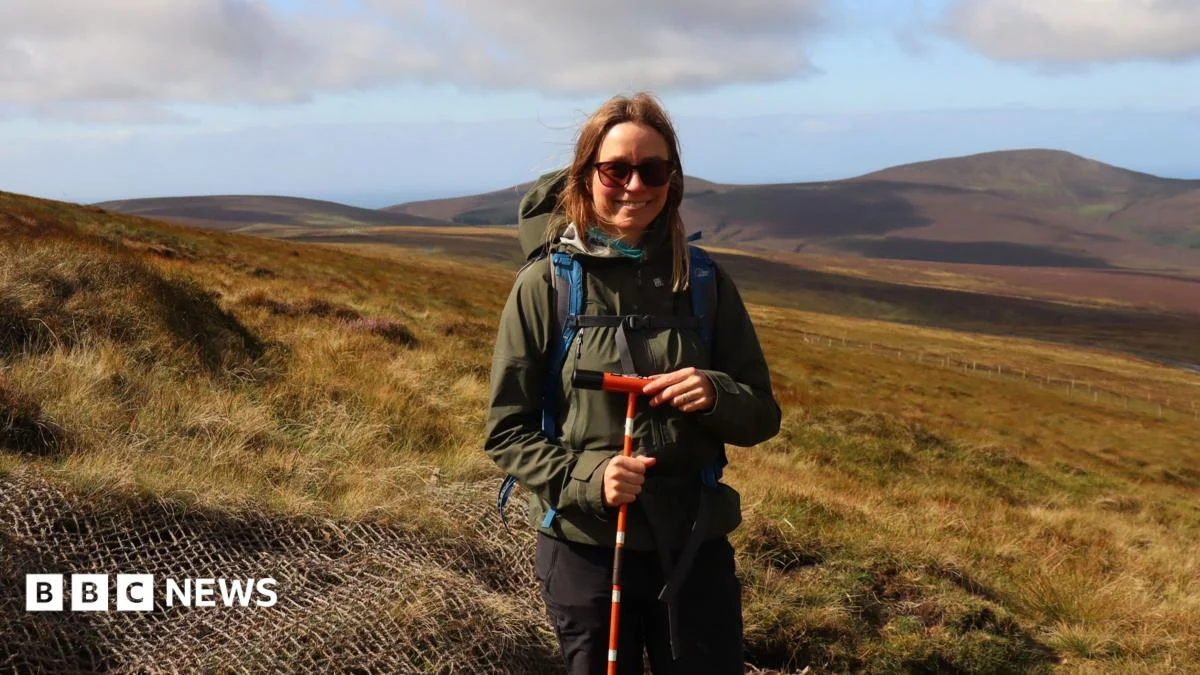
High up on a Manx hillside, Sarah Hickey effortlessly pushes a metre-long metal rod into the wet ground until it disappears almost to her hands. The cool, damp earth yields easily, a testament to the accumulated millennia beneath her boots. "This is pretty deep here," she says, her voice measured as she reads the etched markings on the probe, indicating a substantial peat deposit. This rich, dark material, built up over thousands of years from partially decayed plants and organic matter, forms the very foundation of the island’s unique upland ecosystems. Hickey, the island’s dedicated Peatland Officer, is part of a small but vital Uplands team of just three, who collectively manage approximately 8,000 hectares of the Island’s rugged hills. Her critical job is to meticulously identify the parts of this vital landscape that have suffered damage, often over centuries, and then to painstakingly inject new life back into them, one painstaking metre at a time.
Peat is not merely soil; it is a unique geological archive and an unparalleled ecological asset. Formed in waterlogged conditions where decomposition is slowed, it accumulates over centuries, layer upon layer, storing more carbon per unit area than any other terrestrial soil on Earth, including forests. Globally, peatlands cover only 3% of the Earth’s land surface but hold twice as much carbon as all the world’s forests combined. "It’s important to keep that carbon locked away and not released to the atmosphere," Hickey emphasizes, highlighting the critical role these bogs play in mitigating climate change. When healthy and wet, peatlands act as massive carbon sinks, absorbing and retaining atmospheric carbon dioxide. However, when they dry out or are damaged, this ancient carbon is exposed to oxygen, leading to its rapid decomposition and release back into the atmosphere as potent greenhouse gases, primarily CO2.
Much of that precious carbon has indeed stayed locked away within the Isle of Man’s high bogs, but not all of it. The island’s uplands bore the brunt of human activity for centuries. By the 17th century, the island was largely stripped of its native trees, a consequence of shipbuilding, fuel demands, and agricultural expansion. With little timber left to burn, Manx islanders, driven by necessity, turned to the hills for an alternative fuel source. Peat became the lifeline. Generations extracted it, cutting the dense, fibrous material into rectangular blocks known as ‘turf’ or ‘peat sods.’ These blocks would then be carefully stacked in distinctive pyramidal formations to dry in the wind and sun, a practice that shaped the very landscape. Peat made a good, slow-burning fuel, providing essential heat for homes and cooking fires across Manx households for generations, becoming deeply embedded in the island’s cultural heritage and economic survival.
The pervasive practice of peat cutting, while historically crucial, left an enduring scar on the landscape. The bare faces that cutting left behind were not merely aesthetic blemishes; they initiated a cascade of environmental problems. Without the protective layer of vegetation and the intricate root systems that bind the soil, these exposed peat banks began to collapse and erode. Rainwater, instead of being slowly absorbed and filtered, would carve channels through the exposed peat, washing sediment down the hillsides. This not only stripped away more of the precious carbon-rich material but also choked the island’s waterways and reservoirs with silt, impacting water quality and increasing the risk of flash flooding downstream. Recognising the severe ecological damage and the urgent need to protect these vital carbon stores, the practice of commercial peat extraction was finally banned on the Isle of Man in 2020, marking a significant shift in environmental policy and a commitment to restoration.
The repairs now underway are a testament to meticulous planning and a deep understanding of bog ecology. The process starts with a specialized, light-footed digger, chosen specifically for its ability to traverse the delicate terrain without causing fresh damage. This machine carefully pulls the bare, eroded peat back to a gentler, more stable slope, mimicking natural contours. Crucially, it then folds existing vegetation—often hardy grasses and heather from the adjacent, healthier areas—over the newly shaped peat. This immediate covering provides a crucial protective layer, shading the exposed ground and offering a nascent structure for recovery. What remains exposed is then protected with biodegradable coir logs, often made from coconut fibre, which are laid along the contours to slow water flow and trap sediment. These logs are then held down under a protective netting, which further stabilises the ground, keeps it shaded and damp, and creates the ideal microclimate for new vegetation to take hold, preventing desiccation and wind erosion.
However, the true engineer of a healthy, functioning bog, experts universally agree, is sphagnum moss. This remarkable plant is not just a component of peatland habitats; it is the very architect of them. "It grows in peatland habitats, but it also creates them," Hickey explains, underscoring its pivotal role. Sphagnum moss possesses an extraordinary ability to hold huge amounts of water – up to 20 times its dry weight. This incredible water retention capacity is what makes it so vital. As rain falls, sphagnum acts like a giant sponge, slowing its movement downhill, significantly reducing the speed and volume of water runoff, which in turn mitigates flooding risks in lower-lying areas. Furthermore, as water slowly percolates through the sphagnum matrix, it filters out sediment and pollutants, ensuring cleaner water reaches the island’s reservoirs.
Beyond its hydrological prowess, sphagnum moss offers another critical benefit: fire resistance. Peat in good condition, saturated with water and dominated by sphagnum, can be up to 90% water. This makes it incredibly difficult to ignite and prevents wildfires from spreading deep into the carbon-rich peat layers, where they can smoulder for weeks or even months, releasing vast quantities of carbon dioxide. This characteristic is increasingly important as climate change brings more frequent and intense summer droughts, making wildfires a growing threat to vulnerable upland ecosystems. The reintroduction and encouragement of sphagnum growth are therefore central to building resilient, climate-proof peatlands that can withstand future environmental challenges.
The dedicated work of Sarah Hickey and the Uplands team is more than just ecological restoration; it’s an investment in the Isle of Man’s future. Managing 8,000 hectares of diverse upland terrain, from heather moorland to deep peat bogs, requires a broad skill set, from ecological surveying and hydrological assessment to heavy machinery operation and community engagement. Their daily challenges involve navigating remote, often difficult terrain, adapting restoration techniques to specific site conditions, and patiently nurturing fragile ecosystems back to health. Their unwavering commitment ensures that the island’s natural heritage is preserved and enhanced for generations to come.
This local effort on the Isle of Man resonates with a global movement to restore peatlands, recognised as one of the most cost-effective nature-based solutions to climate change. The island’s commitment to halting peat extraction and actively restoring its bogs aligns with international conservation goals and its own ambitious climate targets. Beyond carbon sequestration and water management, healthy peatlands also support unique biodiversity, providing habitats for specialised plants, insects, and birds that thrive in these rare environments. Public awareness campaigns and educational initiatives are slowly shifting perceptions, transforming peat from a historical fuel source into a cherished natural resource worthy of protection. The vision is for these ancient landscapes to not only continue their vital ecological functions but also to serve as living laboratories and tranquil havens for both wildlife and people, showcasing the power of restoration and the enduring value of nature. It is slow, muddy work, requiring patience, expertise, and a long-term perspective, but the payoff—a healthier planet and a more resilient Isle of Man—is immeasurable.




 Nakalama John
 atisusanti
 Ramos Leo
 Roy Suryo
 George Anjay