
 George Anjay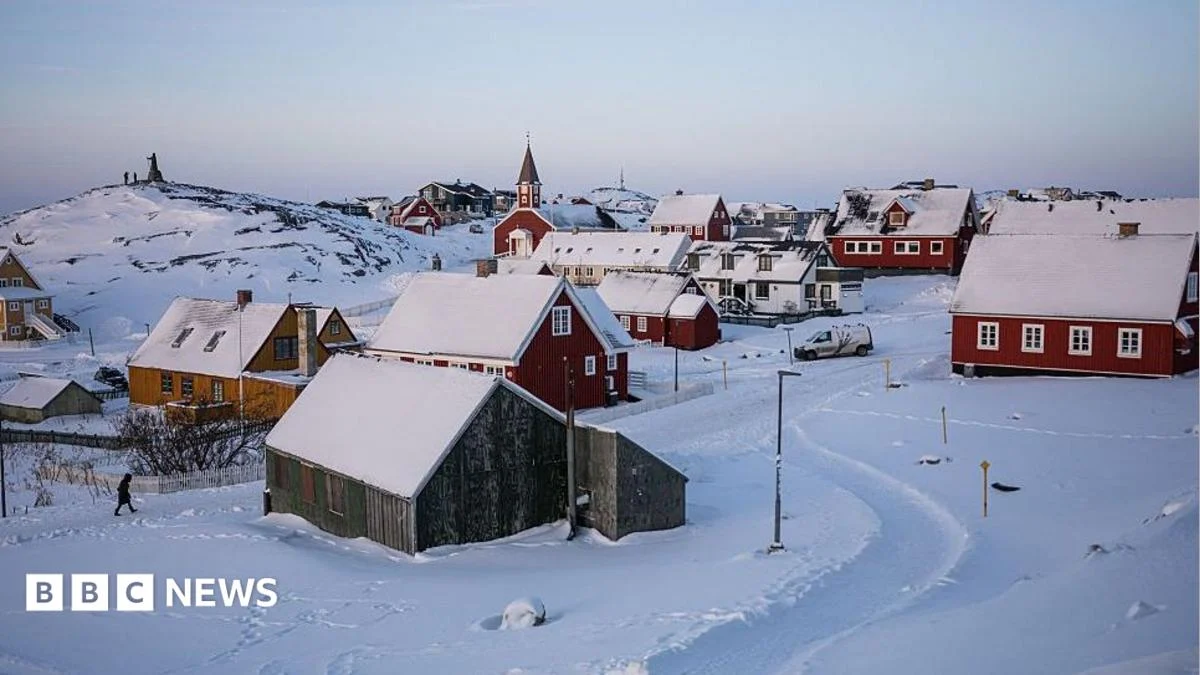
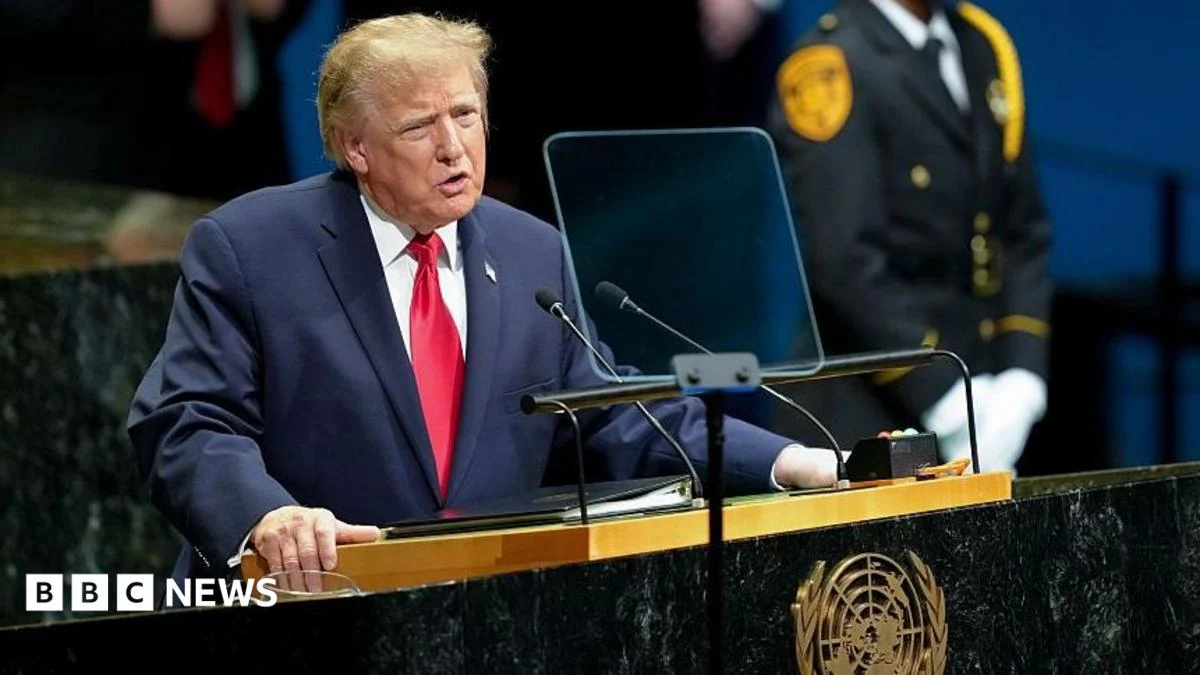
The United States, Denmark, and Greenland have formalized a significant defense agreement, paving the way for Washington to establish two new military bases within the strategically vital Arctic territory. This accord, inked at the United Nations General Assembly in New York, not only bolsters U.S. military infrastructure but also unequivocally reaffirms Denmark’s sovereignty over Greenland, effectively resolving a period of considerable diplomatic tension. U.S. President Donald Trump, speaking prior to the signing ceremony, declared, "We will immediately begin the process of developing a large military presence in the appropriate locations," signaling a swift commencement of construction and deployment.
Danish Prime Minister Mette Frederiksen characterized the deal as mutually beneficial, stating it was "good for the U.S., Denmark and Greenland" and, by extension, for the broader European continent and NATO. Echoing this sentiment, Greenland’s Prime Minister Jens-Frederik Nielsen described the agreement as a "win-win-win," highlighting the collaborative spirit and shared benefits. The signing by the three leaders marked a conclusive end to over a year of strained relations, which had been exacerbated by President Trump’s earlier, highly controversial proposals to acquire Greenland.
Trump’s previous pronouncements, which included threats to "take" the semi-autonomous Arctic territory, were publicly justified by him on grounds of national security, citing Greenland’s crucial strategic defense positioning and its rich mineral resources. These remarks, however, ignited widespread criticism from Greenlanders, Danes, and European leaders alike, who issued a joint statement condemning his words as undermining transatlantic relations and risking a "dangerous downward spiral." The newly signed defense pact serves as an amendment and update to the foundational 1951 defense agreement between Denmark and the United States, modernizing the bilateral security framework for the 21st century.
The new pact explicitly permits the U.S. "to establish an additional Defence Area at Narsarsuaq and Mestersvig." These locations, situated in Greenland’s southern and eastern regions respectively, hold distinct strategic importance. Narsarsuaq, a site with a history as a former civilian airport and a World War Two military base, boasts deep-water access and a substantial runway, features that U.S. military engineers have recently been surveying, as confirmed by the U.S. North Command. Mestersvig, in contrast, is a more remote and less developed outpost, currently utilized by a Danish naval dog sled unit, underscoring the diverse operational needs the new bases are intended to serve.
Crucially, the agreement stipulates that the "modalities and technical details" of these new bases are yet to be finalized and will require the mutual consent of all three parties. This provision ensures that U.S. security arrangements are not unilateral and that Greenland and Denmark retain significant oversight and approval rights. Washington currently operates its existing Pituffik Space Base in Greenland’s northwest. The new deal not only permits the continuation of operations there but also allows the U.S. to "modernize and expand its activities" at the facility, further enhancing its capabilities in the region.
A significant clause within the agreement explicitly bars any nation not affiliated with NATO from establishing military installations, whether manned or unmanned, in Greenland, and also prohibits such states from maintaining a persistent military presence. While the presence of non-Nato troops in Greenland was already highly improbable, this explicit exclusion solidifies the region’s alignment with the Western military alliance. Importantly, the agreement makes no territorial concessions to the United States. Instead, it unequivocally recognizes both Denmark’s "sovereignty and territorial integrity" and Greenland’s inherent right to self-determination.
From a U.S. perspective, this outcome represents a substantial diplomatic achievement, particularly when viewed against President Trump’s earlier aspirations to acquire the Arctic island. While the rhetoric of acquisition has been set aside, the deal secures a significantly strengthened U.S. military presence and expands upon the existing defense cooperation, which many in American strategic circles will perceive as a historic win. However, the agreement is not yet fully ratified; it requires the approval of both the Danish and Greenlandic parliaments before it can be formally implemented.
Despite the months of diplomatic friction that preceded this accord, the atmosphere at the signing ceremony in New York was notably optimistic and cordial. President Trump expressed his confidence in a robust future relationship, stating, "We’re going to have a tremendous relationship, a secure relationship." He further emphasized the broad positive implications, remarking, "This is tremendous for Europe and for the United States, for everybody, and for Greenland it’s going to be incredible."
Prime Minister Frederiksen echoed this positive outlook, describing the signing as a "milestone in our long-standing co-operation." She reflected on the historical context, noting, "Seventy-five years ago we entered into an agreement about the defence of Greenland. Today, we’re signing an even bigger and better agreement – a deal that can last forever." She reiterated the core principles of the agreement, stressing that it "respects sovereignty and territorial integrity of the Kingdom of Denmark, as well as Greenland’s right to self-determination."
Greenland’s Prime Minister Nielsen articulated the significance of the deal from his nation’s perspective: "For Greenland, it is not only an agreement about us, it is [an] agreement with us." He highlighted that the pact "takes into account the people of Greenland, our rights, our livelihoods and the development of our country." Nielsen underscored Greenland’s geopolitical relevance, stating, "Greenland matters for North American security and for transatlantic security," and acknowledged NATO’s pivotal role in the North Atlantic amidst evolving security landscapes. The agreement also includes a provision confirming that Greenland would remain a member of NATO should it achieve independence from Denmark, a crucial element for maintaining regional security architecture.
The 1951 defense agreement already provided the U.S. with broad latitude to station troops in Greenland, and Washington currently maintains a contingent of over 100 military personnel permanently stationed at its Pituffik base. President Trump’s sustained efforts over several months to purchase or annex Greenland were driven by concerns about potential vulnerabilities to adversaries, specifically Russia and China. He had also posited the Arctic island as a critical component of his ambitious plan to develop a futuristic "Golden Dome" defense system designed to shield the U.S. from missile attacks. However, the new agreement mentions this specific project only once and does not contain any concrete proposals or commitments related to its development, indicating a more measured approach to future defense initiatives.
A NATO spokesperson promptly welcomed the deal, asserting that it would "help advance security, stability and cooperation in this vital region." Within Denmark, the agreement is being lauded as a diplomatic triumph, with several political parties signaling their support. For Greenland, a nation with a population of just 56,000, the resolution of the protracted crisis brought by President Trump’s earlier pronouncements offers a substantial cause for relief. The sight of its leader engaging directly with the world’s most powerful head of state and securing an agreement that promises an end to months of uncertainty is a significant diplomatic victory. The new framework, building upon decades of cooperation, solidifies Greenland’s strategic importance while respecting its autonomy and Denmark’s sovereignty, marking a new chapter in Arctic security cooperation.


 Nakalama John
 Ramos Leo

 atisusanti