atisusanti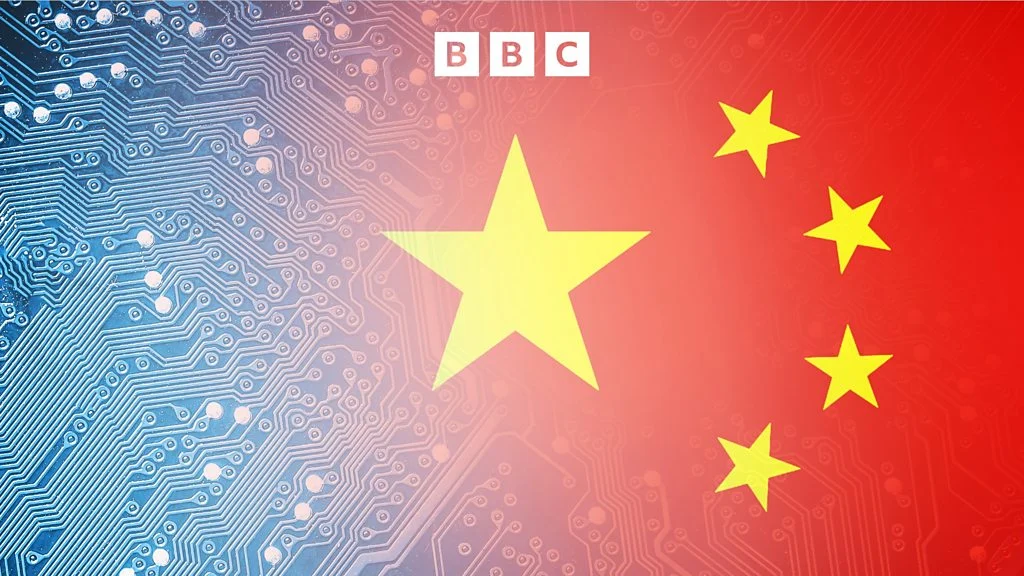
The landscape of Artificial Intelligence is a rapidly evolving frontier, and in recent years, China has emerged as a formidable contender, challenging established global leaders. This episode of BBC Sounds’ "Tech Life," titled "Gauging China’s AI Strength," delves into the intricate details of China’s advancements, the strategic thinking driving its ambitions, and the significant hurdles it must overcome to solidify its position on the world stage.
Presented by Chris Vallance and produced by Tom Quinn, the episode, released on September 22, 2026, offers a comprehensive 26-minute exploration of China’s AI prowess. The accompanying imagery, a compelling illustration of the Chinese flag superimposed over intricate electronic circuitry, by Getty Images, serves as a potent visual metaphor for the nation’s technological integration and global aspirations.
At its core, the program seeks to answer a critical question: How far has China truly come in its development of Artificial Intelligence? This isn’t a question with a simple yes or no answer. China’s journey into AI has been characterized by a dual approach: massive government investment and a burgeoning private sector, both fueled by an immense domestic market and a vast pool of talent. The government’s "Next Generation Artificial Intelligence Development Plan," launched in 2017, laid out an ambitious roadmap, aiming to make China a global leader in AI theory, technology, and application by 2030. This plan has spurred significant progress across various AI sub-fields, including machine learning, natural language processing, computer vision, and robotics.
The episode likely unpacks the key drivers behind China’s AI surge. One of the most significant is the sheer volume of data generated by its colossal population and its widespread adoption of digital technologies. This data is the lifeblood of AI algorithms, enabling them to learn, adapt, and improve at an accelerated pace. Furthermore, China’s state-backed approach has allowed for large-scale, coordinated efforts in areas like smart cities, surveillance, and autonomous systems, often surpassing the pace of development in more privacy-conscious Western nations. Companies like Baidu, Alibaba, and Tencent have become AI powerhouses in their own right, investing heavily in research and development and integrating AI into their vast ecosystems of services.

However, the "Tech Life" episode also acknowledges the substantial challenges that China faces in its quest for AI supremacy. While China excels in AI application and data utilization, questions persist regarding its fundamental research capabilities and its ability to innovate at the foundational level. The dependency on foreign-made high-end semiconductors is a prime example of this vulnerability. Recent geopolitical tensions and export controls have highlighted the critical need for China to develop its own indigenous semiconductor industry, a monumental task that requires years of sustained investment and breakthrough innovation. Without this self-sufficiency, China’s AI ambitions could be hampered by supply chain disruptions and technological bottlenecks.
Another critical aspect likely explored is the ethical and societal implications of China’s AI development. The widespread deployment of facial recognition technology, AI-powered social credit systems, and sophisticated surveillance mechanisms raises significant concerns about privacy, civil liberties, and the potential for misuse. The episode may touch upon how these ethical considerations are being addressed, or perhaps, how they are being navigated within China’s unique sociopolitical context. The global perception of China’s AI development is also a factor, with international scrutiny on its technological advancements and their potential implications for global security and economic competitiveness.
Beyond the overarching theme of China’s AI strength, the episode broadens its scope to encompass other fascinating developments in the world of technology. The mention of "fifty thousand autonomous machines" hinting at the future of robotics suggests an exploration into the burgeoning field of swarm robotics or large-scale autonomous systems. This could involve discussions on applications ranging from logistics and manufacturing to environmental monitoring and disaster relief. The potential for such vast numbers of interconnected machines to revolutionize industries and reshape our interaction with the physical world is immense.
Furthermore, the inclusion of how "cutting edge tech helps cricket reach new audiences" demonstrates the program’s commitment to showcasing the diverse applications of technology in everyday life and niche sectors. This segment could highlight innovations in sports analytics, broadcast technology, virtual reality fan experiences, or even AI-powered coaching systems, illustrating how technology is not only driving global power dynamics but also enhancing cultural experiences and democratizing access to information and entertainment.
In essence, "Gauging China’s AI Strength" on BBC Sounds’ "Tech Life" promises to be an insightful and multifaceted exploration. It aims to provide listeners with a nuanced understanding of China’s impressive strides in Artificial Intelligence, while simultaneously acknowledging the complex challenges and ethical considerations that accompany its ascent. By examining both the macro-level geopolitical implications and the micro-level technological innovations, the episode offers a vital perspective on the future of AI and its profound impact on our interconnected world. The program’s website, linked as "Programme Website," likely offers further resources and context for those eager to delve deeper into these compelling topics. The availability of "More episodes" suggests a broader series dedicated to exploring the ever-evolving landscape of technology.




 George Anjay
 Nakalama John
 Ramos Leo