Nana Banana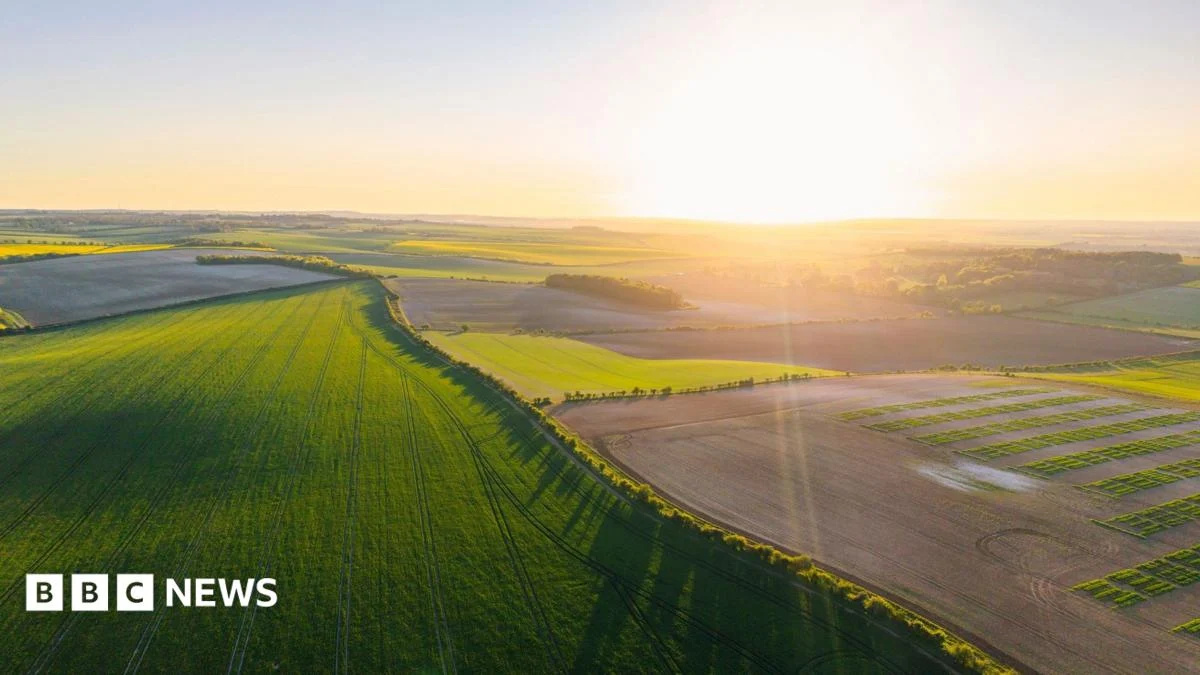
Robyn Munt, NFU vice-president, articulated the sentiment of many farmers, stating, "The rapid uptake of the scheme comes as no surprise. Its closure in less than six hours shows the scale of demand there is from farmers to deliver for the environment and to invest in farm resilience." This unprecedented speed of allocation highlights a critical disconnect between the evident need on the ground and the resources made available. For farmers already grappling with significant economic pressures – including soaring input costs, inflationary pressures, and the ongoing transition away from direct payments post-Brexit – the closure represents another layer of uncertainty. Munt further emphasized, "The current cashflow pressures facing farmers and growers only exacerbates that demand as they look for certainty and clarity for the year ahead." This financial precariousness means that access to schemes like the Sustainable Farming Incentive (SFI) is not merely an optional bonus but a vital lifeline for maintaining operations and planning for future sustainability.
The stark reality of the situation was vividly captured by Vicki Hird, agriculture lead at the Wildlife Trusts, who lamented that "the scramble for green farming schemes was worse than the dash for Oasis tickets." This potent analogy underscores the sheer desperation and competitive pressure faced by farmers, differentiating it from a pursuit of leisure. While a missed concert ticket is a disappointment, a missed funding opportunity can have profound implications for a farmer’s livelihood, their ability to invest in sustainable practices, and ultimately, the health of the environment they manage. Hird unequivocally added, "The budget has been inadequate for far too long and the Treasury must recognise this and allocate far greater funds to ensure climate resilience in farming in the next budget." Her comments point directly to the Treasury as the ultimate arbiter of agricultural funding, urging a strategic re-evaluation of financial priorities to address the escalating challenges posed by climate change.
The SFI scheme is not just another government initiative; it is a cornerstone of the UK’s post-Brexit agricultural policy, designed to reward farmers for delivering environmental benefits alongside food production. It is considered vital for many farmers who have proactively turned large swathes of their land over to nature-friendly schemes. These crucial initiatives include planting hedges, which create vital wildlife corridors and reduce soil erosion; creating wildflower margins, which support pollinators and boost biodiversity; and implementing practices that protect and enhance soil health, a fundamental component of sustainable agriculture and carbon sequestration. The environmental benefits are manifold, ranging from improved water quality and flood mitigation to enhanced biodiversity and carbon capture, all contributing to national environmental targets.
The memory of past missteps loomed large over the latest funding window. When the scheme was suddenly closed without notice last year, it sent shockwaves through the farming community. There were genuine concerns that some farmers, having already invested time, effort, and resources into environmental work, might be forced to abandon these crucial initiatives if they could not access the promised payments. This previous closure bred distrust and heightened anxiety, meaning that demand for Tuesday’s scheme was not just high but intensely anticipated, creating an atmosphere of frantic urgency from the moment it opened. The government, therefore, had ample warning that demand would be overwhelming, yet the allocated budget appears to have been woefully insufficient to meet this predictable surge.
The Nature Friendly Farming Network (NFFN), a leading organisation dedicated to assisting farmers in managing land in environmentally responsible ways, joined the chorus of criticism. They condemned the "frantic scramble" and highlighted that farmers had "faced a desperate race against time" to secure their funding agreements. Martin Lines, a Cambridgeshire arable farmer and the lead for the NFFN, articulated the widespread frustration, stating, "This entire SFI system, with windows opening and closing within a few hours, isn’t fit for purpose." His critique goes beyond mere budget shortfalls, questioning the fundamental design of the scheme itself. Lines advocated for a more stable and predictable approach, emphasizing the need for "a better way based on continuous, whole-farm agreements, not doors that slam shut on day one because the money has already gone." Such a system would allow farmers to plan long-term, integrate environmental practices more holistically into their operations, and avoid the current stop-start, high-stress application process.
Lines further underscored the pressing context in which farmers operate, pointing out that "after years of extreme weather, many farmers were relying on the funding to help adapt their farms to climate change and become more resilient." The impacts of climate change, from prolonged droughts and severe flooding to unpredictable temperature swings, are already taking a heavy toll on agricultural productivity and farm infrastructure. Funding from schemes like SFI is critical for investments in water management systems, drought-resistant crop varieties, improved drainage, and soil carbon sequestration, all of which are essential for building climate resilience and ensuring future food security. Without consistent access to such financial support, the agricultural sector’s capacity to adapt to a changing climate is severely hampered.
In response to the widespread outcry, the Department for Environment, Food and Rural Affairs (Defra) offered a lukewarm assurance, stating it would provide further information on future opportunities for funding applications in 2027 "soon." This three-year waiting period for clarity on future funding is a source of considerable concern for farmers who require short-term stability and long-term planning certainty. A Defra spokesperson attempted to justify the recent allocation, stating, "This year we ensured small farms and those new to SFI were prioritised – with an exclusive first window in the summer." While this intent may be commendable, it clearly did not alleviate the immense pressure on the main funding window. The spokesperson also noted, "In anticipation of high demand in the second window, ministers decided to allocate an additional £20m to the fund, on top the £50m announced by the prime minister in August, so that we could fund as many agreements as possible." This combined £70m, however, stands in stark contrast to the estimated £233m demand for funding, highlighting a colossal deficit that left the majority of applicants disappointed.
Farming Minister Stephen Morgan added to Defra’s defence, asserting that the SFI had been designed to be simpler to apply for and that farmers had "responded in force." While a simpler application process is undoubtedly welcome, its efficacy is undermined if the scheme is chronically underfunded, merely accelerating the rate at which an inadequate budget is exhausted. Morgan concluded, "This is a scheme that works for farmers, backs food production, and delivers practical, sustainable land management, supporting the aims of our farming roadmap, our long-term plan for English farming." However, for the vast majority of farmers who were unable to secure funding, the assertion that the scheme "works for farmers" rings hollow. A scheme that generates intense competition and then slams its doors shut within hours cannot be said to provide the stability and support necessary to genuinely back food production or deliver long-term sustainable land management.
The current situation exposes fundamental flaws in the UK’s post-Brexit agricultural transition. The shift from the EU’s Common Agricultural Policy (CAP), which provided direct payments, to the Environmental Land Management (ELM) schemes, including SFI, was intended to deliver greater environmental benefits. However, if the flagship schemes are perpetually underfunded and prone to rapid closures, the entire vision for a greener, more resilient farming sector is jeopardised. This instability not only undermines the livelihoods of individual farmers but also threatens the UK’s ambitious environmental targets for biodiversity recovery and net-zero emissions. Furthermore, by creating such uncertainty, the government risks alienating the very farmers whose cooperation is essential for achieving national food security in an era of increasing climate volatility. The "scramble for Oasis tickets" is not just a catchy phrase; it’s a symptom of a systemic issue that demands urgent and comprehensive reform to ensure a stable, adequately funded, and genuinely sustainable future for English farming.


 Roy Suryo
 Nakalama John
 George Anjay