
 Nakalama John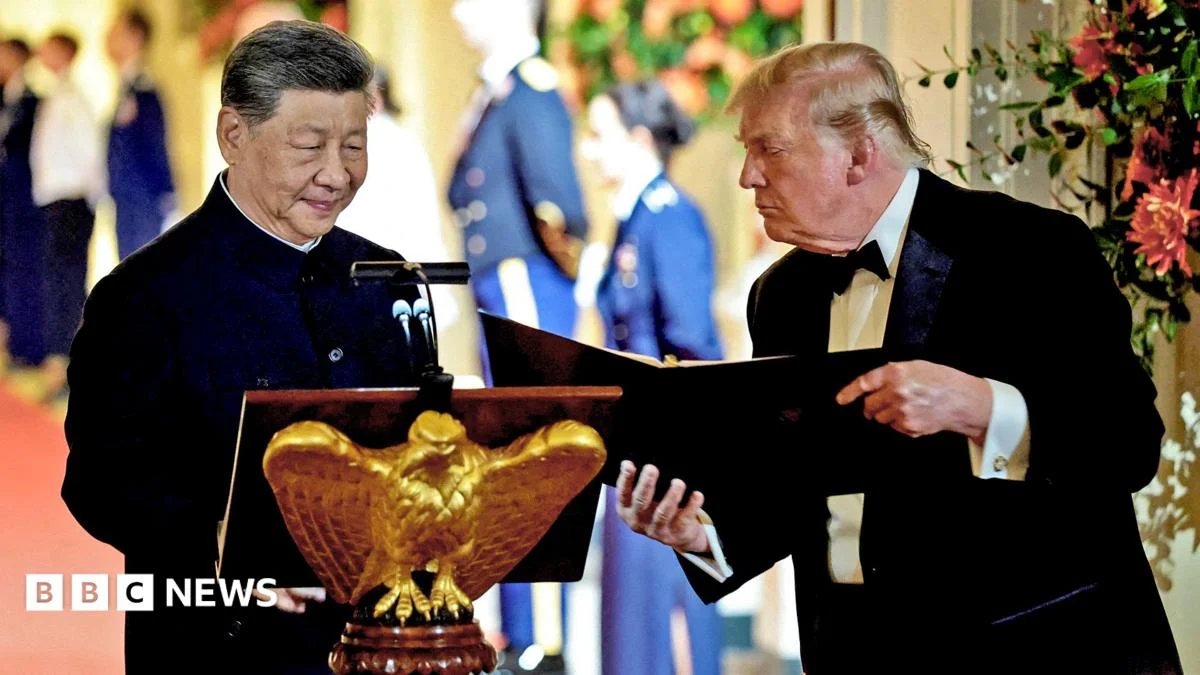
President Xi Jinping, in his remarks, emphasized the critical need for both countries to ensure that artificial intelligence remains "under human control" and to act "as responsible major countries." This call for human oversight in AI development resonates globally, highlighting a burgeoning concern about the ethical implications, autonomous weapons systems, and the societal impact of advanced AI. Xi’s statement can be interpreted as an overture for collaboration on global AI governance, or perhaps as a subtle assertion of China’s intent to shape future international norms in a field where it seeks global leadership. His broader appeal for the US and China to act as "responsible major countries" underscored Beijing’s vision for a multipolar world where its growing influence is acknowledged and respected, implicitly calling for a partnership in managing global challenges rather than a confrontational rivalry.
President Trump, in his turn, toasted a future of "harmony, peace and success" for both nations, portraying a vision of amicable coexistence despite the historical and ideological divergences. He lavished praise on his Chinese counterpart, telling those attending the dinner that while the two countries had "different systems," they had "never gotten along better." This rhetoric, while perhaps designed to project an image of successful diplomacy and personal rapport, often stood in stark relief against the daily realities of fierce economic competition and strategic distrust that characterize the bilateral relationship. It represented a desire to project stability and a functional working relationship, even as substantive breakthroughs remained elusive.
Despite these diplomatic overtures and the convivial atmosphere, tensions remained palpably beneath the surface. One of the most contentious issues centered on Taiwan, the self-governing island that Beijing considers an inseparable part of its territory, to be reunified with the mainland, by force if necessary. Earlier in the day, Xi had urged Trump to take the "correct position" on Taiwan, a clear demand for Washington to cease its support for the democratic island. This appeal came amid reports of a paused US weapons package intended for Taiwan, a move that would have been seen as a significant concession by the Trump administration to Beijing’s demands. The US maintains a "One China" policy, acknowledging Beijing’s claim but also historically providing Taiwan with defensive capabilities under the Taiwan Relations Act, a delicate balance that often irritates Beijing and complicates cross-strait relations. Any perceived shift in US policy, such as pausing arms sales, carries immense symbolic and strategic weight, impacting regional stability and Taiwan’s security.
Beyond Taiwan, little to no explicit mention was made of other key issues that fundamentally divide the leaders of the world’s two most powerful countries. China firmly believes the United States is strategically trying to contain its rise as a global superpower, viewing Washington’s actions through a lens of suspicion and a perceived effort to thwart its "national rejuvenation." Consequently, Beijing wants Washington to stay out of its way, particularly when it comes to critical domains such as trade, technology, and its territorial claims in the South China Sea.
In the realm of trade, the US-China relationship has been fraught with disagreements over tariffs, market access, intellectual property theft, and China’s state-subsidized industries. American businesses frequently complain about unfair trade practices, forced technology transfers, and non-tariff barriers that hinder their ability to compete fairly in the Chinese market. The substantial trade deficit that often favors China has been a persistent point of contention for successive US administrations, including Trump’s, leading to trade wars and ongoing negotiations.
Technological rivalry represents another critical battleground. The race for global technological supremacy, particularly in areas like 5G infrastructure, artificial intelligence, semiconductors, and quantum computing, has intensified. The US has expressed concerns over China’s cyber espionage, intellectual property theft, and the security risks posed by Chinese tech companies operating within American networks. China, in turn, views US restrictions on technology exports and investments as attempts to stifle its innovation and economic development. The future of global digital infrastructure and data security is deeply intertwined with how these two giants navigate their technological competition.
The evening instead marked a continuation of the lavish welcome Xi had so far received in the US, designed to project an image of strong diplomatic ties and mutual respect. The extravagant dinner drew an eclectic mix of guests, underscoring the complex web of political, economic, and social connections between the two nations. Trump presented the Chinese president with a sculpture of a bald eagle – America’s national symbol – saying it embodied "the free and soaring spirit of America." First Lady Melania had participated in its design, a personal touch meant to convey warmth and respect.
Others in attendance included key White House figures, such as Defence Secretary Pete Hegseth, chief of staff Monica Crowley, and Trump’s son-in-law Jared Kushner, signifying the highest levels of US government engagement. They were joined by scores of US officials, as well as influential conservative broadcasters, tech industry bosses, social media CEOs, and corporate executives, highlighting the broad spectrum of American interests invested in the relationship with China.
The guest list was particularly noteworthy for its concentration of tech luminaries. Apple’s Tim Cook and Nvidia’s Jensen Huang, whose companies have significant stakes in the Chinese market and supply chains, were seated at the same table as Trump and Xi. Their presence underscored the deep economic interdependence despite geopolitical tensions. Elon Musk, who previously worked in Trump’s administration leading the effort to shrink government, also attended, representing the cutting edge of American innovation and entrepreneurial spirit. OpenAI’s Sam Altman, Google’s Sundar Pichai, and Amazon’s Jeff Bezos were also present, alongside Mark Zuckerberg and Jeff Yass, the American billionaire who owns a significant share of TikTok. The gathering of these tech titans reflected the critical role of technology in the US-China dynamic, from trade and investment to national security and global influence. Their presence at such a high-level diplomatic event signals the intricate relationship between government policy, economic interests, and technological advancement in shaping international relations.
However, the meticulously curated spectacle of the state dinner was not without its dissonant notes. Their arrival at the White House was marked by protesters shouting from just outside the White House gates, some of whom were arrested. These demonstrators represented various causes, including human rights advocates highlighting China’s treatment of ethnic minorities in Xinjiang, political dissidents from Hong Kong, Tibetan independence activists, and Falun Gong practitioners. Their impassioned shouts served as a stark reminder of the human rights issues that often go unaddressed in high-level diplomatic exchanges, providing a poignant counterpoint to the "warm words" exchanged inside.
Xi, meanwhile, welcomed what he described as a "historic juncture" in US-China relations, asserting that both leaders’ ambitions could "surely be mutually reinforcing." He reiterated, "China and the United States must act as responsible major countries to meet the expectations of our peoples, keep pace with the trend of our times, and explore a new approach for major countries to get along with each other." This statement encapsulates China’s long-term strategic vision for a "new type of great power relations," one that seeks to avoid direct confrontation while challenging the existing US-led global order and establishing a more equitable distribution of power and influence.
Ultimately, the state dinner, while a significant diplomatic event, served more as a platform for symbolic gestures and aspirational rhetoric than for tangible breakthroughs. The warm words and lavish hospitality masked the deep-seated disagreements on critical issues that continue to define the US-China relationship. While the leaders expressed hope for a future of harmony, the fundamental divergence in their strategic interests and values ensures that progress on key issues like Taiwan, trade, and technology will remain slow, incremental, and hard-won. The evening highlighted the enduring paradox of US-China relations: a relationship characterized by both profound interdependence and intense strategic competition.


 George Anjay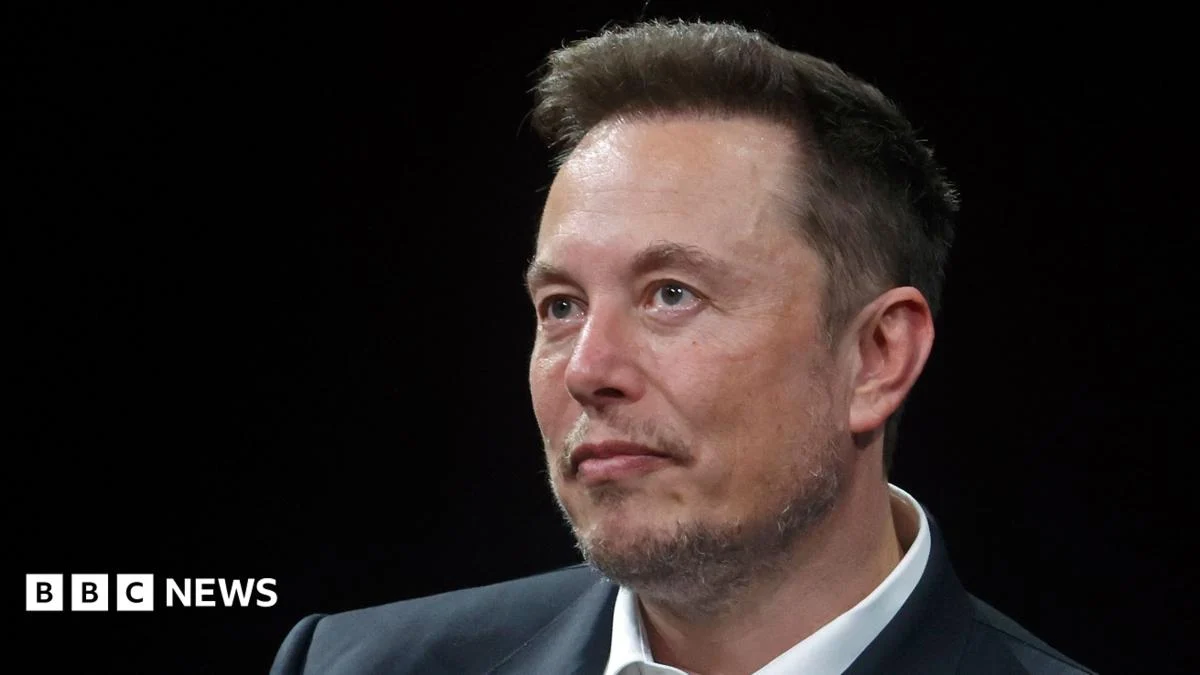
 atisusanti
 Ramos Leo
 Roy Suryo
 Nana Banana