
 atisusanti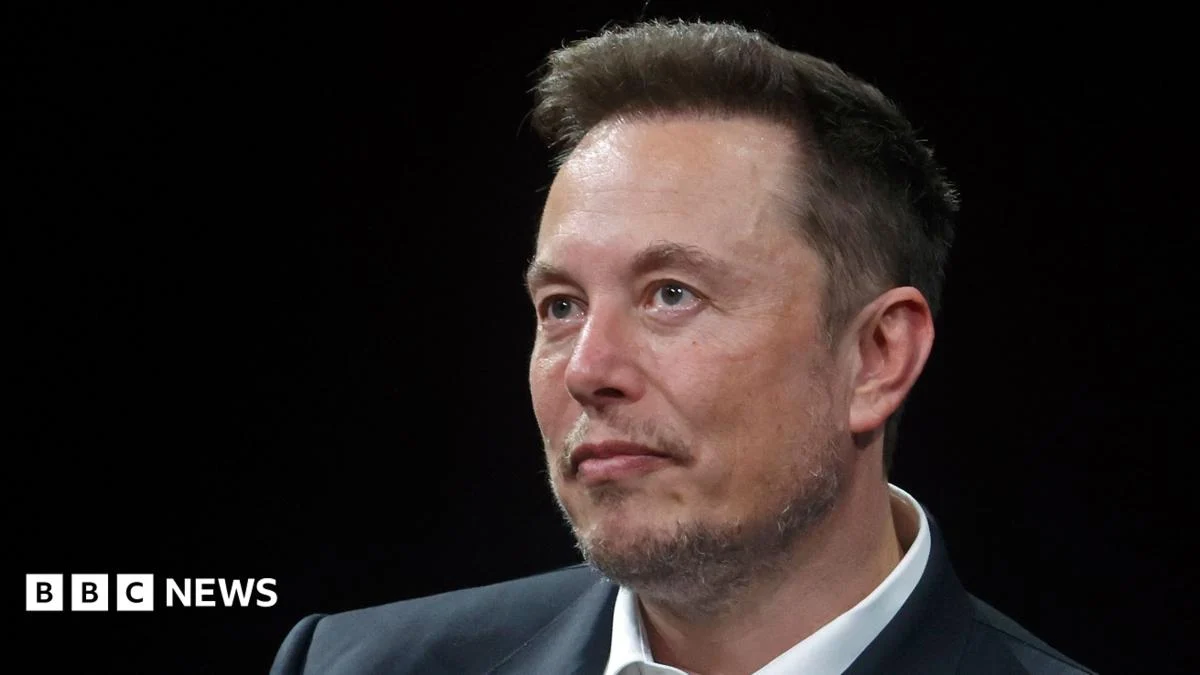
The United States government has officially thrown its weight behind Elon Musk’s legal battle to overturn a substantial €120 million (approximately £105 million) fine levied against his social media platform, X, by the European Union. This intervention marks a significant escalation in the ongoing dispute, positioning the US as a direct supporter of Musk’s challenge against EU regulatory actions. The core of the European Commission’s penalty, issued in December 2025, stems from its assertion that X "deceives users" by allowing individuals to pay for a blue verified check mark. The Commission argued that this practice is not indicative of genuine verification of the account’s owner, thus misleading the platform’s user base.
In a strongly worded statement, US Assistant Attorney General Brett A. Shumate articulated the US government’s stance, asserting that the European Commission had "inappropriately attempted" to extend its regulatory reach beyond its established jurisdiction and into the operations of American companies that operate largely outside of the EU’s direct control. This intervention is particularly noteworthy given Elon Musk’s prominent political leanings and his past financial support for Donald Trump and other Republican figures. Musk himself has been vocal in his criticism of EU tech regulations, frequently characterizing them as impediments to innovation and progress for companies operating in the digital sphere.
The US Department of Justice (DOJ) has formally submitted an application to the EU’s General Court, signalling its intent to intervene in the case brought forth by X Corp. and Elon Musk, which seeks to annul the aforementioned fine. This application is grounded in a specific provision of the Statute of the Court of Justice of the EU, which permits a state to intervene in legal disputes before the court if it can demonstrate a tangible "interest in the result of the case." The DOJ’s filing underscores the US government’s belief that it possesses a "clear interest" in ensuring that any decision made by the European Commission is applied in a manner that is consistent with the established principles of territorial jurisdiction within international law.
Furthermore, the US government aims to prevent any potential "prejudice" to American-headquartered digital services that make substantial contributions to the US economy. This concern reflects a broader anxiety within the US about the extraterritorial application of foreign regulations and their potential impact on American businesses. The European Commission has been approached for comment on this latest development, indicating that it has yet to formally respond to the US government’s intervention.
The €120 million fine is not solely related to the controversial blue tick badges. EU regulators also accused X of a broader pattern of non-compliance, including a failure to provide adequate transparency surrounding its advertising practices and a refusal to grant researchers access to crucial public data. At the time the fine was announced, Henna Virkkunen, the European Commission’s executive vice-president for tech sovereignty, declared that the Commission was "holding X responsible for undermining users’ rights and evading accountability." Virkkunen’s statement emphasized that practices such as "deceiving users with blue checkmarks, obscuring information on ads and shutting out researchers have no place online in the EU," thereby framing the action as a defense of fundamental online rights and standards.
The US response has been notably strong, with prominent figures in the American political landscape echoing concerns about the EU’s regulatory overreach. US Secretary of State Marco Rubio, alongside members of the Federal Communications Commission (FCC), had previously criticized the EU regulator, accusing it of targeting and attempting to censor American firms. Rubio, in a post on X, characterized the European Commission’s fine as more than just an attack on X, but rather an "attack on all American tech platforms and the American people by foreign governments." He further asserted, "The days of censoring Americans online are over." These remarks were publicly endorsed by Elon Musk, who reposted Rubio’s statement with the emphatic addition of "absolutely."
The European Commission, in its defense, has vehemently denied any intention to target specific nationalities or companies based on their origin. Instead, it maintains that its actions are driven by a commitment to protecting its digital and democratic standards, thereby seeking to preserve its position as a global benchmark for online regulation. The Commission emphasizes that its regulatory framework is designed to foster a safer and more transparent digital environment for all users within the EU.
This regulatory action against X represents a significant milestone, marking the Commission’s first official non-compliance decision issued under the Digital Services Act (DSA). The DSA is a cornerstone of the EU’s regulatory framework for the digital economy, comprising two mandatory rulebooks designed to govern online platforms and ensure greater accountability and user protection. The DSA aims to create a more responsible digital ecosystem by setting clear obligations for platforms regarding content moderation, transparency, and user rights.
Beyond the specific fine related to verification and advertising, the EU is actively pursuing several other investigations into X’s operations. One notable investigation is examining X’s integrated AI assistant, Grok, due to concerns that it may have been used to generate sexually explicit images of real individuals. This investigation highlights the EU’s broader commitment to scrutinizing the ethical implications and potential harms associated with emerging technologies deployed by major online platforms. The US intervention in the blue tick fine case, therefore, is unfolding against a backdrop of ongoing regulatory scrutiny by the EU, signaling a complex and evolving relationship between transatlantic digital giants and European regulators. The DOJ’s involvement suggests a potential shift towards a more assertive US stance in defending its tech industry against what it perceives as overreaching foreign regulations.


 George Anjay
 Nakalama John
 Ramos Leo
 Roy Suryo
 Nana Banana