
 Roy Suryo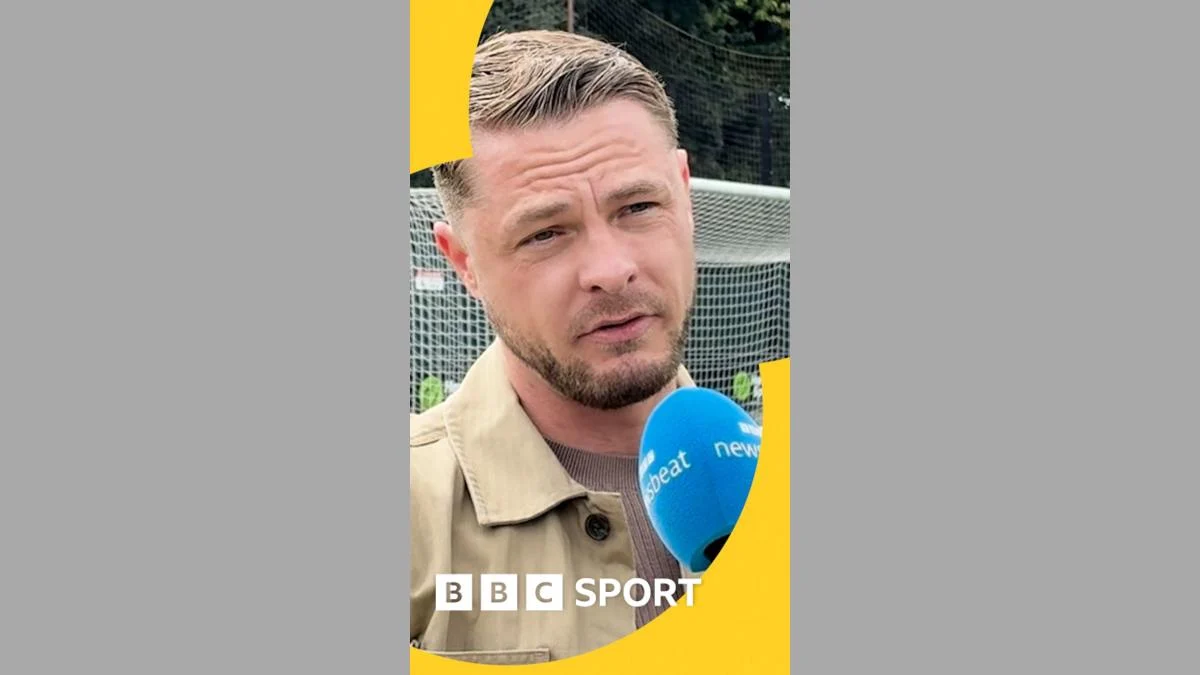
The roar of the crowd, the vibrant green of the pitch, the electrifying tension of a cup final – these were the sensations that defined Dan Robathan’s life. For years, he had meticulously honed his skills, his sharp eyes and swift movements making him an indispensable part of the footballing fraternity. His dedication culminated in a moment many officials only ever dream of: running the line at the FA Cup final in 2025, a prestigious clash between Crystal Palace and Manchester City. The weight of the occasion, the sheer magnitude of the spectacle, was something he carried with pride, a testament to a career built on passion, discipline, and an unwavering love for the beautiful game. Yet, just twelve months later, the dream began to unravel, not due to a dip in performance or a loss of enthusiasm, but due to a diagnosis that would irrevocably alter his trajectory: benign tumours in his spine.
The news, delivered with clinical precision, landed like a thunderclap in the quiet of a doctor’s office. Benign, the doctor had said, a word that usually conjures a sense of relief. But in the context of his spine, and the physical demands of his profession, “benign” felt like a cruel irony. These weren’t aggressive cells bent on destruction, but they were present, growing, and their insidious presence threatened to sever the very cords that allowed him to fulfil his aspirations. The tumours, nestled within the intricate network of his spinal column, began to exert their influence, manifesting in ways that were both subtle and terrifying. Initially, it was a persistent ache, a dull throb that he initially dismissed as the occupational hazard of a life spent sprinting up and down touchlines. But the ache deepened, evolving into a more profound discomfort, a gnawing sensation that began to erode his confidence and his physical capabilities.
The decision to step away from the game he adored was not one made lightly. It was a wrenching, soul-crushing process, akin to amputating a limb. Dan, a man who had always prided himself on his physical prowess and his ability to remain impartial and precise under immense pressure, found himself increasingly hampered by his own body. The swift movements required to keep pace with the fastest players, the sharp turns and sudden stops, the very essence of his role as an assistant referee, became fraught with peril. Each sprint carried with it a new wave of anxiety, a fear of aggravating the tumours, of exacerbating the pain, and of potentially suffering a more severe injury. The mental toll was as significant as the physical. The constant awareness of his condition, the internal dialogue of doubt and fear, began to overshadow the joy and exhilaration that football had once brought him.
He spoke to BBC Newsbeat about the profound impact of this diagnosis, his voice tinged with a sorrow that resonated far beyond the studio walls. The contrast between the pinnacle of his career in 2025 and his current reality was stark. The FA Cup final, a stage where he had performed with such assurance and expertise, now felt like a distant, almost unattainable memory. He recounted the feeling of being on that hallowed turf, the electric atmosphere, the knowledge that millions were watching, and how every decision he made was scrutinised with microscopic intensity. It was a challenge he thrived on, a testament to his years of training and his innate understanding of the game’s intricate laws. Now, the very thought of such pressure brought a knot of dread to his stomach.
The tumours, though benign, were having a tangible impact on his day-to-day life, and crucially, on his ability to perform his duties. The nerve compression caused by their growth led to a progressive loss of sensation in his legs, a terrifying prospect for someone who relied so heavily on proprioception and fine motor control. The subtle tingling that he initially felt began to escalate into numbness, making it increasingly difficult to gauge his footing, to sense the precise moment to signal for a throw-in, or to maintain his balance during critical phases of play. This loss of sensation was a silent saboteur, undermining the very foundations of his professional competence.
Furthermore, the tumours were affecting his balance and coordination. The delicate equilibrium required to sprint and stop without losing one’s footing was compromised. He described instances where he felt an unsettling unsteadiness, a moment of disorientation that, in the fast-paced environment of professional football, could have disastrous consequences. The fear of falling, of misjudging a stride, of being unable to react swiftly and effectively, became a constant companion. This wasn’t just about personal discomfort; it was about the integrity of the game itself. An assistant referee’s role is crucial in ensuring fair play, and any compromise in his ability to perform that role accurately and reliably would be a disservice to the players, the teams, and the sport he loved.
The decision to retire from his dream career was, therefore, a difficult but necessary one. It was a decision born out of a profound sense of responsibility. He understood that his condition posed a risk, not only to himself but also to the accuracy and fairness of the matches he officiated. The allure of the roar of the crowd, the camaraderie of the dressing room, the intellectual challenge of interpreting the ebb and flow of a game – these were powerful forces that pulled him towards staying. But the stark reality of his physical limitations, the growing pain, and the potential for further complications, ultimately tipped the scales.
The article he referenced, with its poignant title, alluded to the deeper struggles he faced. The warning about suicide and distressing content highlighted the immense psychological burden that such a diagnosis can carry. For Dan, the loss of his career wasn’t just the end of a job; it was the dismantling of his identity, the shattering of a lifelong aspiration. The future, once painted with the vibrant colours of football, now seemed a blank canvas, filled with uncertainty and a gnawing sense of loss.
He candidly shared the emotional turmoil that accompanied his diagnosis. The initial shock gave way to a period of profound grief and anger. He questioned why this had happened to him, a man who had dedicated so much of his life to the sport, who had always strived for excellence. The feeling of helplessness was overwhelming. He was no longer in control of his own destiny; his body, seemingly at odds with his will, was dictating the terms of his future.
The warning of distress was not to be taken lightly. For many, the loss of a dream career, especially one so physically demanding and deeply ingrained in their identity, can lead to feelings of despair, isolation, and even suicidal ideation. Dan’s willingness to speak openly about these struggles, even the darker aspects of his emotional journey, was a testament to his courage and his desire to shed light on the often-invisible battles faced by athletes and officials when their careers are cut short by illness or injury.
The journey ahead was undoubtedly daunting. He spoke of the need to find a new purpose, a new way to engage with the sport that had given him so much. The transition from active participant to spectator, or perhaps to a different role within the footballing ecosystem, would require immense resilience and a willingness to adapt. He had to learn to navigate a world where the physical demands that had once defined him were now a source of vulnerability.
The story of Dan Robathan is a stark reminder of the fragility of dreams, even those seemingly built on solid foundations. It highlights the often-unseen sacrifices made by those who dedicate their lives to sport and the profound impact that unforeseen health challenges can have on their careers and their mental well-being. His journey from the pinnacle of his profession to the difficult reality of his diagnosis serves as a powerful narrative of resilience, courage, and the enduring human spirit in the face of adversity. The scar of his injury may be internal, but the impact on his life, and the echoes of his struggle, are profoundly visible.


 George Anjay
 Nakalama John
 atisusanti
 Ramos Leo
 Nana Banana