
 Roy Suryo
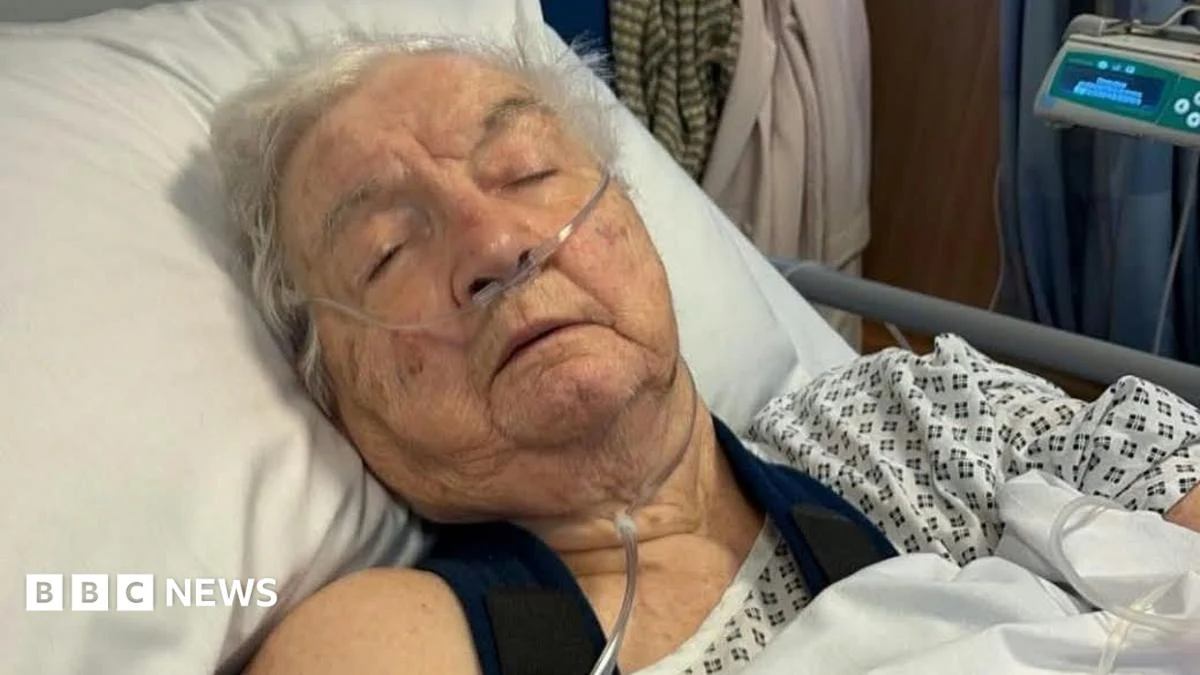
A 93-year-old woman, Margaret Owen, from Abercynon in Rhondda Cynon Taf, endured a harrowing ten-and-a-half-hour ordeal on the floor of her home with broken bones while awaiting an ambulance. The distressing incident, which occurred on October 4th, has ignited further concern over the mounting pressures and response times within the Welsh Ambulance Service, particularly for its most vulnerable patients.
Margaret Owen’s ordeal began when she fell in her home. Her son, Graham Anthony, was alerted by her lifeline alarm at 06:15. Upon arriving at his mother’s residence, he found her in significant distress. Her right leg was immobilised, and she was complaining of severe pain in her right arm, indicative of serious injuries. Recognizing the urgency, an ambulance was officially called at 07:35. However, what followed was an unacceptable and protracted wait that left both Margaret and her son feeling abandoned and helpless.
The gravity of the situation was compounded by the fact that Margaret suffers from dementia, making it difficult for her to recall the exact timeline of events before her son’s arrival. Anthony admits he doesn’t know precisely how long his mother had been on the floor before the alarm was triggered, but her clear and evident distress upon his arrival painted a grim picture. The prolonged wait for medical assistance subjected her to sustained pain and anxiety, a situation described by her son as "not good enough."
The first sign of external help arrived not in the form of a fully equipped ambulance, but a St John Ambulance worker, who attended at 15:30 – a staggering seven hours and fifty-five minutes after the initial call. This worker was dispatched only at the direct request of the Welsh Ambulance Service, highlighting a potential breakdown in their own resource allocation or prioritization protocols. Even after this initial, albeit limited, intervention, it was another agonizing ninety minutes before a fully operational ambulance arrived to transport Margaret to hospital. This meant Margaret had endured approximately ten and a half hours of lying on the floor, in pain and with serious injuries, before being taken for necessary medical treatment.
"Listening to her repeatedly asking for help and sometimes screaming in pain has left me with a feeling of hopelessness," Anthony shared, his voice heavy with the emotional toll of witnessing his mother’s suffering. He expressed profound disappointment and a significant erosion of confidence in the ability of the NHS to provide timely and adequate emergency care.
Margaret Owen was subsequently diagnosed with fractures to her femur and shoulder, requiring surgical intervention. As of the time of reporting, she had not yet been discharged from Royal Glamorgan Hospital, underscoring the severity of her injuries and the impact of the delay on her recovery. While Anthony was quick to praise the professionalism and compassionate care of the ambulance crew who eventually arrived and attended to his mother with great skill, he stated that the overall experience had "knocked my confidence in our health service’s ability to respond."
The incident involving Margaret Owen is not an isolated case, but rather a stark illustration of a systemic issue plaguing the Welsh Ambulance Service. Latest published figures reveal a deeply concerning trend. In August, a staggering 10,977 patients experienced waits of 12 hours or more for an ambulance. While this represented a marginal decrease of 733 patients compared to the previous month, it still signifies a widespread problem affecting thousands of individuals.
Graham Anthony took to social media platform Facebook to share his mother’s harrowing experience, describing the delay as "not acceptable for anyone, let alone a 93-year-old." His post resonated deeply with the public, eliciting a "huge" response, with hundreds of individuals sharing their own distressing encounters of elderly relatives enduring similar lengthy waits for urgent medical care. This outpouring of shared experiences suggests a widespread public dissatisfaction and concern regarding the current state of emergency healthcare provision.
In response to the growing public outcry and the specific case of Margaret Owen, Lee Brooks, the Welsh Ambulance Service’s Chief Operating Officer, offered his apologies. He stated he was "sorry to hear about Owen’s experience" and expressed gratitude for the incident being brought to his attention. Brooks acknowledged that "waiting almost eight hours for help is not the standard of service we want to provide." He revealed that a preliminary review of Margaret’s case had identified "aspects" of how the call was managed that warranted further investigation. Staff are reportedly "carefully" examining the events to determine if alternative response strategies could have been employed.
The Welsh government has acknowledged the distress caused by prolonged waits for medical care following an injury. A spokesperson stated that improving access to care is a "key priority" and announced that a new emergency and acute care policy framework would be published in the autumn. This framework is intended to outline plans aimed at enhancing emergency community response and improving patient flow within hospitals, addressing some of the underlying causes of ambulance delays.
However, Anthony remains unconvinced that these measures will be sufficient to address the root of the problem. He articulated a deep-seated concern that the issue is not merely a matter of isolated incidents but a "huge systemic problem" that "nobody seems to be getting to grips with." He described the situation as a "terrible indictment on the health service" and highlighted the prevalence of "far too many examples of similar injuries, similar waits." In his pursuit of accountability and systemic change, Anthony has submitted formal complaints to both the Welsh Ambulance Service and the Welsh government.
The complexity of ambulance call categorisation and response times further illuminates the challenges faced by the service. In July 2025, NHS Wales implemented a re-categorisation of ambulance calls to better prioritize urgent cases. "Purple" calls are designated for cardiac or respiratory arrest, while "red" calls are reserved for major trauma and other emergencies where patients are at immediate risk of cardiac or respiratory arrest. In December of the same year, three new categories were introduced: "orange" for serious conditions, "yellow" for patients requiring assessment, and "green" for less urgent cases.
Analysis of recent performance data reveals that the median ambulance response time for "red" calls in the past two months was nine minutes and 32 seconds, falling short of the target response time of six to eight minutes. "Purple" calls, on the other hand, were met with a median response time of seven minutes and 31 seconds, which is within the targeted timeframe.
The situation for "orange" calls is particularly alarming. The median response time has significantly increased to nearly one hour and 30 minutes, a substantial rise from approximately one hour. The longest recorded response time for "orange" calls since records began in December 2025 was in January, reaching one hour and 53 minutes. Data for "yellow" and "green" call response times, as well as the specific target for "orange" calls, are not publicly disclosed, making it difficult to assess the full extent of performance across all categories. In September, the ambulance service received a substantial volume of calls across these categories, with 11,868 "orange" calls, 5,492 "yellow" calls, and 1,414 "green" calls.
The prolonged wait experienced by Margaret Owen, a 93-year-old woman with severe injuries, serves as a potent symbol of the critical challenges facing emergency healthcare in Wales. It underscores the urgent need for robust and effective solutions to ensure that all patients, especially the elderly and most vulnerable, receive timely and appropriate medical attention when they need it most. The widespread public concern and shared experiences suggest that a fundamental re-evaluation and substantial investment are required to restore public confidence in the resilience and responsiveness of the Welsh Ambulance Service.



 George Anjay

 Nakalama John

 atisusanti
 Ramos Leo

 Nana Banana
