
 George Anjay
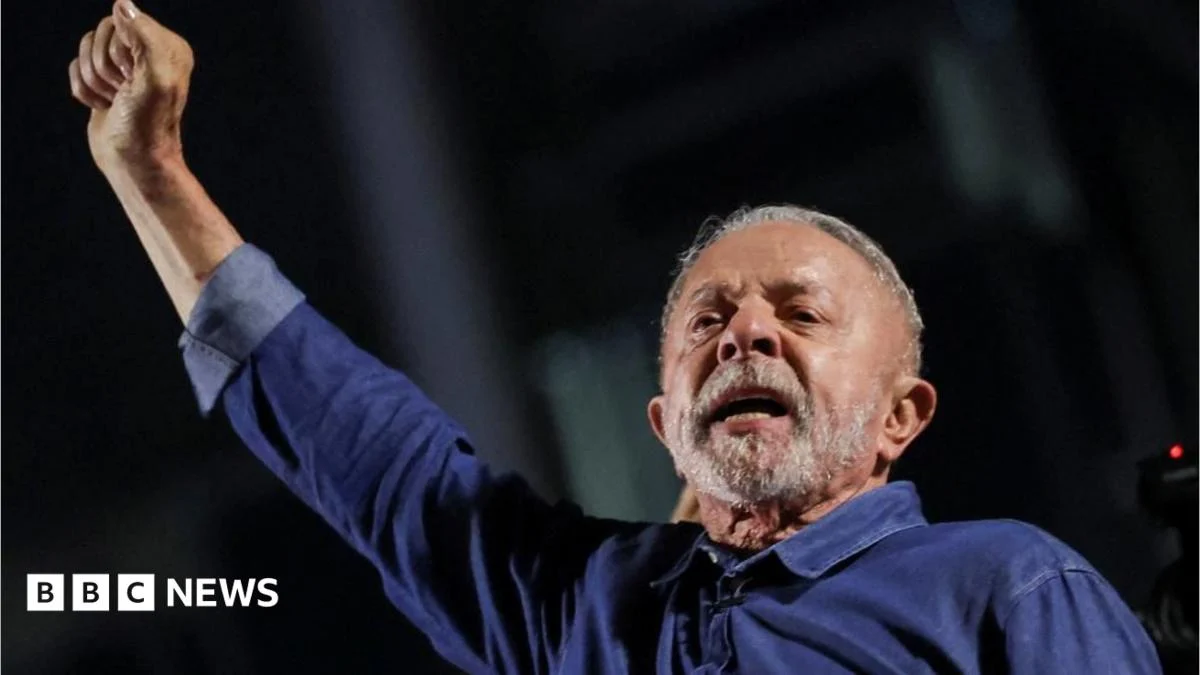
Brazil’s President Luiz Inácio Lula da Silva has secured a historic fourth term in office, achieving a remarkable comeback victory over his right-wing challenger Flávio Bolsonaro in a fiercely contested election. The veteran leftist leader clinched the presidency with 51.79% of the vote, becoming the first president since Brazil’s return to civilian rule in 1985 to win the presidency after losing the initial round of voting. Addressing jubilant supporters in São Paulo, a triumphant Lula declared his victory a triumph over "negativity and lies," proclaiming "long live democracy."
However, the election’s aftermath has been marked by controversy. Flávio Bolsonaro, the son of former president Jair Bolsonaro, has conspicuously refused to concede, calling for the results to be annulled. This stance echoes the actions of his father, who similarly rejected the outcome of the 2022 election that saw Lula return to power. Despite Bolsonaro’s challenge, observers believe a successful annulment is highly unlikely.
The core of Bolsonaro’s challenge appears to stem from the Supreme Court Justice Cristiano Zanin’s decision to extend voting nationwide by two hours. Some Bolsonaro supporters have alleged bias, pointing to Zanin’s past role as Lula’s lawyer. However, both campaigns had actually requested extensions to voting times. Lula’s camp cited transportation issues in São Paulo and Bahia, with insufficient bus services hindering voter access. The Bolsonaro campaign, conversely, pointed to heavy rainfall in southern regions and São Paulo as a reason for their request, highlighting a shared desire to maximize their respective vote counts in a closely watched election where every ballot was crucial.
Reinforcing the integrity of the electoral process, the President of the Supreme Electoral Court, Kássio Nunes Marques – himself appointed by Jair Bolsonaro – confirmed Lula’s victory. Marques stated unequivocally that the extended voting period did not alter the election’s outcome. Furthermore, the substantial margin of victory, with Lula leading Bolsonaro by 4.4 million votes, presents a formidable hurdle for any legal challenge to overturn the results.

The election’s outcome defied initial expectations, as Flávio Bolsonaro had secured a lead in the first round of voting on October 4th, garnering 47% of the ballots compared to Lula’s 45%. However, Lula’s campaign gained significant traction in the run-up to election day, focusing intensely on boosting voter turnout. This effort proved highly effective, particularly after a considerable 33 million eligible voters abstained in the first round. The second round witnessed the most significant reduction in abstention rates between two rounds of a presidential election since 1989, underscoring the heightened engagement and polarization of the electorate.
While Bolsonaro had reportedly prepared a victory speech, he later expressed his disbelief at the result, deeming it "inexplicable" and reiterating his demand for annulment. As his despondent supporters dispersed from his Brasília headquarters, Lula took to the streets of São Paulo to celebrate with an ecstatic crowd. The former metalworker, who is set to turn 81 on Tuesday, pledged that his fourth term would be the most impactful, stating, "It will be the one in which I listen most to the Brazilian people."
Despite this momentous victory, Lula faces a daunting set of challenges as he prepares to govern. He inherits a deeply divided nation, an opponent who refuses to acknowledge his legitimacy, and a Congress largely dominated by Bolsonaro allies. The immediate aftermath of the election saw a significant market reaction, with the São Paulo stock exchange experiencing a sharp decline of 15% shortly after opening, prompting a brief trading suspension before a partial recovery. Interest rate futures also saw an uptick as investors began scrutinizing Lula’s forthcoming fiscal policies.
Adding to the international intrigue, former US President Donald Trump weighed in on the election, suggesting it had been "stolen" without providing any substantiating evidence. Speaking to reporters, Trump remarked, "It looked very bad to me." In contrast, a broad spectrum of world leaders extended congratulations to Lula. Mexico’s left-wing President Claudia Sheinbaum celebrated the victory on X, stating, "The people of Brazil won." Peru’s right-wing President Keiko Fujimori commended Brazil’s "democratic day," with similar sentiments echoed by the presidents of Chile and Ecuador.
Canadian Prime Minister Mark Carney highlighted the existing strong partnership between their nations. European Commission President Ursula von der Leyen declared that "democracy and multilateralism" had triumphed, while Spanish Prime Minister Pedro Sánchez hailed it as a "great victory." French President Emmanuel Macron expressed a commitment to working together "in service of a more just world." South African President Cyril Ramaphosa characterized Lula’s win as a victory for the "global south and progressive forces throughout the world."

In a video posted on Instagram on Monday, Flávio Bolsonaro indicated that he had been instructed by police to surrender his passports and was barred from leaving the country. This development comes amid a complex backdrop of political affiliations. Trump has previously voiced strong support for Jair Bolsonaro, who is currently serving a 27-year prison sentence following his conviction for a coup attempt after losing the 2022 election to Lula. Flávio Bolsonaro had also met with Trump at the White House earlier in the year, reportedly seeking his endorsement.
Lula’s ascension to a fourth term is unprecedented in Brazilian history. He previously served three non-consecutive terms, from January 2003 to December 2010, and again from January 2023. His new mandate will extend until 2030. However, this hard-won victory arrives at a time of significant domestic and international constraints, including the overt animosity from the US president. In his victory speech, Lula directly addressed the geopolitical landscape, invoking what Trump has termed the "Donroe Doctrine" – a concept aiming to establish US dominance in the Western Hemisphere. Lula emphatically declared that Brazil "will not accept being anyone’s backyard."
Furthermore, Lula’s victory signifies a departure from a broader trend observed across Latin America, where voters in countries such as Argentina, Chile, and Colombia have increasingly elected right-wing candidates and parties. Lula’s success represents a resurgence of progressive leadership in a region experiencing significant political shifts. The challenges ahead for Lula are immense: healing a fractured nation, navigating the persistent skepticism of his defeated opponent, and working within a potentially obstructive Congress. His ability to unite Brazil and implement his policy agenda will be crucial in determining the success of his historic fourth term.

 Nakalama John
 atisusanti
 Ramos Leo

 Roy Suryo
 Nana Banana
