
 Nana Banana
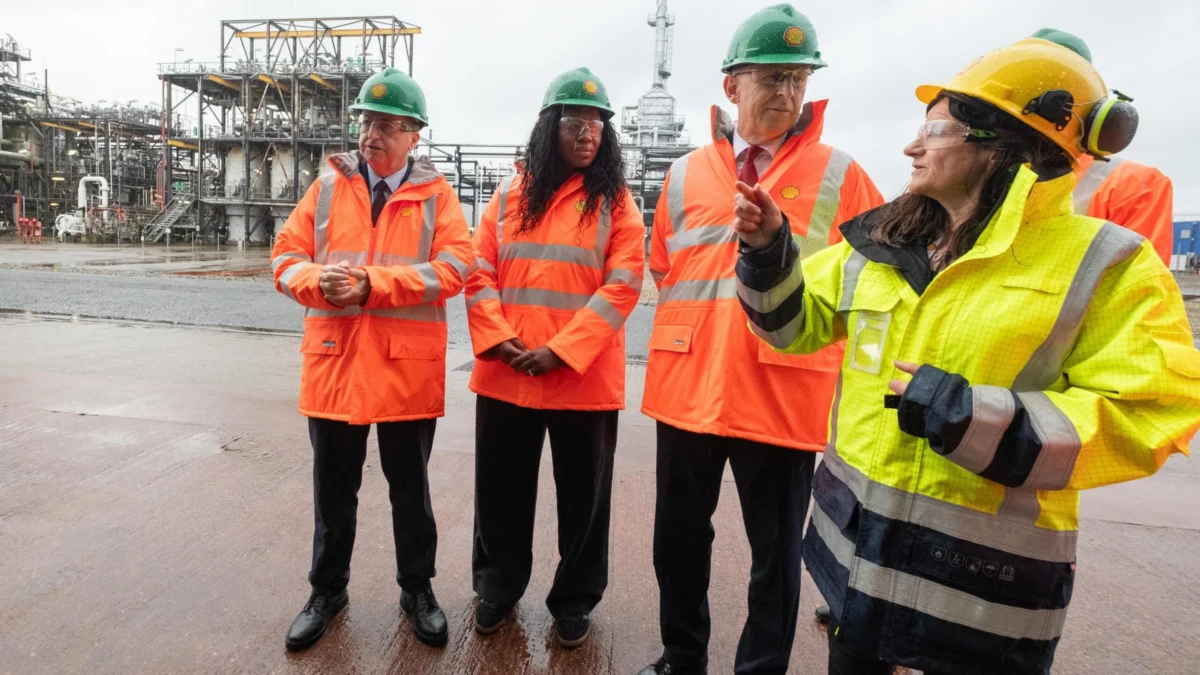
A significant internal struggle is currently gripping the Labour Party, centered on the contentious Rosebank oil field development in the North Atlantic. Scottish Labour leader Michael Marra has plunged directly into this escalating political battle, issuing a forceful appeal to Energy Secretary Miatta Fahnbulleh to greenlight the project. His intervention underscores the deep divisions emerging within Labour regarding the UK’s future energy strategy, pitting economic imperatives and energy security against the party’s foundational environmental commitments. Rosebank, situated approximately 80 miles north-west of Shetland, represents the UK’s largest untapped oil field, making its fate a pivotal decision with far-reaching consequences for both the economy and the environment. For years, environmental advocacy groups have waged a relentless campaign against the proposals for drilling, labeling it a "carbon bomb" and a direct threat to the UK’s net-zero ambitions. That this heated debate has now migrated from external pressure groups to the very core of the governing Labour Party is a stark indicator of the profound shifts in the UK’s energy politics over recent years.

When Labour swept into power in 2024, it did so with a clear and unequivocal manifesto pledge: a moratorium on all new drilling for oil and gas in the North Sea. This commitment was seen as a cornerstone of Prime Minister Keir Starmer’s green agenda and a bold statement on the UK’s transition to renewable energy. The initial legal challenges surrounding the Jackdaw and Rosebank developments thrust their futures into the hands of the then-Energy Secretary, Ed Miliband. Miliband, a figure deeply committed to renewable energy and known for his close political ties to Starmer, was widely expected to uphold the manifesto promise. At that juncture, senior figures within the offshore industry held little hope that these projects, particularly Rosebank, would ever receive the necessary regulatory approvals, given the government’s stated policy and Miliband’s known environmental stance. The party’s position seemed unshakeable, an article of faith for a government determined to lead on climate action.
However, the global landscape rapidly and dramatically shifted. The outbreak of significant geopolitical instability, coupled with escalating global energy crises, particularly disruptions to crucial shipping lanes like the Strait of Hormuz, sent shockwaves through international energy markets. This confluence of events exacerbated an already pressing cost of living crisis, placing immense pressure on households and businesses across the UK. Faced with spiraling energy prices and heightened concerns over supply security, the political calculus began to change. A new government, led by Prime Minister Andy Burnham, subsequently entered 10 Downing Street. This new administration found itself with greater political latitude and a perceived mandate to reassess the nation’s energy strategy. Crucially, a new Energy Secretary, Miatta Fahnbulleh, was appointed to navigate these complex decisions, bringing a fresh perspective to the crucial energy portfolio.

Strictly speaking, the Rosebank and Jackdaw developments were not applications for entirely new drilling licenses but rather adjudications of existing ones, a nuance that offered the new government some flexibility. Yet, in broader political terms, the shift in tone within the Labour Party has been undeniable. What had once been an unwavering principle on energy policy has evolved into a much more pragmatic and flexible approach. This recalibration is also evident within the Scottish National Party (SNP), where the Scottish government, which previously favored a presumption against new oil and gas drilling, has now adopted a more cautious and even welcoming stance towards announcements like the Jackdaw approval. This bipartisan softening highlights the immense pressure brought by global events to prioritize immediate energy needs and economic stability.
The new direction became palpably clear last week when Energy Secretary Miatta Fahnbulleh announced that production could commence on the Jackdaw gas field. In her official statement, Fahnbulleh justified the decision by emphasizing that the project, over its projected 11-year lifespan, would significantly bolster the UK’s domestic gas supply, safeguard hundreds of jobs in the energy sector, and inject an estimated £2.9 billion into the national economy. This move was framed as a pragmatic step to ensure energy resilience during the transition period. Unsurprisingly, environmental organizations vehemently condemned the decision, arguing that it would severely undermine the UK’s efforts to combat climate change and would make "no meaningful difference" to long-term UK energy security. They maintained that investing in new fossil fuel projects locked the nation into a carbon-intensive future, diverting crucial resources and political will away from essential renewable energy development.

With the Jackdaw precedent now set, attention has sharply pivoted to Rosebank, the larger and even more controversial project. The UK government has consistently maintained that these decisions are part of a quasi-judicial process, judged solely on stringent environmental and technical criteria, rather than political expediency. However, as the Rosebank decision looms, the political dimensions are undeniably seeping into the process. Within mere hours of Jackdaw receiving approval, a calculated briefing campaign began, suggesting that Fahnbulleh was "minded" to reject Rosebank. This leak signaled an immediate internal pushback against a potential second fossil fuel approval. Compounding the internal pressure, recent reports in the run-up to the Budget have indicated that Chancellor John Healey is reportedly in favor of approving Rosebank, citing its economic benefits and contribution to public finances.
Neither cabinet minister has publicly confirmed their private views, maintaining the official line. Fahnbulleh herself has insisted that the decision is "a regulatory process not a policy process," acknowledging the immense personal responsibility she carries. "It sits heavy for such a big controversial decision because in the end only I can make it," she stated, underscoring the weight of her impending judgment. Despite her assertion that she is not actively seeking external advice, Scottish Labour leader Michael Marra has been unequivocal in his willingness to offer it. Marra is currently in Westminster, engaged in crucial meetings with both Chancellor Healey and Energy Secretary Fahnbulleh, strategically timed ahead of the Budget announcement on Wednesday.

Marra’s rationale for supporting Rosebank is firmly rooted in his belief that the project is indispensable for the Scottish economy, regional employment, and the overall health of public finances. He articulated his position, stating, "I supported Jackdaw and Rosebank because I think they’re really crucial for the Scottish economy, for employment, and for the public finances as well." He further emphasized the need to cultivate a national investment climate, adding, "We need to make sure that we’re a country that people feel they can invest in. You’ve seen what’s happened with Jackdaw in recent days – a real boost to the morale and the investment climate in the north east of Scotland." Beyond Rosebank, Marra is also advocating for increased levies on banks in the upcoming Budget, proposing these funds contribute towards mitigating the ongoing cost of living crisis. The second request appears likely to be granted, which perhaps emboldens Marra to publicly champion the Rosebank approval, leveraging his influence within the party.
The arguments in favour of approving Rosebank are multi-faceted, extending beyond the immediate economic benefits highlighted by Marra. Proponents argue that developing Rosebank is critical for enhancing the UK’s energy security, reducing its reliance on volatile international markets and potentially hostile foreign suppliers. In an era of geopolitical uncertainty, domestic production is seen as a strategic imperative, even if the oil is eventually traded internationally. Furthermore, the project is touted as a vital source of skilled jobs, not just directly on the platforms but also across a vast supply chain in engineering, manufacturing, and logistics, particularly in the North East of Scotland which has a long-standing expertise in the oil and gas industry. The tax revenues generated from Rosebank could also provide a significant boost to the public finances, which can be reinvested into public services or used to fund the transition to renewables. There’s also the pragmatic argument that while the UK transitions to net-zero, there will still be a demand for oil and gas, and it is more environmentally sound and economically sensible to meet some of that demand through lower-emission domestic production rather than importing it from regions with less stringent environmental regulations. The fact that these are adjudications of existing licenses, rather than entirely new applications, also plays into the argument that there is a legal and economic expectation for these projects to proceed.

Conversely, the arguments against Rosebank are equally compelling and are largely driven by the urgent need to address climate change. Environmental groups and a significant faction within Labour view Rosebank as a "carbon bomb" that directly contradicts the UK’s legally binding net-zero targets and its commitments under the Paris Agreement. They contend that any new fossil fuel development, regardless of its size, undermines the credibility of the UK’s climate leadership and sends a dangerous signal to the international community. Critics also challenge the energy security argument, pointing out that much of the oil extracted from the North Sea is typically sold on international markets, offering limited direct impact on UK consumer prices. Instead, they advocate for accelerated investment in renewable energy sources like wind and solar, arguing that true energy independence and security lie in a rapid transition away from fossil fuels. They also raise concerns about the long-term economic viability, warning of potential "stranded assets" if global demand for oil declines faster than anticipated, leaving the UK with costly infrastructure for a declining industry. The emissions associated with extracting and processing the oil, in addition to its eventual combustion, represent a significant contribution to global greenhouse gas levels, making Rosebank a flashpoint in the broader climate debate.
As the Energy Secretary Miatta Fahnbulleh deliberates, the decision on Rosebank encapsulates the profound dilemma facing the Labour government. It’s a delicate balancing act between upholding crucial climate pledges, ensuring national energy security in a turbulent world, safeguarding regional economic stability, and maintaining internal party unity. The outcome will not only determine the future of the UK’s North Sea oil and gas industry but will also send a powerful message about the government’s commitment to its environmental agenda. The very fact that this debate is unfolding with such intensity within the ruling party, challenging previously firm commitments, is a powerful symbol of the complex and often contradictory demands of the UK’s new energy reality. The stakes are extraordinarily high, not just for the UK’s climate reputation and economic future, but for the cohesion and direction of the Labour Party itself.


 Nakalama John

 atisusanti
 Ramos Leo

 Roy Suryo
 George Anjay
