
 Roy Suryo
When Claire Harkin met her husband 11 years ago, she was unaware of the secret he harboured that would eventually shatter her world. For years, Michael Harkin’s life was consumed by a devastating addiction to cocaine and alcohol, leading him down a perilous path of spiralling out of control. Claire bore witness to his gradual decline, describing the experience of watching addiction take hold as one of the most profoundly difficult challenges she has ever faced. "It’s hard because you always saw that glimmer of hope in him that he was still there, but it got to a point… I ended up nearly breaking myself trying to help Michael," she recounted, her voice tinged with the memory of immense strain.
Today, their lives are a far cry from that tumultuous period, now filled with the settled rhythm of family life shared with their children. Claire firmly believes that the experiences of those who support loved ones battling addiction are frequently overlooked. "When I had our son, when you become a mammy everything changes… our son didn’t need two broken people," she explained, highlighting the critical shift in her priorities. "Eventually, I had to become selfish and shut him out, so that he could get help because only he could be the one to seek help." This painful necessity underscored a profound realization: "Sometimes you have to realise that they’re not doing it on purpose, they’re not doing it to spite you," Claire added, a crucial insight for anyone caught in the maelstrom of addiction.
Her own emotional journey was a complex one. "I felt really down, like, ‘What’s wrong with me? Why is he doing this to me? Is it our relationship?’" she confessed. The process of disentangling her own emotional well-being from her husband’s addiction was paramount. "And then I realised, that it’s something Michael was going through, so you have to learn to understand that. I went away and worked on myself, and that’s the only reason we could come back together after he went and sought help for himself." This period of self-reflection and personal growth was instrumental in their eventual reconciliation.
Michael, now sober for five years, candidly admits that without the intervention he received, he likely would not be alive today. He acknowledges that in the initial stages, his commitment to change was superficial, driven by a desire to placate those around him rather than a genuine internal drive. "We become, as they say in the programme, master manipulators," he stated, a stark self-assessment of the deceptive nature of active addiction. "We’re able to manipulate people around us and they believe we’re going to change this time and that this will be the last time, but you can only really manipulate people so long before they start closing the door."
He described hitting rock bottom with his substance use, a point so dire that he vividly remembers looking in the mirror and confronting the terrifying reality: "’I’m gonna die’." This stark realization served as the catalyst for seeking help. Michael joined the 12-step recovery programme through Heal The Hurt, a Derry-based charity, and has not looked back since. "I eventually said, ‘Enough’s enough, I want to change’. That was the start of my recovery, and it was for me, not for anyone else – it had to be for me," he emphasized, underscoring the personal nature of recovery.
Navigating recovery as a married couple presents its unique set of challenges, but Claire and Michael have emerged stronger, possessing a refined ability to identify and manage "triggers." "Even something as simple as a sunny day can be a trigger for him, because in the past he would have loved going to a beer garden and drinking in the sun. But now we plan around things like that and talk openly about them," Claire explained, illustrating their proactive approach to maintaining sobriety.
Claire recently shared her experiences, detailing the profound impact of addiction on families, at a "Voices of Recovery" event in Londonderry. She and Michael were among several speakers who have participated in these events, a collaborative initiative by the Old Library Trust and the Bogside and Brandywell Health Forum (BBHF). These talks are designed to reach individuals affected by addiction, those seeking help and support, or anyone interested in hearing raw, real-life accounts of recovery.
Another compelling story of recovery from alcohol addiction was shared by George Conway, who recounted a harrowing period where he was in a hospital bed, receiving last rites. "Never in a million years did I think I would be able to give a talk considering where my life was at one point," George reflected, his voice filled with a sense of disbelief and gratitude. "It was nerve-wracking, but if it even helps one other person then it’s worth it."
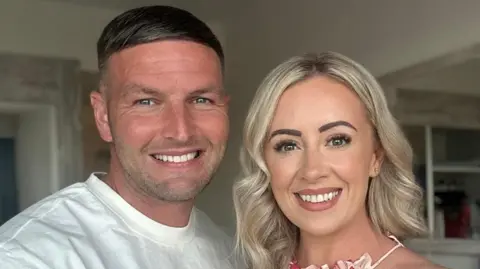
Addiction had reduced George’s life to a state of destitution, leaving him virtually homeless and residing in hostels. "I ended up in hospital having a seizure, I was there for six weeks in ICU and then I got out of hospital, started to get myself sober and met up with Mo and the rest is history," he stated, acknowledging the pivotal role of support worker Mo Mahon in his journey. George, who was once told that due to spinal surgery he might struggle to walk, is now actively pursuing a career as a personal trainer, a testament to his remarkable recovery. "They told me I couldn’t, but I knew I could," he declared, embodying a spirit of resilience and determination.
Mo Mahon, a support worker with the BBHF, described George’s transformation as nothing short of a "genuine miracle." "I’m thankful and proud to be a small part of his recovery," Mahon expressed. "As he was coming up to four years sober, we knew, after speaking with George, that he was ready to give that talk and share his story." Mahon emphasized the inclusive nature of these events, stating, "Anybody can come to these talks. The stories are always different, but it’s all about people coming and taking something away from them. People like George become role models through this. He is proof that even when things look bleak, things can always get better if you put the work in."
The "Voices of Recovery" events serve as a powerful platform for destigmatizing addiction and fostering hope. By sharing their personal narratives, individuals like Claire, Michael, and George not only illuminate the devastating impact of addiction but also offer a beacon of possibility for others facing similar struggles. Their stories underscore the vital importance of support systems, the courage required to seek help, and the profound capacity for healing and redemption. The often-overlooked impact on loved ones is brought to the forefront, acknowledging the immense toll addiction takes on families and the critical role they play in the recovery process, both for their addicted loved ones and for themselves.
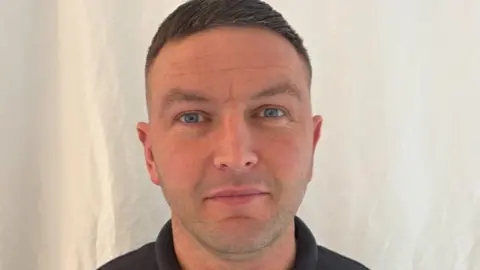
If you have been affected by the issues raised in this story, organisations which can offer help and support are available on the BBC’s Action Line.

 George Anjay
 Nakalama John
 atisusanti
 Ramos Leo
 Nana Banana