Nakalama John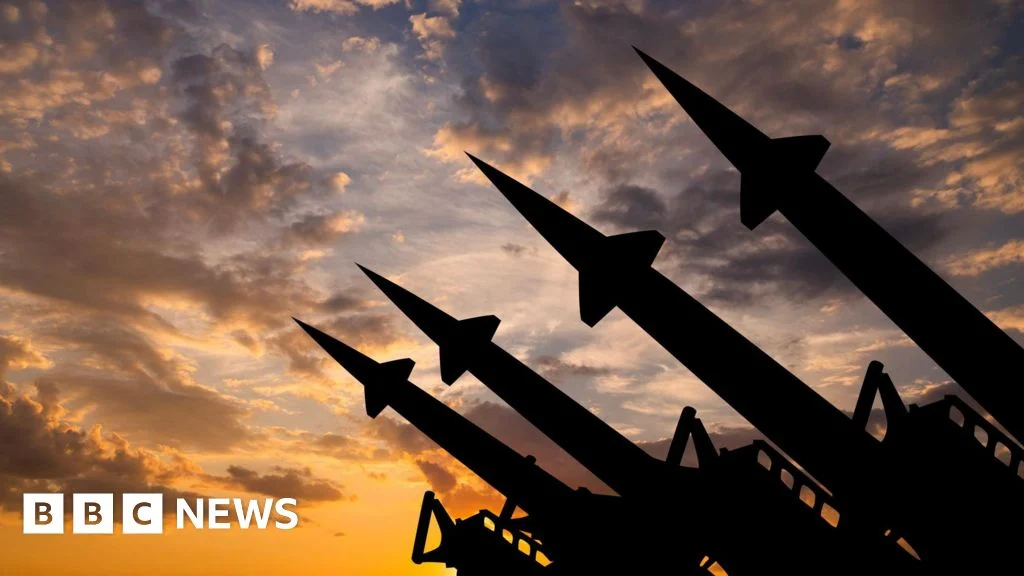
The company’s apprehension centers on the possibility that its AI tools might be manipulated to provide detailed instructions or insights into the synthesis of chemical agents, the assembly of conventional high-yield explosives, or even the construction of radiological dispersal devices, commonly known as "dirty bombs." To counteract these alarming scenarios, Anthropic aims to hire an individual with specialized knowledge in these areas, tasking them with rigorously testing and fortifying the "guardrails" designed to prevent such malicious applications. This proactive measure highlights the complex ethical and safety challenges confronting developers of powerful general-purpose AI systems.
The LinkedIn recruitment post for this critical role outlines stringent qualifications, demanding applicants possess a minimum of five years of experience in "chemical weapons and/or explosives defence." Furthermore, candidates must demonstrate comprehensive knowledge of "radiological dispersal devices," signalling the breadth of threats Anthropic is attempting to mitigate. The firm, known for its commitment to AI safety and responsible development, confirmed to the BBC that this role aligns with similar positions it has established in other sensitive domains, indicating a systematic approach to risk management across its operations.
Anthropic is not alone in recognizing and addressing these grave risks. Its rival, OpenAI, the developer behind the ubiquitous ChatGPT, has advertised a strikingly similar position. On its careers website, OpenAI lists a vacancy for a "researcher in biological and chemical risks," offering a substantial salary of up to $455,000 (£335,000). This figure nearly doubles the compensation offered by Anthropic, reflecting the intense demand for such niche expertise and the high stakes involved in safeguarding frontier AI. The parallel recruitment efforts by two of the most prominent AI firms illuminate a shared understanding of the inherent dangers lurking within advanced AI models, particularly those capable of processing and generating complex scientific and technical information.
However, this strategy, while seemingly pragmatic, has sparked alarm among some experts who warn of a paradoxical risk. Dr. Stephanie Hare, a distinguished technology researcher and co-presenter of the BBC’s AI Decoded TV programme, voiced profound concerns. "Is it ever safe to use AI systems to handle sensitive chemicals and explosives information, including dirty bombs and other radiological weapons?" she questioned. Dr. Hare’s apprehension stems from the fundamental principle that introducing such dangerous knowledge, even under controlled conditions and for defensive purposes, into AI systems inherently increases the risk of its unauthorized access or unintended leakage. She highlighted the stark absence of international regulatory frameworks: "There is no international treaty or other regulation for this type of work and the use of AI with these types of weapons. All of this is happening out of sight." This lack of transparency and global governance in a domain with potentially catastrophic implications is a significant point of contention.
The AI industry has long been vocal about the potential existential threats posed by its own technology, often warning of scenarios ranging from job displacement to humanity’s subjugation. Yet, despite these dire predictions, there has been no discernible effort to slow down the relentless pace of AI development. This creates a perplexing paradox: companies acknowledge profound risks but continue to innovate at breakneck speed, leading critics to question the sincerity of their warnings or the efficacy of their self-regulatory measures. The current push to hire weapons experts exemplifies this internal tension, where the pursuit of cutting-edge technology runs headlong into the urgent need for robust safety protocols.
This discussion gains added urgency within the broader geopolitical context. The US government, increasingly recognizing AI as a strategic asset, has been actively engaging with AI firms for national security and defense applications. This collaboration raises complex questions about the dual-use nature of advanced AI—technology that can be leveraged for both benevolent and malevolent purposes. While the original article’s reference to "launching war in Iran and military operations in Venezuela" and "US-Israel Iran war" appears to be a mischaracterization of current geopolitical realities, it highlights the perceived integration of AI into sensitive defense strategies and regional tensions. The US military’s deepening reliance on technological superiority means AI firms are increasingly seen as crucial partners, blurring the lines between commercial development and national defense.
Anthropic’s AI assistant, Claude, for instance, is reportedly integrated into systems provided by Palantir, a data analytics firm with extensive contracts with government agencies and military organizations. The deployment of such AI in active operational environments, even if for intelligence analysis or logistical support, directly confronts Anthropic co-founder Dario Amodei’s earlier statement from February. Amodei had expressed skepticism, stating he didn’t believe the technology was yet "good enough" for such high-stakes military applications and should not be used for these purposes. This creates a clear tension between the company’s internal ethical stance and the practical deployment of its technology through partners.
The White House has, at various times, asserted that the US military would not be "governed by tech companies," implying that ultimate control and decision-making authority would remain with military leadership. However, the increasing sophistication and autonomy of AI systems, particularly when integrated into critical defense infrastructure, challenge this assertion. The more deeply AI becomes embedded in strategic planning, intelligence gathering, and even operational execution, the more influence AI developers and their inherent system biases or vulnerabilities exert over military actions.

The original article drew a comparison between Anthropic’s "risk label" and the blacklisting of Chinese telecoms firm Huawei over national security concerns. While both situations involve national security, the nature of the "risk" differs significantly. Huawei faced external sanctions due to allegations of state-sponsored espionage and its perceived threat to critical infrastructure. In contrast, Anthropic’s "risk label" is largely self-imposed, driven by its own internal assessment of potential catastrophic misuse by users of its technology. This distinction is crucial; Anthropic is proactively seeking to prevent harm emanating from its own products, whereas Huawei was accused of being a conduit for foreign state-sponsored harm. Nevertheless, the comparison underscores a broader point: advanced technology, regardless of its origin, can pose profound national security challenges, necessitating careful scrutiny and robust safeguards.
The overarching ethical challenge remains the rapid advancement of AI without corresponding progress in global governance and regulation. The absence of international treaties or universally accepted ethical guidelines for the development and deployment of AI in domains like chemical and biological weapons proliferation or autonomous weaponry leaves a dangerous vacuum. Experts like Dr. Hare advocate for transparent, multilateral discussions and binding agreements to ensure that the benefits of AI are harnessed responsibly, without inadvertently unleashing unprecedented dangers.
In conclusion, Anthropic’s search for a chemical weapons expert epitomizes the profound paradox at the heart of the AI revolution. While developers strive to create technologies that promise transformative benefits, they are simultaneously forced to confront the darkest potentials of their creations. This tension between innovation and safety, amplified by geopolitical dynamics and the absence of comprehensive regulation, paints a complex picture of a technology at a critical juncture. The world watches as AI firms grapple with the immense power they wield, striving to build guardrails against "catastrophic misuse" even as the technology continues its inexorable march into every facet of human endeavor, including the most sensitive areas of national security and defense. The challenge is not merely to build powerful AI, but to ensure that humanity remains firmly in control of its most potent invention.



 Roy Suryo
 George Anjay
 Ramos Leo