
 Ramos Leo
In a significant intervention that has reignited internal Labour Party tensions, Culture Secretary Lisa Nandy has openly stated her belief that Greater Manchester Mayor Andy Burnham should be permitted to stand as a Labour Member of Parliament. Her comments, made to The House Magazine, represent the most senior challenge yet to Sir Keir Starmer’s leadership team regarding their controversial decision earlier this year to block Burnham from contesting a by-election. Nandy’s stance underscores persistent divisions within the party and highlights the ongoing speculation surrounding Burnham’s potential return to national politics.
The core of the controversy stems from an incident in January, when Andy Burnham sought to become Labour’s candidate for the Gorton and Denton by-election. This constituency, traditionally a safe Labour seat, became the unlikely battleground for a proxy war over the party’s future direction. However, Burnham’s ambition was swiftly curtailed by Sir Keir Starmer and his allies on Labour’s powerful National Executive Committee (NEC). The NEC, responsible for approving candidate selections, refused to grant him permission to stand, effectively preventing his bid to return to Westminster.
Labour’s official justification for blocking Burnham was pragmatic: to "avoid an unnecessary mayoral election, which would use substantial amounts of taxpayers’ money and resources." Had Burnham successfully secured the candidacy and subsequently won the Gorton and Denton seat, he would have been obliged to step down from his highly visible and influential role as Greater Manchester Mayor. This would have triggered a costly and potentially disruptive by-election for the mayoral position, a scenario the party leadership claimed it wished to prevent.
However, this official explanation was met with widespread scepticism within Labour ranks and among political commentators. A prevailing belief, openly discussed by many in the party, was that Burnham was blocked primarily due to fears that he could pose a significant challenge to Sir Keir Starmer’s leadership if he were to re-enter Parliament. Burnham, a popular figure often dubbed the "King of the North" for his strong regional mandate and high public profile, has previously contested the Labour leadership and is widely seen as a potential future contender. His return to the Commons would undoubtedly have amplified such speculation, creating an alternative power base that Starmer’s team seemingly sought to avoid.
Lisa Nandy, herself a prominent figure in the Labour Party and a former leadership contender, did not shy away from expressing her disagreement with the NEC’s decision. Speaking to The House Magazine, she articulated her strong personal and political support for Burnham. "He’s a friend of mine. He’s my mayor, and he was my neighbouring MP for seven years," Nandy stated, emphasising their long-standing relationship and shared regional connection. "I think he’s a huge asset to the party. And I’ve said before, I’ll say again, I’ll support him in whatever he wants to do."
Nandy further elaborated on her principled objection to the blocking of Burnham, asserting her belief in the democratic rights of party members. She argued that party members should be "allowed to make their own choices about who they want to be their candidates in elections – I’ve always thought that right." This statement implicitly criticises the top-down decision-making process employed by the NEC. When pressed on how she would have voted had she been on the NEC, Nandy was unequivocal: "Yeah, I would have voted to allow him to stand." While acknowledging the "understandable argument that he’s the mayor of Greater Manchester, and he’s a very good mayor, and he’s got a term to see out," her overall sentiment clearly favoured allowing Burnham to pursue his parliamentary ambition.
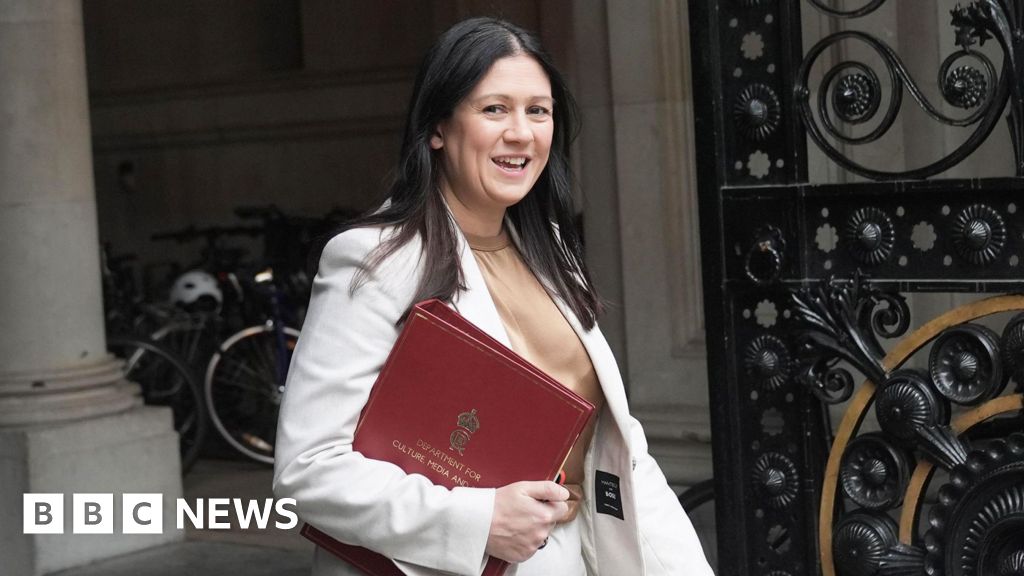
Nandy’s intervention is particularly noteworthy given her position as Culture Secretary in a Labour government. It is not the first time she has publicly voiced concerns about the party’s direction or internal affairs. Just last month, she described political turbulence within the Labour government as "unforgivable," a comment widely interpreted as a veiled criticism of the leadership’s handling of various issues. Her willingness to speak out, even from within the shadow cabinet, highlights a degree of internal dissent that continues to simmer beneath the surface of apparent unity.
The outcome of the Gorton and Denton by-election further complicated the narrative surrounding Burnham’s exclusion. Despite being a historically safe Labour seat, the party went on to finish a dismal third, trailing behind both the Green Party and Reform UK. This unexpected and poor performance added weight to the arguments of those who believed blocking Burnham had been a strategic blunder, depriving Labour of its "very best chance at winning" the seat, as some 50 Labour MPs reportedly argued in a letter objecting to the move. The result undoubtedly fueled the perception that the party leadership had prioritised internal political maneuvering over electoral success in a crucial by-election.
The only NEC member to publicly vote in favour of Burnham’s application was Jonathan Powell, a testament to the strong opposition he faced from the Starmer loyalists on the committee. This overwhelming majority against Burnham underscored the leadership’s determination to prevent his return to Westminster, fearing the potential for a formidable rival to emerge.
Andy Burnham’s history within the Labour Party lends credence to the leadership challenge fears. He served as an MP for Leigh from 2001 to 2017, holding various ministerial positions under Tony Blair and Gordon Brown, including Chief Secretary to the Treasury, Secretary of State for Culture, Media and Sport, and Secretary of State for Health. He mounted two unsuccessful bids for the Labour leadership, in 2010 and 2015, establishing himself as a significant figure with a distinct political platform. Since becoming Greater Manchester Mayor in 2017, he has cultivated a reputation as a powerful advocate for the North, often clashing with central government and demonstrating a unique ability to connect with voters across the political spectrum. His "King of the North" persona is not merely a media epithet but reflects genuine public recognition and approval.
Despite the move to block him from returning to Parliament, discussion about the Labour leader’s position has continued unabated. The party has faced several internal challenges to Starmer’s authority. In February, Scottish Labour leader Anas Sarwar publicly called on Sir Keir to step down, prompting a swift rally of Cabinet ministers who publicly backed the prime minister to quell the burgeoning rebellion. More recently, deputy leader Angela Rayner reignited leadership speculation by delivering a speech to Labour activists that strongly criticised the government, interpreted by some as positioning herself for a future leadership bid, should Starmer falter.
Lisa Nandy’s willingness to openly challenge the leadership on such a sensitive issue, therefore, cannot be seen in isolation. It is part of a broader pattern of internal debate and dissent within the Labour Party as it navigates a challenging political landscape. Her comments not only reflect her personal convictions but also give voice to a significant faction within the party that believes in greater democratic accountability and perhaps a more pluralistic approach to leadership.
The implications of Nandy’s statement are manifold. For Andy Burnham, it provides a senior endorsement, keeping alive the possibility of his eventual return to national politics, even if not immediately through a by-election. For Lisa Nandy, it solidifies her reputation as an independent voice, willing to challenge the party line when she believes it is in the best interest of Labour and its principles. For Sir Keir Starmer, it serves as a fresh reminder of the persistent internal pressures he faces, highlighting the ongoing need to unify a diverse and sometimes fractious party as it aims for a general election victory. The debate over Andy Burnham’s future, therefore, remains a potent symbol of the wider struggle for power and direction within the Labour Party.



 Roy Suryo

 Nakalama John
 atisusanti
