George Anjay
In a dramatic shift of diplomatic strategy, US President Donald Trump abruptly cancelled a high-stakes trip by American officials to Pakistan on Saturday, just hours after Iran’s foreign minister concluded his discussions in Islamabad. The move, announced via a series of pointed posts on his Truth Social platform, underscored the volatile and uncertain nature of the ongoing tensions with Iran, particularly concerning the escalating conflict and the broader implications for regional stability. Trump declared that sending special envoy Steve Witkoff and his son-in-law Jared Kushner would be a waste of “too much time,” asserting that Iran’s leadership, if genuinely interested in dialogue, could simply initiate direct contact.
The cancellation occurred shortly after Iranian Foreign Minister Mohammad Javad Zarif, who was engaged in discussions with Pakistan as a mediator, articulated his country’s stance on de-escalating the conflict. Zarif expressed that he had shared Iran’s perspective on achieving a permanent end to the war but remained skeptical about the United States’ true commitment to diplomacy. This sentiment was echoed by Pakistan’s Prime Minister Shehbaz Sharif, who described his meeting with Zarif as a “warm, cordial exchange of views on the current regional situation.” The Iranian foreign minister’s visit to Pakistan was part of a broader diplomatic tour that also included stops in Oman and Russia, aimed at garnering support and exploring avenues for de-escalation.
The diplomatic maneuvering comes amidst a prolonged and perilous standoff centered around the Strait of Hormuz, a vital artery for global oil transit. Tensions flared significantly in February when the US and Israel initiated a series of strikes, prompting Iran to retaliate by restricting passage through the strategic waterway. In response, the US significantly bolstered its naval presence in the region, with the explicit aim of curtailing Iranian oil exports. This heightened military posture, coupled with concerns over Iran’s nuclear ambitions, has created a precarious environment, where any miscalculation could have catastrophic consequences.
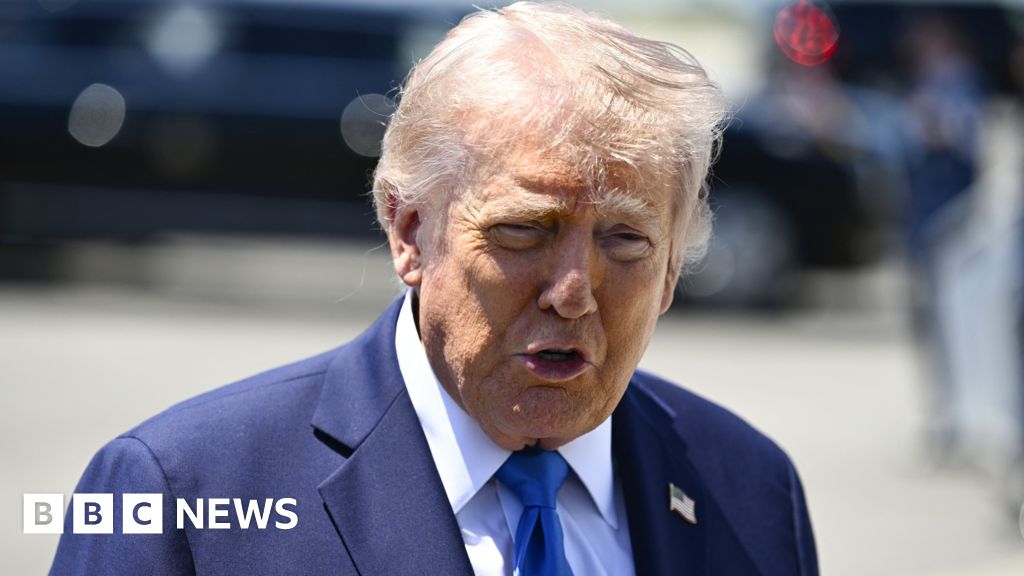
The White House had previously signaled optimism regarding potential dialogue, stating on Friday that Iranian officials had expressed a desire to talk. However, Iran consistently maintained that no plans for a direct meeting were in place. Trump’s decision to call off the US delegation’s trip further dashed hopes for an immediate breakthrough in face-to-face negotiations. Despite the cancellation, Trump affirmed that the current ceasefire would hold, stating that the possibility of further talks was still being considered, though he admitted that a resumption of hostilities had not yet been contemplated.
In his Truth Social posts, President Trump elaborated on his reasoning for cancelling the trip, citing "tremendous infighting and confusion" within Iran’s leadership, which he claimed led to a lack of clarity regarding who was in charge. He emphatically stated, "Also, we have all the cards, they have none! If they want to talk, all they have to do is call!!!" This assertion reflects a hardline stance, emphasizing the perceived strategic advantage of the United States in the current geopolitical landscape.
Earlier in the week, the White House had announced that US Vice-President JD Vance was on standby to join the talks, contingent on the success of initial diplomatic efforts. Vance had led the US delegation in the first round of talks earlier in April, which concluded without any significant agreement. His potential involvement in a subsequent round, had it materialized, would have signaled a heightened level of commitment from the US administration. The fact that he was merely on standby, however, perhaps indicated a cautious approach and a recognition that a major breakthrough was not immediately anticipated.
Iran’s President Masoud Pezeshkian had previously reiterated Tehran’s openness to dialogue, but he also pointed to the existing obstacles. He stated that "breach of commitments, blockade and threats are main obstacles to genuine negotiations," a clear reference to the US sanctions and military posture. These preconditions underscore the deep-seated mistrust and the significant challenges that lie ahead in bridging the divide between the two nations.
Pakistan has played a crucial, albeit challenging, role as a mediator in facilitating communication between the US and Iran. The recent round of talks on April 11, facilitated by Pakistan, ended without a resolution, highlighting the entrenched positions of both sides. Zarif’s visit to Islamabad was therefore a critical opportunity to reassess the situation and explore potential pathways forward. His statement on X, indicating that he had shared Iran’s framework for ending the war but was awaiting tangible signs of US sincerity in diplomacy, encapsulates the cautious optimism and inherent skepticism that pervades the current diplomatic efforts.
The underlying issues fueling the conflict are multifaceted, encompassing Iran’s nuclear program and its regional influence. The US and Israel have long expressed concerns that Iran is pursuing nuclear weapons, a claim that Tehran consistently denies, asserting that its nuclear activities are solely for peaceful energy generation. Despite these assurances, Iran’s enrichment of uranium to near weapons-grade levels has fueled international apprehension. The current conflict, in part, stems from these broader geopolitical anxieties and the perceived threat posed by Iran’s growing capabilities.
Meanwhile, the regional tensions extend beyond the US-Iran dynamic. In southern Lebanon, at least four people were killed in Israeli strikes on Saturday, according to Lebanese state news agency. The Israeli military stated that Hezbollah, an Iran-backed militant group, had launched rockets into Israel. Despite an existing ceasefire between Israel and Hezbollah, both sides have engaged in a pattern of escalating cross-border fire in recent weeks, with each accusing the other of violating the agreement. Israeli Prime Minister Benjamin Netanyahu’s office issued a statement on Saturday, ordering the military to "vigorously attack Hezbollah targets in Lebanon," indicating a significant escalation in the conflict along Israel’s northern border. This parallel escalation underscores the fragility of peace in the wider Middle East and the interconnected nature of the various regional conflicts.
The cancellation of the US envoy’s trip to Pakistan, therefore, occurs against a backdrop of heightened military activity and diplomatic uncertainty across the Middle East. The absence of direct engagement between the US and Iran, coupled with the ongoing hostilities in Lebanon, paints a grim picture of the region’s immediate future. While President Trump has indicated that the ceasefire will hold, the cancellation of talks suggests that the path to de-escalation remains fraught with significant obstacles, and the potential for renewed conflict looms large. The coming days and weeks will be critical in determining whether diplomatic channels can be re-established and whether a lasting resolution to the Iran crisis can be achieved. The role of regional mediators like Pakistan, while crucial, appears increasingly challenged by the deep-seated animosity and divergent interests at play. The international community watches with bated breath, hoping for a de-escalation that seems, at this moment, increasingly distant.


 Nakalama John
 Ramos Leo
 Nana Banana