
 Nakalama John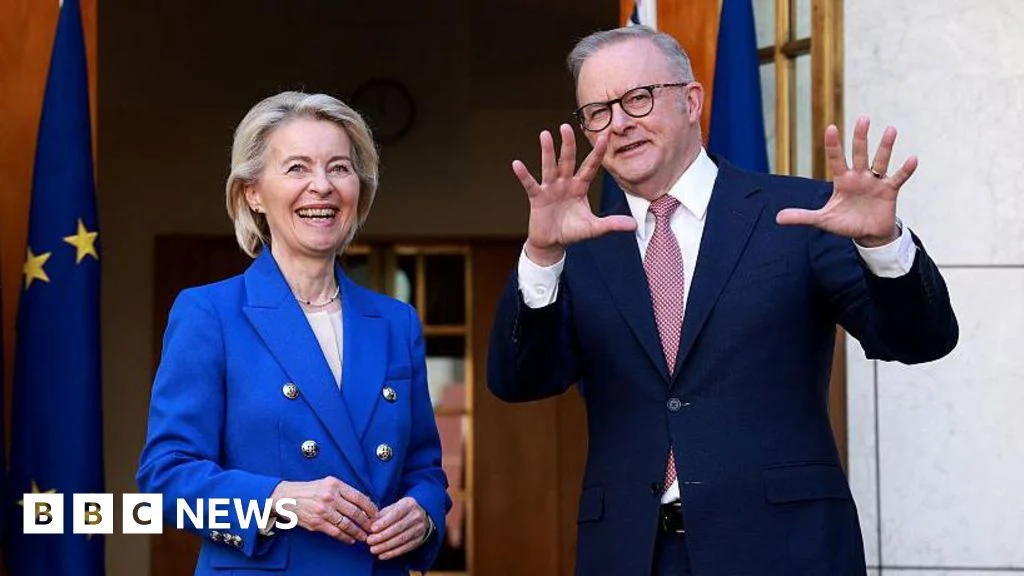
Beyond the immediate economic benefits, the agreement extends its reach into crucial areas of international cooperation, including enhanced collaboration on defence and the vital sector of critical minerals. This broader scope underscores a deliberate move towards fostering "collective resilience" in a world increasingly defined by geopolitical shifts and economic uncertainties. As President von der Leyen articulated, the global stage is "deeply changing," with major powers leveraging tariffs and supply chains as tools of influence and vulnerabilities to be exploited. This pointed observation alluded to the protectionist tendencies seen in recent US trade policy, particularly under former President Donald Trump, and the significant control exerted by nations like China over critical mineral markets. Von der Leyen stressed that in this evolving environment, "trust matters more than transactions," highlighting the "unique relationship" between Australia and the EU, which she described as "built for the long term." This sentiment reflects a growing recognition among democratic allies that economic interdependence, underpinned by shared values, is a crucial bulwark against external pressures and disruptions.
The protracted negotiations, spanning nearly a decade, saw both sides navigating complex issues, particularly in the sensitive agricultural sector and over geographical indications (GIs). The eventual agreement signifies a willingness to compromise and find common ground, driven by a strategic imperative to diversify trade relationships and secure supply chains. The EU, the world’s largest trading bloc, and Australia, a significant player in the Indo-Pacific, are seeking to deepen their engagement at a time when global supply chains are being re-evaluated following the COVID-19 pandemic, the war in Ukraine, and escalating geopolitical tensions. This deal is not merely about tariffs; it’s about cementing alliances and building resilience in an era marked by rising protectionism and economic coercion.
What’s in the Deal? Beef, Wine, Critical Minerals, and Defence
The economic core of the agreement revolves around the substantial removal of tariffs. Under the terms, almost all EU tariffs will be eliminated on key Australian agricultural products. This includes a wide array of goods such as wine, fruit and vegetables, olive oil, seafood, most dairy products, wheat, and barley. For Australia’s renowned wine industry, this translates into an estimated saving of approximately A$37 million annually for local producers and exporters, significantly boosting their competitiveness in the lucrative European market. Conversely, Australian consumers can look forward to a broader selection and potentially lower prices for European imports, including fine wines, spirits, artisanal biscuits, chocolates, and pasta, enriching the domestic market.
A particularly sensitive aspect of the negotiations concerned geographical indications (GIs), which protect the names of products originating from specific regions and possessing particular qualities or reputations linked to that origin. This issue was a major sticking point, given Europe’s strong tradition of protecting its regional food names and Australia’s history of using generic terms for products like ‘Prosecco’ or ‘Feta’, often influenced by migrant communities.
A significant outcome for Australia is the unique concession regarding Italian-style sparkling wine. Australian-made Prosecco can continue to be sold domestically under that name. For exports, however, the name will be phased out over a period of 10 years, allowing producers time to transition. This agreement marks Australia as the only country outside of Italy to have secured EU permission for continued domestic use of the name Prosecco, highlighting a distinct win for Canberra. Similarly, Australian producers can continue to use names like ‘Parmesan,’ while ‘Feta’ will be subject to "grandfathering and lengthy phase-out periods." Prime Minister Albanese acknowledged the cultural significance of these names, noting that Australia’s modern history is intrinsically linked to migrants who brought their culinary traditions, from "Greeks coming here and creating feta, or Italians coming and doing parmesan or people from Eastern Europe doing kransky sausages – it’s a connection with Europe." This compromise demonstrates a nuanced approach to balancing trade interests with cultural heritage and intellectual property rights.
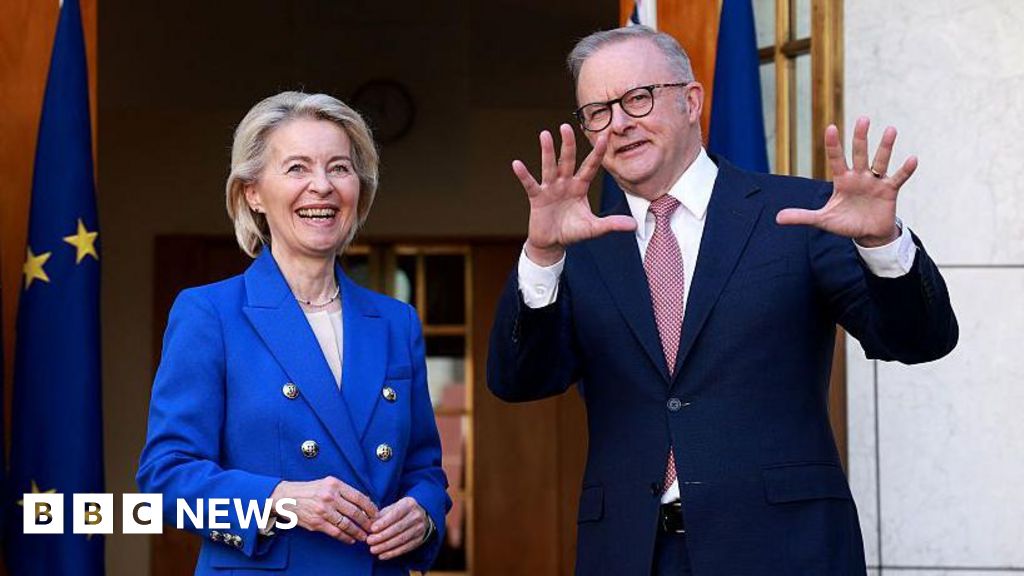
European Commission President von der Leyen underscored that the trade agreement strikes a "perfect balance," promising easier access for Australian exports to the EU market while simultaneously increasing the availability of EU-made goods in Australia. This reciprocal benefit is expected to stimulate economic growth and consumer choice in both regions.
However, not all sectors expressed unreserved enthusiasm. The agreement on meat exports, particularly beef, was met with disappointment by some Australian industry stakeholders. Andrew McDonald from Meat and Livestock Australia articulated that the deal on beef exports did not represent a fair outcome for Australian farmers. The industry had lobbied for an annual quota of at least 50,000 tonnes to the EU, but the final agreement allows for only approximately 30,000 tonnes, albeit a significant increase from the previous 3,389 tonnes. McDonald described this as "unquestionably a missed opportunity for Australia’s red meat producers, processors and exporters," highlighting the persistent challenges of gaining full market access to the highly protected European agricultural sector. Despite this, the increased quota still represents a valuable new market for Australian beef producers, albeit one that falls short of industry aspirations.
Beyond traditional trade, the deal formalizes a new security and defence partnership. This collaboration is set to foster greater cooperation across various critical domains, including the defence industry, counter-terrorism efforts, space exploration, and maritime security. Such initiatives are crucial for regional stability and reflect a shared commitment to addressing complex global security challenges. The partnership aims to enhance interoperability, facilitate information sharing, and potentially lead to joint exercises or technology development, aligning with broader strategies for a secure and stable Indo-Pacific region.
A particularly forward-looking element of the agreement is the enhanced cooperation on critical minerals. Ursula von der Leyen specifically announced greater collaboration on several critical minerals projects between Australia and the EU, naming lithium and tungsten as key examples. Australia is a global powerhouse in critical minerals, essential for the green energy transition, high-tech industries, and defence applications. The EU, on the other hand, is heavily reliant on imports for many of these minerals, with concerns about over-reliance on a single supplier, particularly China. This partnership aims to diversify supply chains, ensure security of access for the EU’s burgeoning electric vehicle battery and renewable energy sectors, and potentially foster joint investment in extraction, processing, and refining capabilities in Australia. This strategic alignment directly addresses the "supply chains as vulnerabilities" narrative, creating a more resilient and secure global economy for both partners.
The agreement also extends to areas like digital trade, intellectual property rights, and sustainable development, establishing a modern framework that reflects contemporary economic realities and challenges. Both leaders emphasized the strategic importance of this deal, not just for economic growth, but for strengthening democratic alliances and promoting a rules-based international order in a fragmenting world.
Looking ahead, the deal is expected to be subject to a ratification process in both Australia and the EU, which can be a complex and time-consuming undertaking, involving parliamentary approvals and potentially extensive debates. However, the strong political will demonstrated by both leaders suggests a smooth path towards full implementation. This sweeping trade deal between Australia and the EU stands as a significant achievement, promising to bolster economic prosperity, enhance strategic resilience, and deepen a crucial partnership in the face of ongoing global uncertainty. It represents a clear signal that both regions are committed to forging robust alliances and diversifying their economic and security interests in a rapidly changing world.



 George Anjay
 atisusanti
 Ramos Leo
 Roy Suryo
 Nana Banana