George Anjay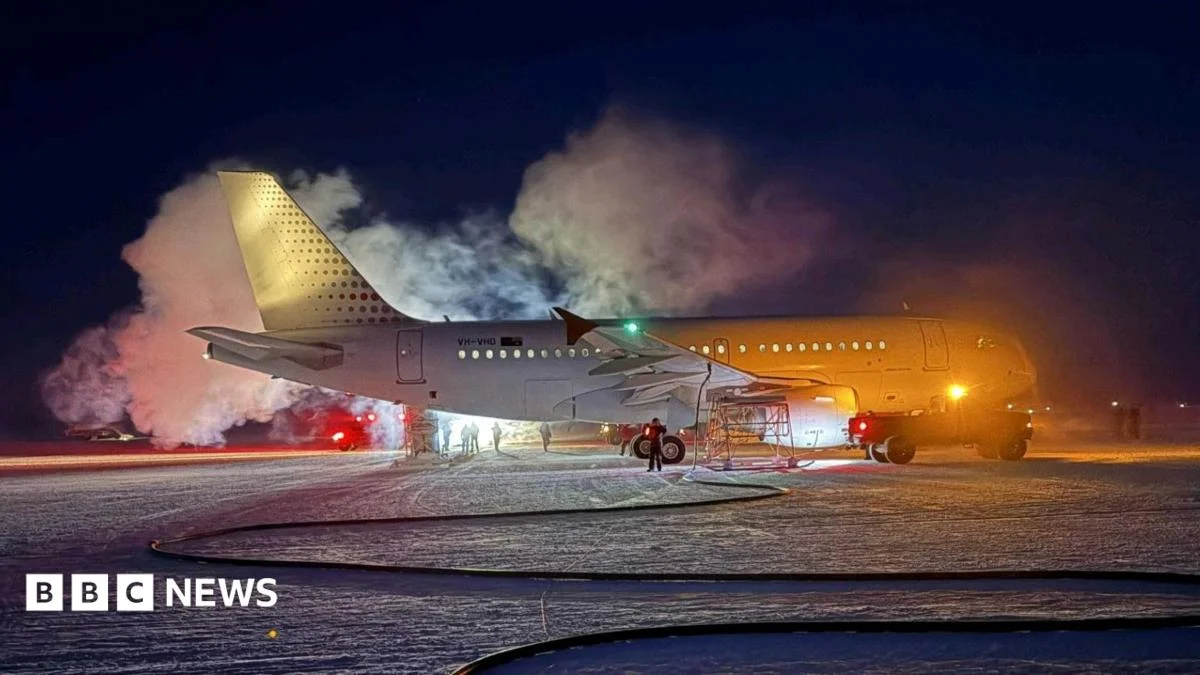
In a feat of unparalleled bravery and logistical mastery, an Australian aviation crew has successfully executed a perilous midwinter rescue mission in Antarctica, extracting a United States expedition member from the remote McMurdo Station amidst the brutal embrace of polar winter. The extraordinary operation, undertaken last Friday, was a race against time and the unforgiving elements, responding to an urgent request for a critical medical evacuation from the isolated research facility. Operating in the depths of Antarctic winter, where temperatures plummeted to a staggering -43 degrees Celsius (-45.4 degrees Fahrenheit) and the sun remained perpetually below the horizon, the Skytraders crew demonstrated exceptional skill and determination.
The specialized Airbus A319, affectionately nicknamed "Snowbird 1," was deployed for this critical mission. Skytraders, a leading Australian aviation company, highlighted the "extraordinary" nature of the undertaking, emphasizing the extreme challenges posed by the prevailing weather conditions. After an initial delay, a necessary concession to the volatile Antarctic climate, the crew managed to navigate their aircraft onto the icy runway under conditions that tested the very limits of aviation capability. The successful landing was a testament to the extensive training and profound understanding of polar operations possessed by the entire Skytraders team.
Upon arrival at McMurdo Station, located on Ross Island, the patient was swiftly and safely transferred to Snowbird 1. The aircraft then commenced its return journey to Christchurch, New Zealand, where the individual received immediate medical attention. Reports indicate that the patient is now recovering well, a positive outcome that underscores the significance and success of this daring rescue.
Duncan Mackay, Deputy Chief Executive of Skytraders, elaborated on the remarkable preparation involved. He revealed to The Australian newspaper that the Airbus A319 underwent a complete and rapid refit into a specialized medevac configuration within a mere 24 hours of receiving the distress call. This swift transformation of a commercial airliner into a fully equipped medical transport highlights the company’s agility and readiness for such critical missions.
However, the journey was far from straightforward. The planned departure from Hobart, Tasmania, was significantly delayed, with the crew enduring a tense 12-hour wait for a suitable weather window. This prolonged delay underscores the unpredictable nature of Antarctic weather and the meticulous planning required for any operation in such an environment. Eventually, in the early hours of Friday morning, Snowbird 1 embarked on its vital mission, navigating the vast expanse of the Southern Ocean towards the frozen continent.
While no specific details regarding the patient’s identity or the exact nature of their medical condition were disclosed, the confirmation of their successful recovery provides a measure of reassurance and highlights the crucial role of timely medical intervention, even in the most remote corners of the globe.
Mackay further emphasized the historical significance of this mission, stating his company’s belief that this was one of the closest landings a civilian airliner had achieved to the winter solstice, which occurred on June 21st. "Skytraders has conducted winter medevacs previously, but never this close to the winter solstice," he remarked. He stressed that such an operation demanded "an enormous amount of experience and familiarity with the conditions" to safely land a large aircraft on an ice runway in complete darkness and at extreme sub-zero temperatures. The precision required for such a maneuver is immense, with even the slightest miscalculation having potentially catastrophic consequences.
Captain Al Wallach, the pilot at the helm of Snowbird 1, lauded the successful mission as a reflection of the specialist expertise embodied by every member of the team. He underscored that the success was a collaborative effort, involving not only the flight crew but also the meteorologists who provided critical weather forecasts, the operational planners who meticulously charted the course, the dedicated runway teams who prepared the icy landing strip, and the vital medical personnel who were prepared to provide immediate care. "Every Antarctic mission demands absolute precision, but winter operations raise the complexity significantly," Captain Wallach stated. "The conditions we encountered were right on the edge of even the most specialised aircraft capability." This sentiment highlights the extreme nature of the environment and the cutting-edge technology and skill required to operate within it.
This daring midwinter rescue is not the first time Skytraders has answered the call for help in Antarctica. In March 2020, the company undertook a similar, albeit slightly less extreme, mission to evacuate a member of the US Antarctic Program, also based at McMurdo Station. During that operation, the temperatures, while still frigid, were marginally warmer, recorded at -30 degrees Celsius (-22 degrees Fahrenheit). This prior experience, while significant, pales in comparison to the extreme conditions faced during the recent midwinter rescue, further emphasizing the extraordinary nature of the latest mission.
The successful execution of this mission serves as a powerful reminder of the dedication and professionalism of the individuals who work in and support operations in Antarctica. It also underscores the vital role of specialized aviation capabilities in ensuring the safety and well-being of those engaged in scientific research and exploration in one of the world’s most challenging environments. The Skytraders crew, through their courage and expertise, have etched another remarkable chapter in the annals of Antarctic aviation history, proving that even in the depths of the polar night, human ingenuity and a commitment to saving lives can prevail against the harshest of natural forces. The ability to conduct such a complex medical evacuation in midwinter, with its inherent dangers of extreme cold, limited visibility, and treacherous ice runways, is a testament to the advanced training, specialized equipment, and unwavering resolve of the Australian aviation sector and its international partners. The mission not only highlights the technical prowess involved but also the profound human element of compassion and collaboration that drives such critical operations. The recovery of the patient is the ultimate measure of success, validating the immense effort and risk undertaken by all involved.




 Nakalama John
 Ramos Leo
 Nana Banana