
 Nana Banana
The landscape of military readiness and human performance is poised for a significant shift, as highlighted in a recent BBC Radio 4 "Inside Science" episode from July 23, 2026. This particular broadcast delved into three compelling scientific developments, ranging from human physiology and military strategy to marine biology and the burgeoning capabilities of artificial intelligence. At the forefront of the discussion was the controversial announcement by Secretary of Defence Pete Hegseth, declaring that the US military would begin screening all personnel aged 30 and older for testosterone deficiency. Those identified with low testosterone levels would be offered voluntary hormone replacement therapy (HRT), a move framed by the Secretary as essential for cultivating "a healthy, capable, and decisively dominant fighting force."
This policy raises a myriad of scientific, ethical, and practical questions, which presenter Tom Whipple explored with Professor Joe Herbert from the University of Cambridge, an expert in neuroendocrinology. The discussion likely centered on the complex role of testosterone in the male body, its natural decline with age, and the potential benefits and risks of exogenous hormone administration. Testosterone, a crucial androgen, influences a wide array of physiological functions beyond just libido and muscle mass. It plays a role in bone density, red blood cell production, mood regulation, cognitive function, and energy levels. A genuine deficiency, often termed hypogonadism, can manifest as persistent fatigue, reduced muscle strength and mass, decreased bone density, low libido, erectile dysfunction, and even mood disturbances like depression and irritability. For individuals suffering from clinical hypogonadism, hormone replacement therapy can indeed be life-changing, restoring vitality and improving overall well-being.
However, the military’s proactive screening program introduces several layers of complexity. Firstly, defining "low testosterone" can be challenging. Normal testosterone levels vary significantly among individuals and fluctuate throughout the day. What might be considered low for one person could be within a healthy range for another, or simply a transient dip. There’s also the question of whether age-related declines, often natural and not necessarily pathological, warrant intervention. Professor Herbert likely emphasized the body’s intricate feedback loops that regulate hormone production, suggesting that artificially boosting testosterone without a clear clinical need could disrupt this delicate balance.
The ethical implications of "voluntary" HRT within a military context are also profound. While presented as voluntary, the inherent pressures within a hierarchical organization like the military could subtly coerce personnel into undergoing treatment, particularly if there’s a perceived link between testosterone levels and career progression or unit readiness. The long-term health consequences of TRT, especially for individuals who might not have a severe clinical deficiency, are not fully understood. Potential side effects include an increased risk of cardiovascular events, sleep apnea, benign prostatic hyperplasia, and even testicular atrophy due to the body’s own production shutting down. Furthermore, the psychological impact of being labeled "deficient" and the societal implications of a military seeking to pharmacologically enhance its fighting force could have far-reaching consequences beyond individual health. Is the goal genuine therapeutic intervention, or is it edging towards pharmacological enhancement for military advantage, blurring the lines between medicine and performance optimization? The notion of a "decisively dominant" force suggests an emphasis on peak physical and mental performance, which might tempt the military to push boundaries on what constitutes medical necessity.
Beyond the human physiological frontier, the episode transported listeners to the depths of the ocean to explore a newly observed and utterly bizarre behavior among orcas. Marine Biologist Kathryn Ayres, from the non-profit organization Beneath the Waves, described instances where these apex predators collaboratively swim with such intensity into a dead sunfish that the unfortunate creature "explodes." This vivid description likely refers to a violent dismemberment or rupture of the sunfish’s internal structure, rather than a literal explosion in the conventional sense. Sunfish, or Mola mola, are massive, slow-moving oceanic fish known for their unusual flattened bodies and cartilaginous skeletons. They are not typically considered agile prey, and their sheer size would make them a substantial challenge to consume efficiently.
The behavior raises intriguing questions about orca intelligence, social learning, and predatory strategies. Is this a sophisticated, albeit brutal, method for processing a large food source, perhaps designed to break it down into manageable pieces for consumption by the pod? Given orcas’ renowned intelligence and complex social structures, it’s plausible that this is a "teachable moment" for younger orcas, demonstrating an effective, albeit unconventional, technique for subduing and dismembering particularly large prey. Orcas are known for their diverse hunting strategies, which are often culturally transmitted within pods, ranging from wave-washing seals off ice floes to coordinated corralling of fish. Alternatively, Ayres pondered if this violent interaction might simply be "just for fun," a display of immense power and perhaps a form of play behavior. Orcas are known to engage in play, and their immense strength could easily turn a large, passive sunfish into a high-energy "toy." The energy expenditure required for such a collaborative, forceful act suggests a significant motivation, whether it be sustenance, social bonding, or sheer enjoyment. This observation further underscores the depth of our ongoing discoveries about marine life and the complex, often surprising, behaviors exhibited by highly intelligent species like orcas.
Finally, the broadcast pivoted to the realm of pure mathematics and the accelerating capabilities of artificial intelligence, with resident mathematician Kit Yates providing reassurance and insight to Tom Whipple. While acknowledging the widespread anxieties about AI’s potential to one day pose existential threats, Yates highlighted a remarkable achievement: an AI system had successfully disproven an 87-year-old mathematics conjecture. A mathematical conjecture is an unproven statement or proposition that appears to be true but has not yet been rigorously demonstrated. Such conjectures can stand for decades, even centuries, defying the efforts of human mathematicians due to their complexity or the sheer volume of cases that need to be checked.
The disproving of an 87-year-old conjecture by an AI is a testament to the technology’s evolving power in abstract reasoning and problem-solving. It signifies a leap beyond mere data processing and pattern recognition into areas that traditionally required human intuition, creativity, and exhaustive logical deduction. This achievement could stem from several AI capabilities: its ability to rapidly process vast amounts of data and test countless permutations that would be intractable for humans, its capacity to identify subtle counter-examples in complex systems, or its skill in applying novel logical frameworks. The implications for mathematics and scientific discovery are profound. AI could become an invaluable tool for mathematicians, accelerating the pace of discovery, testing hypotheses, and even generating new conjectures. It might allow researchers to tackle problems of unprecedented complexity, pushing the boundaries of human understanding. While the existential concerns about AI remain a topic of intense debate, this particular demonstration offers a glimpse into a future where AI serves as a powerful collaborator, augmenting human intellect and unlocking secrets that have long eluded us. The episode, therefore, masterfully wove together disparate threads of scientific inquiry, from the very personal implications of human biology and military policy to the grand mysteries of the ocean and the ever-expanding frontiers of artificial intelligence.



 atisusanti
 George Anjay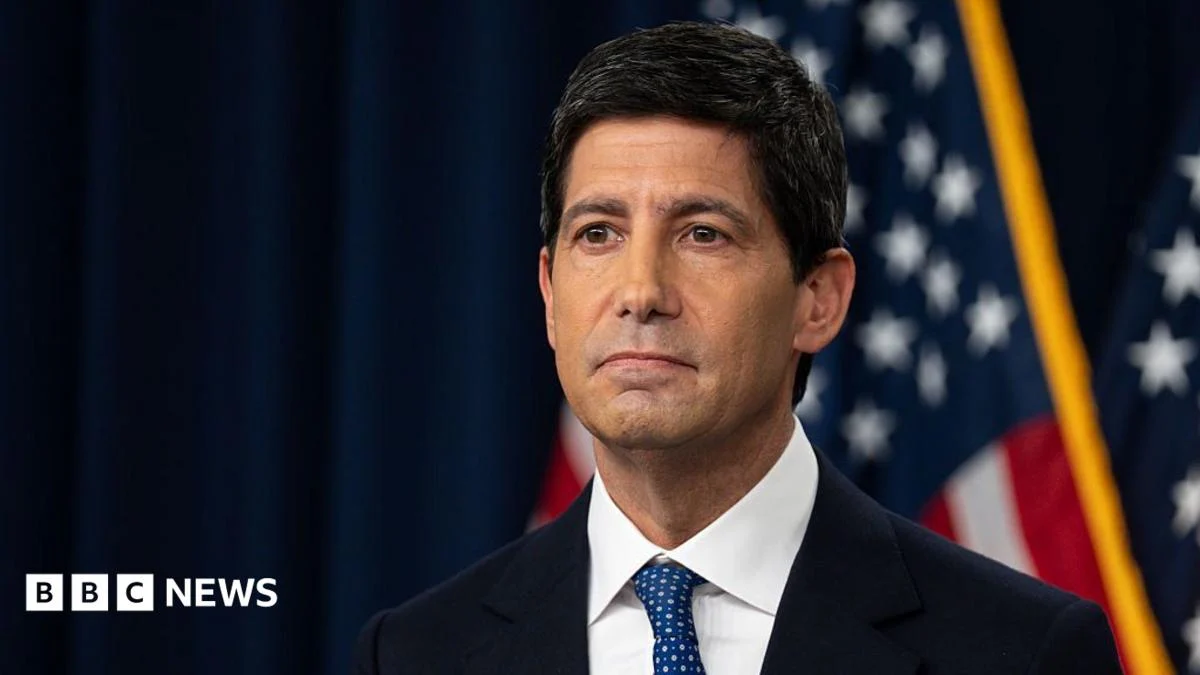
 Nakalama John

 Ramos Leo