Nana Banana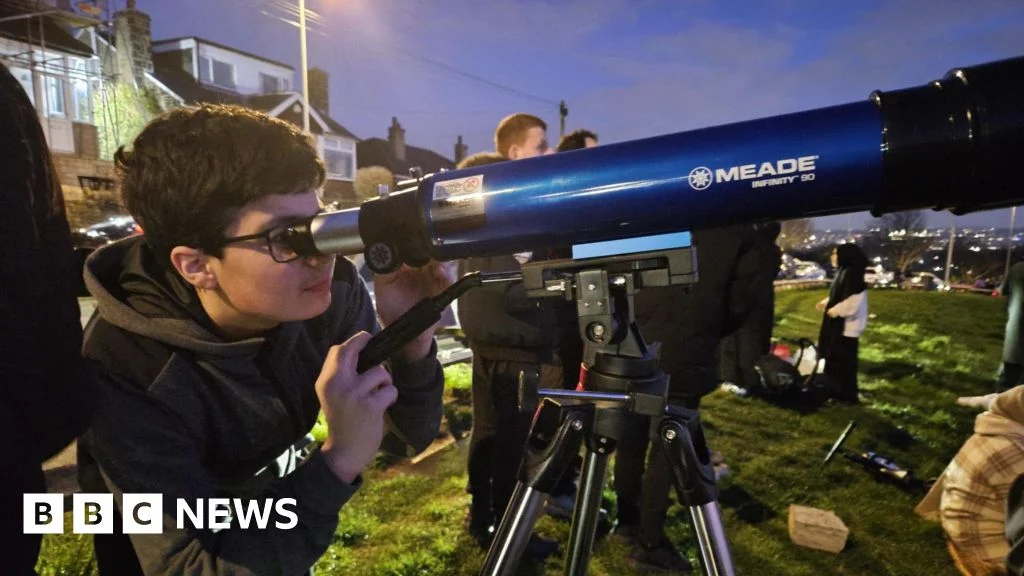
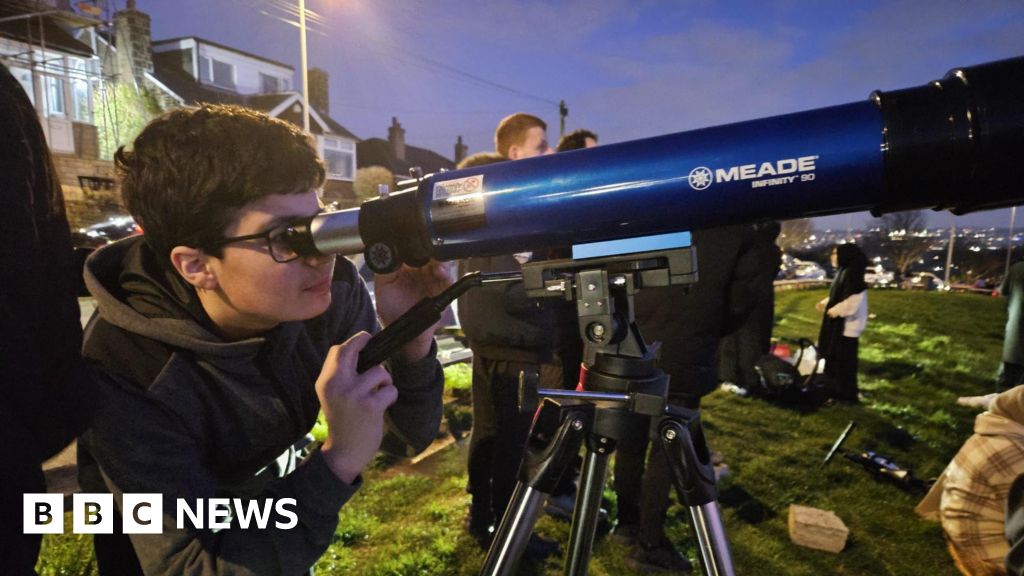
The "top of the world" site, offering expansive views across Bradford and beyond, became a hub of anticipation. Despite the gathering clouds that often shroud the British sky, spirits remained high. Telescopes, some modest and others more sophisticated, were carefully aligned, becoming conduits through which curious children like Eisa Faaris Khan, a bright-eyed 12-year-old, peered into the fading light, hoping to catch the elusive sliver. The atmosphere was a unique blend of scientific inquiry and profound faith, with community members sharing warm drinks, stories, and the shared excitement of the moment. It was a tangible demonstration of how deeply embedded this practice is within the local Muslim community, transforming a religious obligation into a communal celebration of unity and learning.
Islam operates on a lunar calendar, where each new month officially commences with the verifiable sighting of the crescent moon. This ancient tradition, rooted in the teachings of the Prophet Muhammad (peace be upon him), places a direct, experiential connection to the heavens at the heart of religious timing. Eid al-Fitr, specifically, signifies the culmination of Ramadan, a month-long period of fasting, prayer, and reflection where Muslims abstain from food and drink from dawn until sundown. The sighting of the new moon therefore marks a collective release from these spiritual rigours and the onset of a festive period characterized by communal prayers, family visits, gift-giving, and acts of charity. The pursuit of the moon is not merely a technical observation but a profound act of devotion, connecting contemporary Muslims to a timeless practice.
However, the globalized nature of modern life and varying interpretations of Islamic jurisprudence have led to diverse approaches to Eid celebrations among British Muslims. Some communities choose to align their Eid dates with pronouncements from Saudi Arabia, a significant centre of Islamic pilgrimage and scholarship. Others look to the nearest Muslim country, such as Morocco, which also adheres to traditional moon sighting methods. This divergence often results in different segments of the British Muslim population celebrating Eid on separate days, a situation that the moon spotters in Bradford, and indeed across the UK, are actively seeking to address through local, unified sightings. The ambition is to foster greater cohesion and shared experience within the diverse British Muslim community.
At the forefront of this movement is the New Crescent Society, a pioneering British grassroots astronomy network established in 2016. Born out of a desire for local autonomy and unity in religious practice, the society champions the principle of sighting the moon within the UK itself. Its mission is clear: to unite British Muslims under a single, locally observed moon. Hamza Mutahir Khan, a dedicated organiser for the society, embodies this commitment. With six years of consistent moon spotting under his belt, he has witnessed firsthand the organic growth and increasing recognition of the network. "Six years ago there was only two or three people and over the years it’s been a communal thing with the community getting to do it more often," he reflected, highlighting the expanding community engagement. His unwavering vision is to bridge the divides, stating, "The mission and the vision is to put the whole of English Muslims regardless of background under one moon, as Muslims together. If you don’t want to import or outsource the moon, there’s always the moon above us to follow." This philosophy underscores a deep connection to local skies and a desire for self-determination in religious observance.
The evening’s efforts, however, were ultimately thwarted by the characteristically cloudy British weather. Despite the hopeful anticipation and the diligent scanning of the horizon with both naked eye and optical aids, the new crescent moon remained obscured from view in the UK on Thursday. Consequently, the New Crescent Society declared Eid al-Fitr for Saturday for those who follow its guidance, allowing for the full 30 days of Ramadan to be completed. In contrast, many other Muslims in the UK, adhering to reports of moon sightings in Saudi Arabia and Morocco, celebrated Eid on Friday. This disparity vividly illustrates the challenge the New Crescent Society seeks to overcome, demonstrating the immediate impact of local vs. international sighting criteria.
The initiative has garnered support from academic institutions, highlighting the intersection of scientific observation and religious tradition. Erin McNeill, the Physics Engagement Lead at the University of Leeds, expressed her profound enjoyment in collaborating with the New Crescent Society and engaging with moon sighters from across the country. "We live in Bradford, this is one of the most important times in our city. It’s been so wonderful to see so many families and young people coming together to sight the new moon," she remarked, emphasizing the cultural and social significance of the event within the diverse urban fabric of Bradford. McNeill also articulated the broader societal benefits of a unified calendar: "The beauty of a united British calendar is that you would be able to have this network across the country and celebrate Eid on one day." This unity, she suggests, could foster stronger community bonds and a more shared experience of this significant religious festival.
Central to the Bradford gathering was the profound act of intergenerational knowledge transfer. Nazish, described as an "enthusiastic astronomer," exemplified this spirit as she guided her three nieces and nephews through the intricacies of moon spotting. For Nazish, it wasn’t just about identifying a celestial body; it was about imbuing the younger generation with a deeper understanding of their faith. "We came here for the first time last year and what they enjoyed is trying to understand the sunnah [Islamic traditions] and understanding why we try to find the moon ourselves, and why we try to follow the footsteps of the prophet (PBUH)," she explained. Her aspiration is clear and heartfelt: "I really want to pass on that knowledge to them so they can pass on that knowledge to their generation going forward, inshallah (God willing)." This sentiment was echoed across the field, as parents and older relatives patiently explained the significance of the moon, the phases it undergoes, and its profound role in their religious life. The image of Zacky Khan, a curious five-year-old, peering into a telescope with his dad, Woody Khan, perfectly captured this transfer of wonder and knowledge. Such moments are crucial in embedding religious and cultural practices within the family unit and ensuring their continuity.
The event transcended a mere search for the moon; it was a powerful affirmation of community, education, and spiritual continuity. It showcased how a religious obligation can become a vibrant, engaging, and unifying communal activity, bringing together diverse individuals – from seasoned astronomers to young children – under a shared sky and a common purpose. The Bradford moon spotters, through their dedication and the New Crescent Society’s vision, are not just looking for a sliver of light; they are nurturing a sense of identity, fostering intergenerational bonds, and striving for a more unified and self-reliant celebration of Eid across the United Kingdom. This blend of tradition, scientific observation, and community building ensures that the age-old practice of moon sighting remains a living, breathing part of their faith for generations to come.




 George Anjay
 Nakalama John
 atisusanti
 Ramos Leo