
 Ramos Leo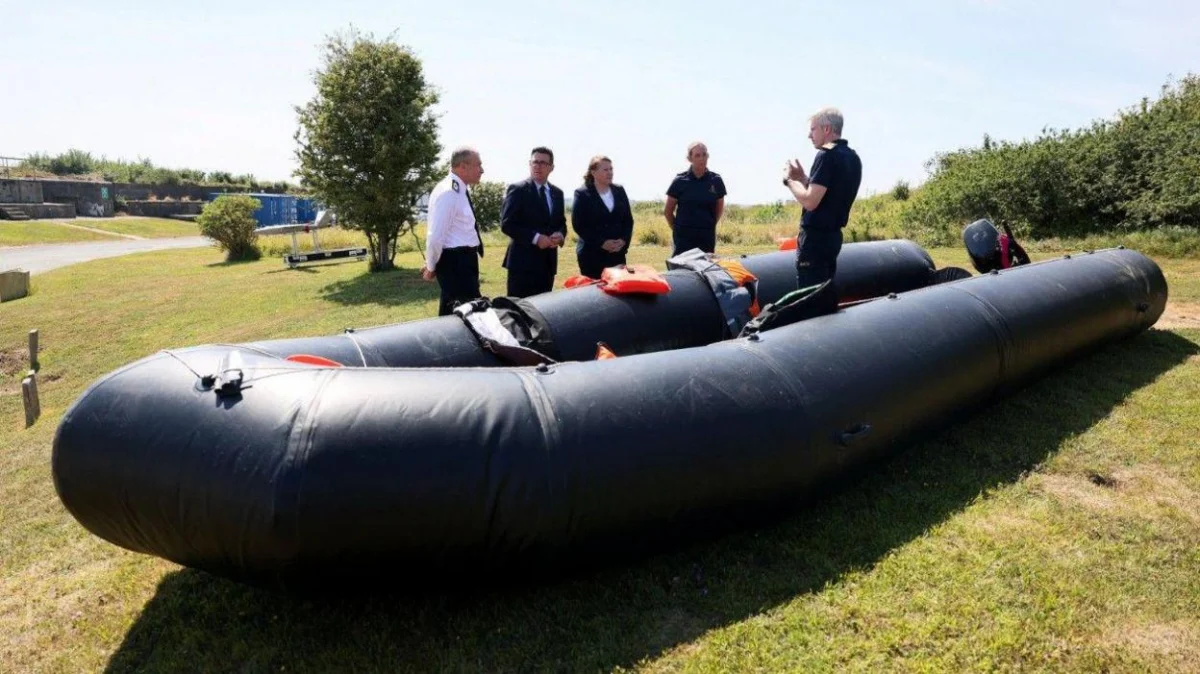
Prime Minister Andy Burnham has unequivocally pledged that his administration will be "relentless" in its efforts to drastically reduce the number of individuals undertaking perilous journeys to the UK aboard small boats. Speaking from the critical vantage point of Dover, the Prime Minister asserted that significant progress was already underway, signaling a comprehensive overhaul of the government’s approach to tackling this complex issue. This revamped strategy includes a substantial increase in enforcement personnel, with the number of officers dedicated to disrupting people-smuggling operations now doubled on both sides of the English Channel.
Burnham highlighted the public’s overwhelming desire for a definitive resolution to the small boat crisis. "People want to see this issue addressed," he stated, emphasizing the dual nature of his government’s strategy. Alongside robust enforcement, he stressed the imperative to "build a system that offers safe routes for people as well, because that also takes away the selling point of the gangs." This nuanced approach suggests an understanding that enforcement alone may not suffice, and that providing legitimate pathways could undermine the illicit trade facilitated by criminal networks. The challenge lies in balancing the imperative of border control with humanitarian considerations and international obligations.
The Prime Minister’s firm stance comes amid renewed political scrutiny over the UK’s migration policies, a debate reignited by recent events across Europe. Just days prior to Burnham’s address, tens of thousands of migrants made dramatic entries into the Spanish exclave of Ceuta, a situation that underscored the persistent pressures on European borders. Burnham acknowledged the swift response to the Ceuta crisis, noting that 98% of those who swam to the African territory had been returned to Morocco, effectively addressing the immediate influx. However, he quickly broadened the scope, adding, "There’s a broader issue about the Schengen area and our relationship with it, and of course, I would want to be in regular dialogue with the EU on those issues." This indicates a recognition that the UK’s migration challenges are often intertwined with broader European dynamics, hinting at a potential desire for closer collaboration with EU partners post-Brexit.
Reinforcing the government’s commitment to increased enforcement, the Home Office simultaneously announced a substantial boost to its operational capabilities. The number of National Crime Agency (NCA) officers specifically tasked with dismantling smuggling gangs facilitating small boat crossings has soared to almost 800, a significant increase from the 376 recorded at the beginning of 2025. This doubling of resources is mirrored by a similar expansion of French enforcement officers, a testament to what Burnham described as enhanced cross-Channel cooperation. These figures underscore the scale of the government’s investment in intelligence-led operations designed to target the criminal enterprises profiting from human misery.
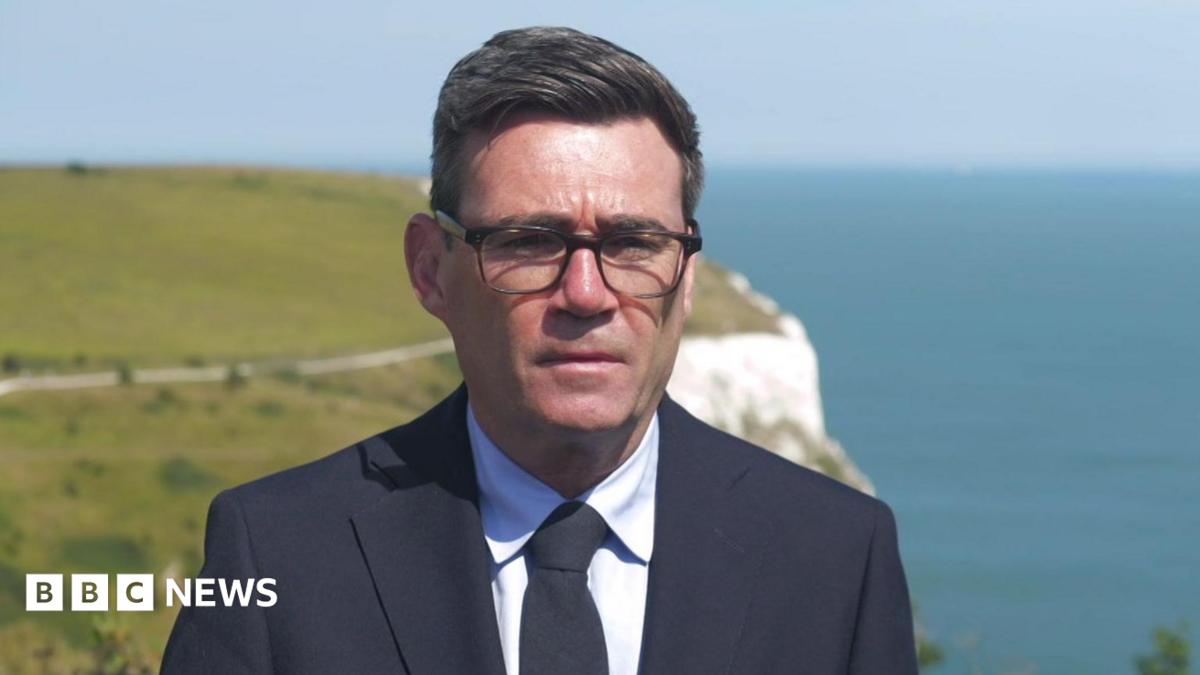
When pressed on whether he aimed to alter the often-heated tone of the public debate surrounding small boats, Burnham articulated a pragmatic vision. He expressed a desire to "deal with the issue rather than play politics with the issue," suggesting a move away from rhetoric towards actionable solutions. He elaborated on the public’s sentiment: "The public don’t like the idea that the border looks like it’s not controlled. We need to bring back that control. But also we need to offer support for people who genuinely need it." This statement encapsulates the tightrope walk his government intends to undertake – reasserting sovereignty while upholding humanitarian principles.
Government figures released by the Home Office on Sunday further highlighted the impact of intensified operations. Last year, nearly 300 members of smuggling gangs were arrested, and more than 1,100 small boats and engines were seized. The Home Office controversially claimed that the seized equipment, if utilized, could have facilitated the illegal entry of an additional 72,000 people into the UK. While the BBC has been unable to independently verify this specific claim, it illustrates the perceived scale of the disruption caused by enforcement activities. Burnham, while acknowledging these successes, maintained a cautious optimism: "Clearly, progress is being made, but we’re not complacent."
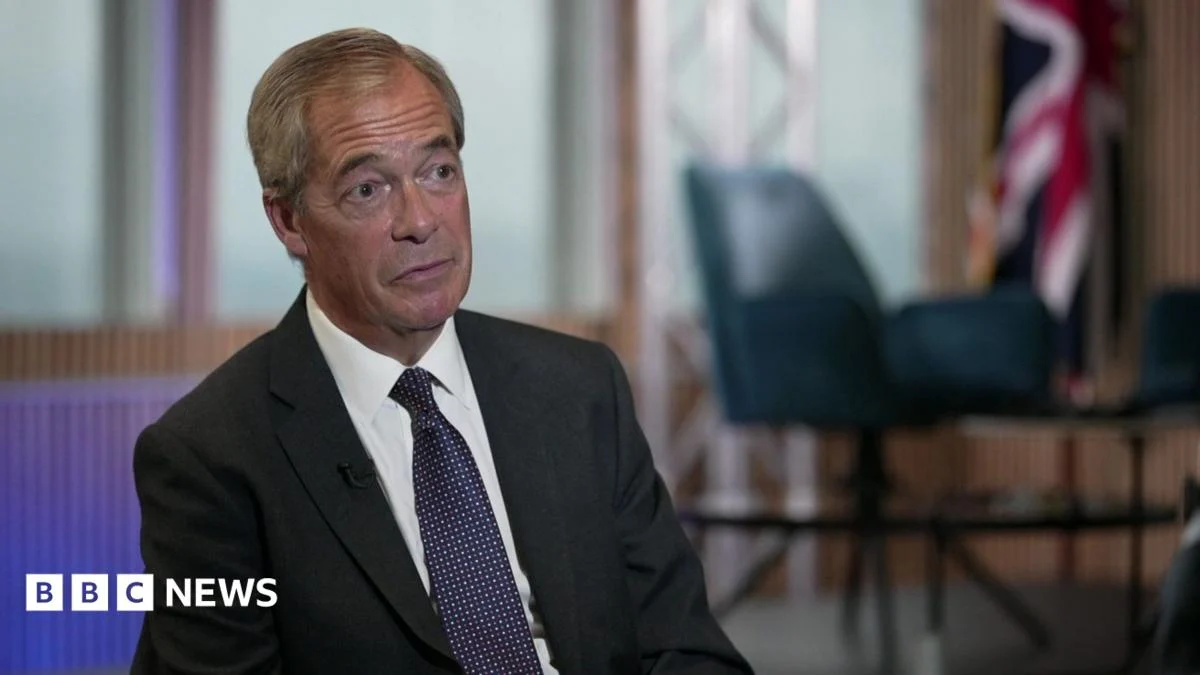
The government’s stance has, predictably, drawn sharp criticism and alternative proposals from opposition parties. Reform UK’s shadow home secretary, Zia Yusuf, put forward a radical plan to deploy the Royal Navy with orders to physically force migrant boats back to French shores. Yusuf dramatically framed this as "the largest military operation in the English Channel since World War Two." However, such a proposal immediately runs into significant legal and ethical obstacles. International conventions governing maritime law, specifically the Law of the Sea and search and rescue (SAR) protocols, mandate that states must render assistance to vessels in distress. Critically, these conventions do not permit the forced return of individuals to another country without that nation’s explicit consent, particularly if it places them at risk. A Labour Party spokesperson swiftly dismissed Reform’s plan as a "desperate bid" to divert attention from ongoing scrutiny of their party’s finances, suggesting a political motivation behind the extreme proposal.
Meanwhile, Conservative shadow home secretary Chris Philp launched a broadside against Labour’s record, asserting that they had failed to "smash the gangs as they promised over two years ago." Philp advocated for a more hardline approach, stating that the Tories would withdraw from the European Convention on Human Rights (ECHR) to enable the swift deportation of illegal migrants within a week of arrival. "If Andy Burnham was serious he would do this – but he’s too weak," Philp contended, attempting to paint the Prime Minister as indecisive.
The Liberal Democrats, through their immigration and asylum spokesman Will Forster, urged a different path, emphasizing the need for diplomatic engagement. Forster called upon the government to "redouble its efforts to rebuild our broken relationship with Europe" and to "continue to cut down on the asylum backlog." This position highlights the belief that international cooperation, particularly with EU member states, and efficient processing of asylum claims are crucial components of a sustainable long-term solution. Rebuilding ties with Europe could potentially pave the way for renewed agreements on returns and information sharing, similar to previous arrangements like the Dublin Regulation.
The scale of the ongoing challenge facing Burnham’s government is evident in the latest crossing statistics. Since he assumed the premiership just a fortnight ago, the number of migrants arriving in the UK via small boats has already surpassed 2,000, with 326 individuals making the perilous journey across the English Channel on a single Saturday. This surge reflects the typical seasonal pattern, as more people attempt the crossing during the summer months when sea conditions are generally more favorable.
Despite these recent numbers, Home Office figures indicate a broader trend: small boat crossings so far this year are down approximately 43% compared to the same period in 2025. The overall number of small boat crossings has been on a downward trajectory since peaking in 2022, a year that saw 45,755 arrivals. In 2021, the figure was 28,526, rising to its peak in 2022, before falling to 29,437 in 2023. However, 2024 saw an increase to 36,816, and 2025 recorded 41,472, making the current year’s observed reduction significant. As of July 29, 2026, a total of 14,128 people had crossed, marking a 42% decrease from the previous year’s corresponding period.
Small boat crossings have emerged as the dominant method for detecting illegal entry into the UK since 2020, transforming into a highly politicized symbol in the broader immigration debate. These arrivals accounted for 42% of asylum applications between April 2025 and March 2026. The increasing number of people per boat, which has more than doubled to an average of 67 since 2021, has heightened the risks involved, with at least 84 lives lost during Channel crossings in 2024, according to the United Nations.
While significant, small boat arrivals represent a fraction of the total immigration picture. They constituted approximately 5% of overall immigration into the UK from January to December 2025. The majority of individuals arriving via small boats subsequently claim asylum, which under international law, allows them to remain in the country while their applications are processed.
Analysis of those arriving reveals Eritrea as the leading country of origin, accounting for 18% of all arrivals from April 2025 to March 2026, with 7,042 detected individuals. Afghanistan followed with 4,490, Iran with 4,378, Sudan with 4,389, and Somalia with 3,740. Disturbingly, Home Office figures for January to December 2025 show that at least 2,000 small boat arrivals were identified as potential victims of human trafficking or other forms of modern slavery, highlighting the humanitarian dimensions of the crisis.
Beyond small boats, other methods of illegal entry persist. Between April 2025 and March 2026, 4,535 people were detected entering the UK without permission via alternative means, including hiding in vehicles, traveling on ferries, or through airports. This figure, however, represented a 22% decrease from the previous year. Furthermore, an unknown number of individuals arrive legally, for instance on work or study visas, and subsequently overstay their permitted duration.
The broader context of immigration to the UK also saw a notable shift last year. In May, the Office for National Statistics (ONS) reported that net migration to the UK fell to 171,000 in the previous year. This figure is almost half the number recorded in 2024, the year Labour assumed power, and marks the lowest level since 2012. The ONS attributed this significant drop primarily to a decrease in individuals arriving from outside the EU for work and study purposes, indicating that changes in legal migration routes are having a profound impact alongside the efforts to curb illegal crossings.
As Prime Minister Burnham navigates the complexities of this issue, his pledge to be "relentless" underscores a determination to regain control of the UK’s borders. Yet, the persistent political divisions, the intricate web of international law, and the humanitarian imperative ensure that the debate surrounding small boat crossings will remain a defining challenge for his government.


 George Anjay
 Nakalama John
 atisusanti
 Roy Suryo
 Nana Banana