
 Ramos Leo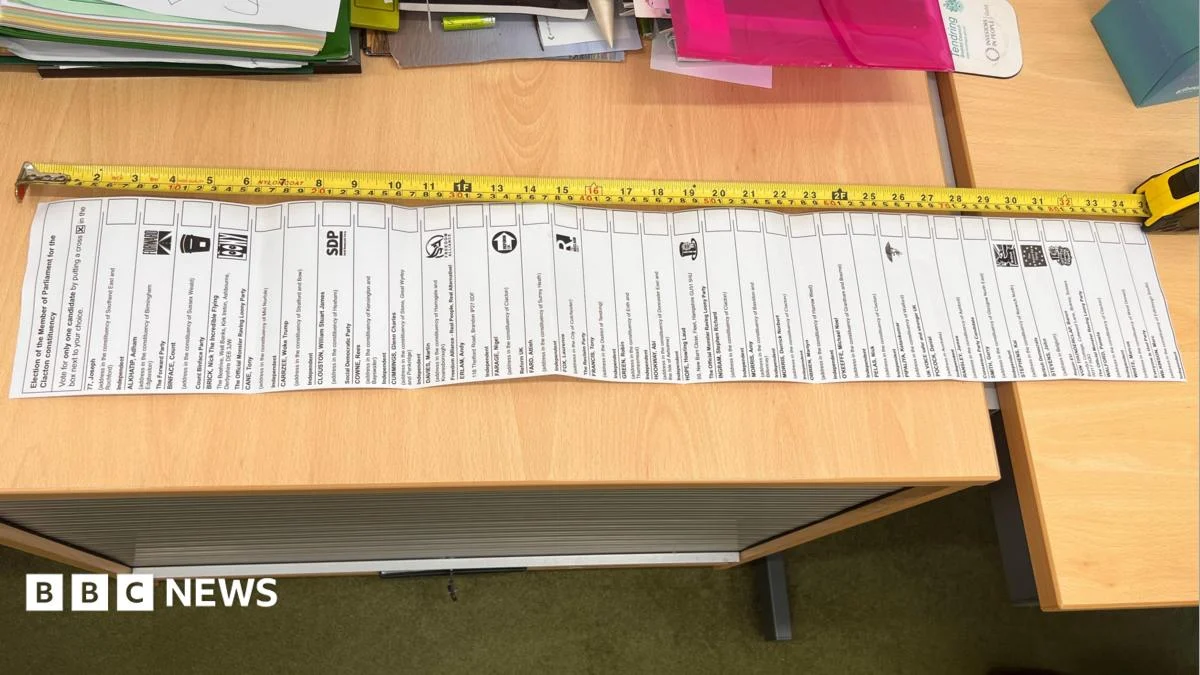
Peter Davidson, the Returning Officer for the Clacton constituency, has detailed the extensive operational overhauls his teams are implementing to manage the election. The standard procedures for ballot handling and counting are proving inadequate for the extraordinary number of candidates. "The ballots are going to be sometimes longer than the table," Davidson explained, highlighting the immediate physical constraint posed by the lengthy list of names. This necessitates a complete re-evaluation of the polling station setup and the subsequent counting process.
To accommodate the expanded ballot papers, election administrators are being forced to deploy "double tables" in counting halls. This seemingly minor adjustment has significant ripple effects, requiring larger venues, more equipment, and an increased number of staff to manage the enlarged footprint and extended processes. The logistical chain, from printing and distributing the unusually long ballot sheets to securely transporting and storing them, becomes inherently more complex and costly. Every stage, from the initial design and proofing of the ballot paper to its final verification, is impacted by the increased complexity.
The counting process itself is undergoing fundamental changes. Davidson noted that ballots would need to be "sorted in batches before we can verify them or even count them." This meticulous batching is essential to maintain accuracy and efficiency when dealing with such a crowded field, but it adds substantial time and manpower to an already labour-intensive operation. The heightened demand for trained personnel, security measures to safeguard the integrity of the process, and the extended hours required for all staff contribute directly to the escalating financial burden on the local authority responsible for administering the election.
Professor Paul Whiteley, a distinguished professor of government at the University of Essex, underscored the historical significance of the Clacton by-election’s candidate roster. The 34 individuals standing for the seat represent an all-time high for a House of Commons election, eclipsing previous records by a considerable margin. This surge in candidacies points to an evolving political landscape and presents unique challenges for both voters and electoral administrators.
Professor Whiteley cited the Haltemprice and Howden by-election in East Yorkshire in July 2008 as the previous record holder for candidate numbers. That contest featured 26 hopefuls, triggered by David Davis’s resignation from his seat. Davis, a prominent Conservative MP, had deliberately resigned and then re-stood as a protest against the then-Labour government’s policies on civil liberties and the extension of detention without charge for terror suspects. His highly publicised protest drew a diverse array of challengers, eager to use the platform to air various grievances or promote niche political agendas.
Prior to Haltemprice and Howden, the record had been held by the Newbury by-election in Berkshire in 1993, which saw 19 candidates vying for the parliamentary seat. That contest was notable for the Liberal Democrats’ victory, marking a significant moment in their resurgence at the time. The progressive increase in candidate numbers over the decades, culminating in Clacton’s 34, suggests a growing trend of political fragmentation, disillusionment with mainstream parties, or simply a greater willingness of individuals and smaller groups to engage directly with the electoral process, perhaps emboldened by the accessibility of information and the potential for media attention.
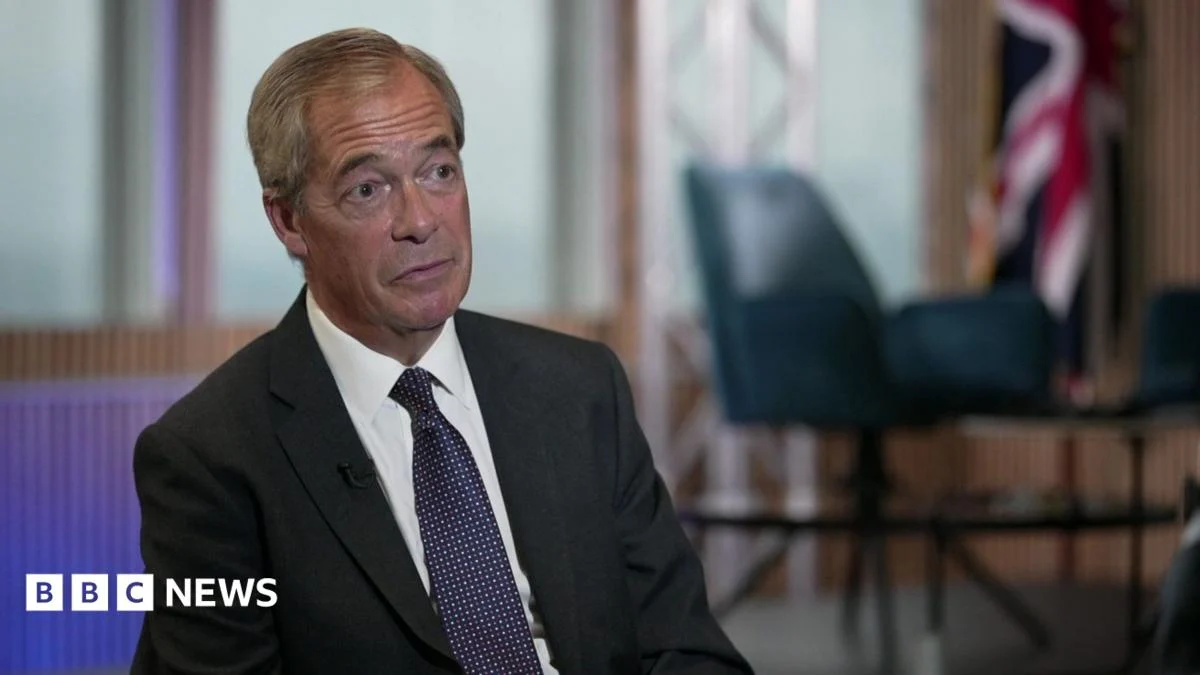
The catalyst for the Clacton by-election is the resignation of Nigel Farage as the Member of Parliament for the constituency on July 7. His resignation followed a period of intense scrutiny regarding his personal finances and the initiation of a parliamentary investigation into allegations of undeclared financial interests and potential breaches of parliamentary rules. Farage, however, is not stepping away from the political arena; he has chosen to re-stand as the leader of Reform UK, transforming the by-election into a high-stakes test of his enduring appeal and the burgeoning influence of his party. His decision injects a potent, nationally significant dimension into what might otherwise have been a local affair.
Among the unprecedented 34 candidates, a remarkable 20 are standing as independents. This figure itself constitutes a record for a single election, surpassing any previous instances of non-aligned candidates. The proliferation of independents often signals a deep-seated dissatisfaction with established political parties, a desire for truly local representation free from party whips, or a response to specific local issues that mainstream parties are perceived to have neglected. Their campaigns, often run on shoestring budgets and relying heavily on grassroots support, add another layer of complexity to the by-election, both for voters attempting to differentiate between them and for administrators managing the diverse range of campaign materials and electoral symbols.
Adding an extraordinary dimension to the Clacton by-election is the collective decision by the major political parties not to field candidates. Neither the Conservative Party, the Labour Party, the Liberal Democrats, nor the Green Party have put forward nominees. This highly unusual strategic retreat by the mainstream parties is virtually unprecedented in modern British electoral history for a by-election involving such a prominent political figure. It raises profound questions about their motivations and the potential implications for democratic representation.
Several factors likely influenced the major parties’ decision to abstain. One strong possibility is a strategic calculation to avoid legitimising Nigel Farage’s return to Westminster by offering him a direct, high-profile contest. By not participating, they might aim to deny him the narrative of having "defeated" the established parties, thereby potentially diminishing the perceived mandate of his victory, should he win. Another significant consideration is the financial risk involved. With 34 candidates on the ballot, the threshold for retaining an election deposit – typically 5% of the total votes cast – becomes considerably harder to achieve. Each party standing would risk losing their £500 deposit if their candidate fails to meet this threshold, a real possibility in such a crowded and unpredictable field.
Furthermore, the absence of major parties could be an implicit acknowledgement of Clacton’s unique political landscape and Farage’s strong personal brand within the constituency. Having previously held the seat, his local support base is robust. Mainstream parties may have concluded that their resources would be better deployed in other, more winnable seats, rather than expending significant effort and capital in a by-election where the odds are stacked against them. This decision, however, carries the risk of alienating their own supporters in Clacton and potentially reinforcing the narrative that they are out of touch or unwilling to engage in certain political battles.
The democratic implications of the major parties’ absence are profound. While it provides an unparalleled platform for independent and fringe candidates, it also limits the choice for voters who typically align with the established parties. It forces them to consider alternatives they might not ordinarily entertain, potentially leading to lower turnout or votes cast out of protest rather than genuine endorsement. The Clacton by-election, therefore, becomes a unique case study in the dynamics of political engagement and representation in an era of increasing political volatility and voter disillusionment.
The Clacton by-election stands as a stark indicator of the evolving challenges within the British electoral system. The record-breaking number of candidates, the unprecedented logistical demands, and the highly unusual absence of major party contenders collectively underscore a period of significant political flux. As election administrators adapt to manage these new complexities and costs, and as voters navigate a ballot paper unlike any seen before, the outcome will offer crucial insights into the future direction of British politics, the resilience of its democratic processes, and the enduring appeal of anti-establishment figures in a fragmented political landscape. The lessons learned from Clacton will undoubtedly inform future electoral practices and discussions about the health and adaptability of the UK’s representative democracy.

 George Anjay
 Nakalama John
 atisusanti
 Roy Suryo
 Nana Banana