Ramos Leo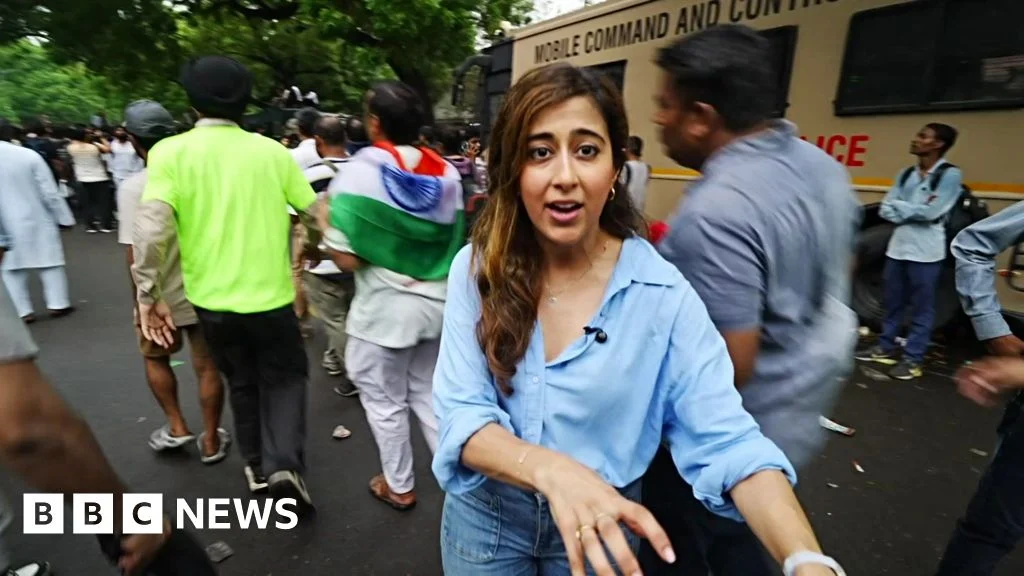
Thousands of people are attempting to march to India’s parliament, a teeming, determined river of humanity flowing through the capital’s arterial roads, after the Cockroach Janta Party (CJP) called a protest demanding sweeping reforms to the education system. This massive demonstration, held on a sweltering Monday in Delhi, marked a significant escalation for a movement that began merely as a satirical online jest. The participants, a diverse cross-section of students, parents, educators, and concerned citizens, carried hand-painted placards adorned with the ubiquitous insect, chanting slogans that ranged from "Education for All, Not Just a Few!" to "The Cockroaches Are Here, Hear Our Fear!" The sheer scale of the mobilization, with estimates placing the crowd well over ten thousand, brought parts of the city to a standstill, forcing authorities to deploy significant police contingents and erect barricades around the heavily guarded Parliament House complex.
The group, which is not a real political party in the traditional sense, started out as biting satire. Its genesis can be traced back to early 2024, emerging from frustrated online communities and meme culture. The "cockroach" moniker was initially a self-deprecating, yet defiant, symbol. It represented the marginalized, the overlooked, the persistent and seemingly indestructible common person who, despite being constantly swatted down or ignored by the powerful, always finds a way to survive and multiply. It was a commentary on the perceived political apathy and the unresponsiveness of established political parties to the everyday struggles of ordinary Indians. The founders, largely anonymous digital activists, envisioned CJP as a mirror, reflecting the absurdity of a system where genuine grievances often went unheard, unless packaged in an equally absurd, attention-grabbing format. The "Janta Party" suffix, a nod to several historical political formations in India, added another layer of satirical weight, contrasting the grand promises of traditional parties with the humble, yet resilient, ‘cockroach’ representing the electorate.
But on Monday, it held its biggest protest yet, transforming from a digital whisper into a roaring physical presence. BBC correspondent Azadeh Moshiri, who attended the group’s first nascent protest in early June, reports from the ground in Delhi, highlighting the stark contrast between then and now. "When I first encountered the CJP’s call to action, it was a modest affair," Moshiri recounted, navigating the current throng. "A few hundred students gathered at Jantar Mantar, a traditional protest site, carrying homemade placards. The mood was more one of cynical amusement mixed with genuine frustration. They joked about being ‘cockroaches’ – insignificant, but resilient. They spoke about broken promises regarding education, lack of job opportunities, and the ever-increasing cost of living." She observed that the early participants were primarily university students, expressing their disillusionment with entrance exam irregularities, outdated curricula, and a job market that seemed increasingly hostile to their aspirations. The issues, while potent, felt contained within academic circles.
What transformed this niche satirical protest into a mass movement in a matter of months is a confluence of factors. Firstly, the core message of "education reform" resonated deeply across socio-economic strata. India’s education system, vast and complex, faces myriad challenges: underfunded public schools, expensive private alternatives, a widening digital divide, a curriculum often seen as detached from modern skills, and a chronic shortage of qualified teachers, particularly in rural areas. The CJP managed to tap into a collective anxiety about the future of India’s youth, promising a platform for voices that felt unheard by established political channels.
Secondly, the CJP’s decentralized, ostensibly leaderless structure, initially born out of its satirical origins, proved to be an unexpected strength. Without a central figurehead, it was harder for authorities to target or discredit. Its messages spread virally through encrypted messaging apps and social media platforms, bypassing traditional media gatekeepers. The "cockroach" meme, easily adaptable and shareable, became a symbol of defiance and unity. People began identifying with the symbol not just as a joke, but as a representation of their own struggles against a system they felt was indifferent to their plight.
Moshiri noted this shift. "Today, the faces are different. While students are still a significant presence, I see parents worried about their children’s future, teachers advocating for better working conditions, and even small business owners concerned about the skills gap in the workforce. The satire has given way to a palpable sense of urgency. The ‘cockroach’ has shed its purely humorous skin and adopted a more serious, almost symbolic, meaning of collective, persistent action."
The demands put forth by the CJP are surprisingly detailed for a movement that started as satire. They call for a significant increase in public spending on education, aiming for at least 6% of GDP, a figure long recommended but rarely met. They advocate for a complete overhaul of the national curriculum to prioritize critical thinking, vocational training, and digital literacy over rote learning. Furthermore, the CJP demands greater transparency in university admissions and government job recruitment, an end to fee hikes in public institutions, and a national program to bridge the digital divide, ensuring equitable access to online learning resources for all students, irrespective of their geographical location or economic background. They also push for improved teacher training, better salaries, and the protection of academic freedom, which they argue is under threat.
The march towards Parliament House was a spectacle of organized chaos. Volunteers, identifiable by their small, cockroach-shaped badges, directed traffic, distributed water, and ensured the peaceful flow of the procession. The air was thick with chants, drums, and the occasional burst of laughter, demonstrating that even in their earnestness, the CJP had not entirely abandoned its roots in humor. Placards read: "We May Be Cockroaches, But We Built This Nation," "Education is a Right, Not a Privilege," and "From Our Holes to Your Halls, We Demand Our Calls." The police presence was heavy, but initially restrained, carefully monitoring the situation as the massive crowd swelled.
The government’s initial reaction to the CJP has been cautious, a mix of dismissal and low-key surveillance. Official statements have downplayed the movement, referring to it as an "online fad" or a "small group of disgruntled elements." However, the sheer numbers on display today will make such dismissals increasingly difficult. The CJP’s ability to mobilize thousands without traditional party machinery or funding suggests a deeper discontent simmering beneath the surface of Indian society. Its decentralized nature makes it resistant to conventional methods of containment, and its humorous origins provide a shield against outright suppression, as cracking down too hard on a "satirical" movement could backfire politically.
The CJP’s rise is emblematic of a broader trend in global protest movements, where social media acts as a powerful catalyst for collective action, often blurring the lines between online activism and real-world mobilization. It highlights the growing impatience of citizens, particularly the youth, with traditional political processes and their willingness to embrace unconventional forms of protest. The "cockroach" metaphor, initially a jest, has now become a powerful symbol of the people’s resilience and their persistent demand for accountability and change.
As the thousands converged near the final police barricades, the atmosphere crackled with anticipation. While the immediate outcome of this particular march remains uncertain – whether they will reach Parliament, whether their demands will be acknowledged – one thing is clear: the Cockroach Janta Party, once a punchline, has now become a force to be reckoned with. Its growth from a satirical online movement to a significant street protest underscores a profound shift in India’s socio-political landscape, where the marginalized and overlooked are finding their voice, and like the tenacious insect they have adopted as their symbol, they are proving incredibly difficult to ignore. The question now is not if the ‘cockroaches’ will be heard, but how loudly the establishment will be forced to listen.




 Roy Suryo