Nana Banana
The immediate trigger for this renewed scrutiny is a legal challenge that successfully overturned previous approvals. The industry regulator, the Offshore Petroleum Regulator for Environment and Decommissioning (Opred), is now meticulously reviewing revised applications for the estimated £8.7 billion Rosebank project and the nearby Jackdaw gas field. These applications were mandated after a landmark ruling by the Court of Session in Edinburgh in 2024, which declared the initial approvals unlawful. The court found that consent had been granted without adequately considering the full lifecycle emissions, specifically the "Scope 3" emissions generated when the extracted fossil fuels are ultimately burned.
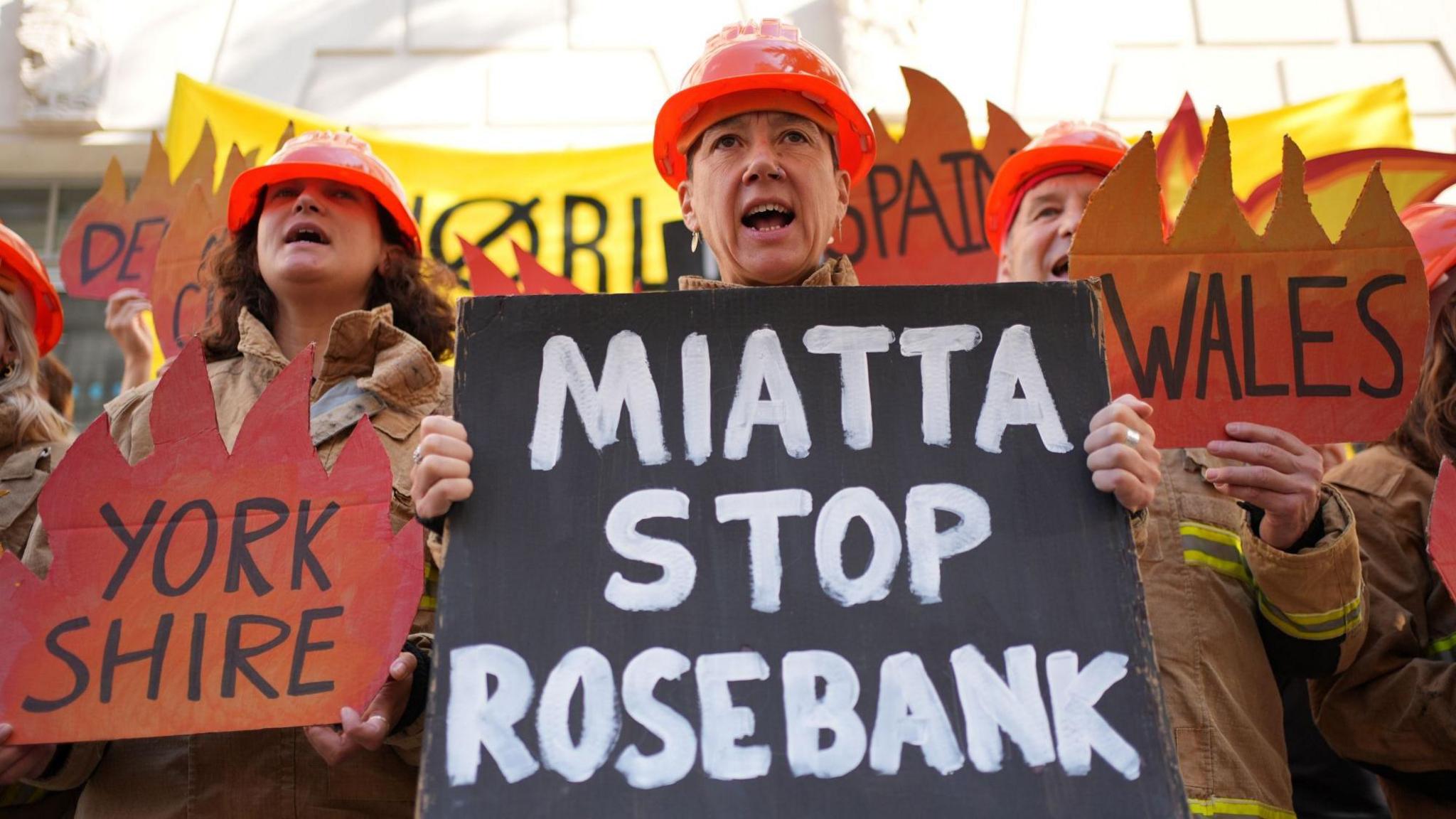
Environmental campaign group Uplift, the organization behind the successful legal challenge, has forcefully reiterated its argument against further drilling. Isobel Reid, representing Uplift, passionately articulated the group’s stance, emphasizing the escalating climate crisis. She pointed to recent extreme weather phenomena, including devastating heatwaves and widespread wildfires, as undeniable evidence of a planet under severe stress. Reid asserted that any new fossil fuel projects would "wreck our planet," exacerbating these climate impacts and undermining global efforts to transition to sustainable energy sources. Her call to action urged the government to reject the applications, insisting that the prime minister must take urgent steps to address the root cause of climate change: the burning of fossil fuels. Uplift’s position is that the UK, as a signatory to international climate agreements, has a responsibility to lead by example and cease new fossil fuel developments.
Conversely, proponents of the Rosebank project, led by oil company Adura, argue for its vital role in the UK’s energy mix and economic stability. Neil McCulloch, CEO of Adura, championed the project on BBC Radio Scotland, highlighting the continued necessity of fossil fuels for years to come, even as the world transitions to renewables. He stressed that domestic production, such as that from Rosebank, would generate billions in tax revenues for the UK exchequer, contributing significantly to national finances. McCulloch also underscored the profound economic impact on the north-east of Scotland, where the project is expected to create and sustain numerous jobs, bolstering a region historically reliant on the oil and gas sector. He described the Rosebank field’s global significance as "low" when compared to total world production, yet "very, very significant" in terms of the localized employment opportunities and economic stimulus it would provide. McCulloch expressed confidence that a "balance of advantages" lay squarely with approving Rosebank, effectively putting the ball back in the government’s court for a final decision.
The Rosebank oil field, along with the Jackdaw gas field located approximately 150 miles east of Aberdeen, had initially received approval under the previous Conservative government, and preparatory construction work is already well underway. The court’s ruling, however, mandated a halt to actual oil and gas production until a fresh, lawful decision is made, though preliminary site work was permitted to continue. This legal intervention underscores the growing scrutiny over the environmental impact assessments (EIAs) for such large-scale projects.
The sheer scale of the Rosebank project is substantial. It is estimated to contain the equivalent of up to 300 million barrels of oil. At its operational peak, the field is projected to produce approximately 69,000 barrels a day. The vast majority of this output will be oil, which is intended to be shipped to Europe for refining before being sold on the open market. A fresh environmental impact assessment, commissioned by Adura, concluded that the oil and gas produced over Rosebank’s lifetime would generate approximately 250 million tonnes of planet-warming greenhouse gases. To put this figure into perspective, it is roughly equivalent to two-thirds of the UK’s total annual emissions for 2024.
However, the industry counters this alarming figure with the argument that domestic production will primarily displace imported oil, rather than adding new emissions to the global total. They contend that the carbon footprint associated with transporting oil from distant foreign sources can often be higher than that of domestically produced resources. Therefore, from their perspective, the EIA’s conclusion that the emissions were "not significant" is justified within the context of global energy demand and supply dynamics. This "displacement argument" is a central pillar of the industry’s case, suggesting that stopping Rosebank would merely shift the environmental burden elsewhere, potentially to countries with less stringent environmental regulations.
The political ramifications of this decision are considerable, placing significant pressure on Prime Minister Andy Burnham and his administration. During a visit to victims of a wildfire in Stourbridge, West Midlands, Prime Minister Burnham acknowledged the need to focus on adapting to a changing climate, including investing in resources like aerial firefighting capabilities. Yet, he also articulated a need for a "pragmatic approach" towards domestic oil and gas production. He stated, "We won’t be able to stop using oil and gas for some time. That’s just a fact." Burnham further suggested that the revenues generated from continued domestic extraction could potentially "accelerate use of it so that we pay for the transition" to a greener economy. This stance highlights the complex tightrope the government walks: acknowledging the climate crisis while simultaneously seeking to maintain energy security and fund the transition to renewables.
The consultation for the Jackdaw gas field closed the previous week, setting a precedent for the Rosebank decision, which concluded its consultation period later on Monday. Ultimately, the decision on both projects is a quasi-legal one, resting with the regulator Opred and requiring final approval from the Energy Security Secretary, Miatta Fahnbulleh. While no specific timetable has been publicly set for this crucial decision, the operator, Adura, has indicated that a relatively swift resolution could see the Jackdaw field commencing gas production by the upcoming winter. The image of the Petrojarl Rosebank production vessel already floated into position, ready for deployment, serves as a stark visual reminder of the advanced stage of preparations and the significant investment already committed to the project. The final decision will therefore not only shape the UK’s energy landscape for decades to come but also serve as a critical test of the government’s commitment to its climate targets and its ability to reconcile conflicting national priorities.


 George Anjay
 Nakalama John
 atisusanti
 Ramos Leo