Ramos Leo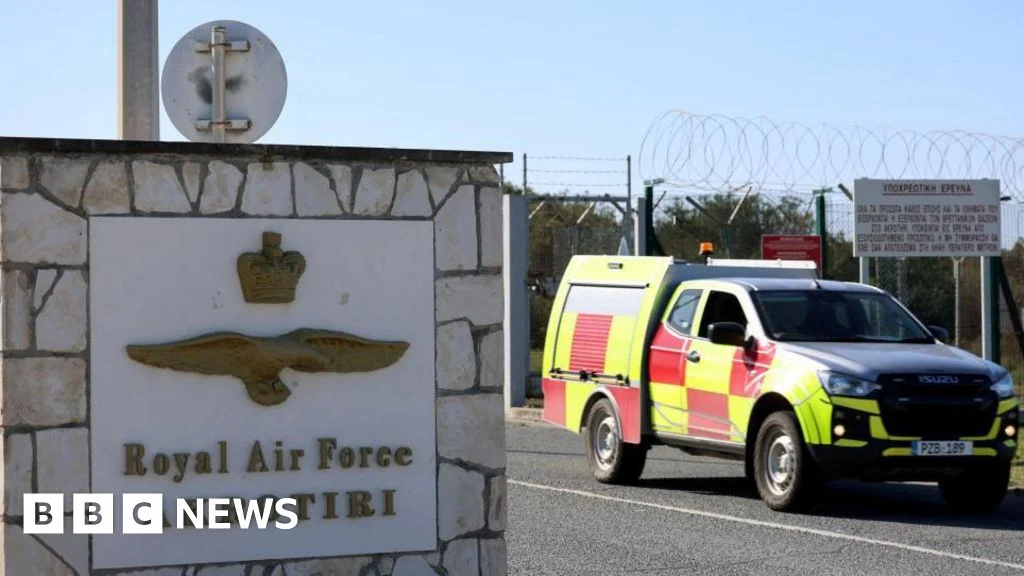
The Sovereign Base Areas (SBAs) of Akrotiri and Dhekelia are a direct legacy of Cyprus’s independence from British rule in 1960. Under the meticulously negotiated Treaty of Establishment, which granted the Republic of Cyprus its sovereignty, the UK retained full sovereignty over these two distinct areas, totaling 98 square miles (254 sq km). This arrangement was designed to safeguard British strategic interests in the Eastern Mediterranean, a region deemed vital during the Cold War era and in the aftermath of the Suez Crisis. The bases have since served as critical staging posts for British military operations, intelligence gathering, and training, underscoring the UK’s enduring geopolitical influence in the region.
However, the perceived stability and utility of these bases have recently been thrown into sharp relief by events unfolding in the broader Middle East. RAF Akrotiri, one of the two sovereign bases, found itself targeted by drones earlier this month, shortly after the intensification of the US-Israeli conflict with Iranian-backed proxies. This attack, believed to have originated from Lebanon and executed by the Iranian-backed group Hezbollah, has ignited a fervent debate within Cyprus. Protesters on the island have voiced significant concerns, arguing that the presence of British military installations inherently makes Cyprus a potential target, inadvertently drawing the nation into conflicts that are not its own.
The drone strike itself resulted in "minimal damage" to RAF Akrotiri, with two of the three incoming drones reportedly intercepted. A third drone, however, managed to strike the base. In response to the attack and the escalating regional instability, the UK dispatched a British naval frigate, HMS Dragon, to bolster its defences around the island, although its arrival in the Mediterranean was noted as being some time after the incident. While the UK has maintained that its sovereign bases in the south and south-east of Cyprus have not been directly used for US offensive operations against Iran, it has confirmed granting the US permission to utilize them for "specific defensive operations." This distinction, while legally precise, has done little to quell the anxieties among the Cypriot populace regarding their island’s role in the wider geopolitical theatre.
The strategic value of Cyprus, an EU member state situated at the crossroads of Europe, Asia, and Africa, has long been recognized. For the UK, the SBAs offer an unparalleled forward operating base in a volatile region, facilitating rapid deployment and logistical support for operations across the Middle East and North Africa. The bases house significant military assets, including RAF aircraft, naval support facilities, and a substantial contingent of personnel. This enables the UK to project power, conduct surveillance, and participate in international security efforts, from counter-terrorism to humanitarian aid missions. The UK’s Ministry of Defence consistently emphasizes the bases’ importance for regional stability and the protection of British interests.
Beyond their military function, the SBAs are deeply intertwined with the social and economic fabric of Cyprus. President Christodoulides highlighted this intricate relationship, stating, "We have more than 10,000 Cypriot citizens within the British bases. We have responsibility for those people." These individuals are employed by the bases in various capacities, from administrative roles to maintenance and support services, making the SBAs a significant source of employment and economic activity for the local population. The unique legal and administrative framework governing these areas means that Cypriot citizens residing or working within them operate under a distinct set of regulations, further complicating any potential changes to their status. The welfare and rights of this population would undoubtedly form a central part of any future negotiations.
Any prospective discussions on the future of the bases would be fraught with immense complexity, given the multi-faceted nature of the original agreements. The 1960 Treaty of Establishment was not merely a bilateral accord between the UK and the newly independent Republic of Cyprus; it also involved Greece and Turkey as guarantor powers, alongside representatives from both the Greek Cypriot and Turkish Cypriot communities. This intricate web of stakeholders means that altering the foundational agreements would require the consent and involvement of all original signatories and interested parties, a diplomatic challenge of considerable magnitude. Each party holds distinct historical, political, and strategic interests in the region, making consensus difficult to achieve.
When pressed on whether he desired the outright removal of the bases, the Cypriot leader chose to exercise diplomatic caution, stating, "We have a clear approach with regard to the future of the British bases… I’m not going to negotiate publicly." This measured response suggests a preference for a structured, confidential dialogue rather than an immediate, public confrontation. It implies that while the long-term presence of the bases is under review, the Cypriot government recognizes the delicate balance of interests and the significant diplomatic hurdles involved.
The UK’s Ministry of Defence, in its response to the BBC regarding President Christodoulides’s remarks, underscored the ongoing strength of Anglo-Cypriot military cooperation. They referred to recent comments made by UK Defence Secretary John Healey in Parliament last week, where he quoted Cyprus’s head of the National Guard as saying, "Our military co-operation has never been closer." This statement aims to highlight a robust working relationship that, from the UK’s perspective, is mutually beneficial and strategically aligned.
Defence Secretary Healey’s visit to the UK’s air defence team on Cyprus earlier this month further emphasized the UK’s commitment to its presence and its collaborative security efforts. During his visit, he reiterated that UK support in the region was fortified by strong alliances with NATO partners, including the United States, France, Greece, and Germany. This collective approach reflects a broader Western strategy to maintain stability and security in the Eastern Mediterranean, particularly in light of current geopolitical volatilities. The UK’s decision to boost its military presence in response to the Akrotiri attack, including the eventual deployment of HMS Dragon, aligns with this strategy of reinforced deterrence and defence.
Furthermore, the regional response to the heightened tensions has seen other European allies demonstrate solidarity. Within days of the drone attack, two Greek frigates and a French naval ship arrived off Cyprus, signaling a collective European concern for regional security. Spain also contributed to this coordinated effort by deploying a frigate, underscoring a broader, multilateral approach to supporting Cyprus, a fellow EU member state, and addressing the shared security challenges emanating from the Middle East. These deployments indicate that while the British bases are a point of contention for Cyprus, their role within a wider Western security framework is undeniable, adding layers of complexity to any future "frank discussion" about their ultimate fate. The dialogue, when it eventually commences, will not only shape the future of UK-Cypriot relations but also resonate with broader themes of post-colonial legacy and contemporary geopolitical realities.




 Roy Suryo
 Nakalama John
 atisusanti