Nakalama John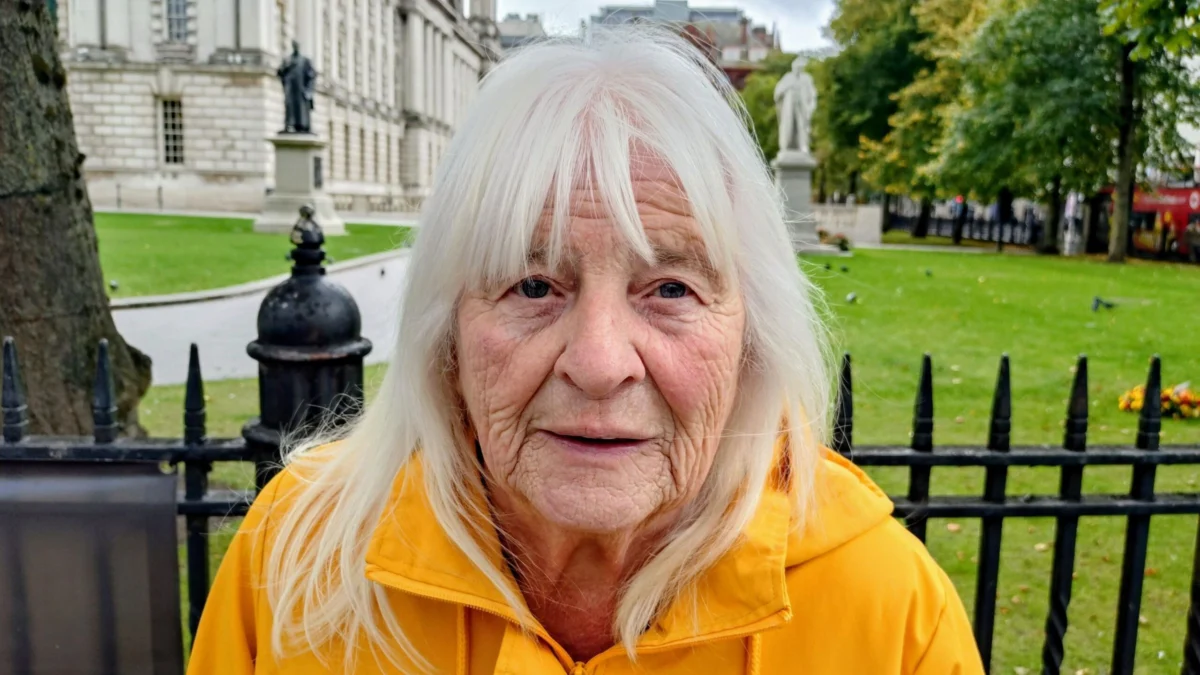
Speaking to BBC News NI in Belfast city centre, Alison, a local resident, conveyed a common sentiment of cautious appreciation. "It wouldn’t make a lot of difference over the course of a year," she noted, acknowledging that while the discount is welcome, especially as Christmas approaches, its long-term impact on household budgets is likely to be minimal. Her perspective highlights the ongoing struggle many face, where one-off payments, however well-intentioned, struggle to offset the cumulative burden of elevated expenses. For families managing tight budgets, the festive season often brings additional financial strain, making even a small discount a temporary reprieve rather than a solution.
Conversely, James articulated a more critical viewpoint, describing the £63 discount as "nothing in comparison" to the substantial increases in household bills. He lamented the broader economic landscape, stating, "It’s a wee bit of hypocrisy when they’re giving you back the change basically out of what they’re taking. They’re taking thousands off you in gas, electric, heating oil." James also pointed to the rising costs of commuting, including fuel and parking, illustrating how the financial squeeze extends beyond energy bills. His frustration underscores a perception among some that government interventions are insufficient to tackle the root causes of the cost-of-living crisis, and that the aid offered pales in comparison to the financial erosion households have endured. For a typical family, annual electricity bills can easily run into hundreds of pounds, making a £63 reduction equivalent to roughly one or two weeks’ worth of energy usage, which many feel is inadequate against the backdrop of record inflation.

How the Discount Works for NI Households
The £63 electricity bill reduction for Northern Ireland is a direct consequence of schemes implemented in Great Britain, where a separately regulated electricity market operates. Funded entirely by the UK government, this initiative seeks to ensure that NI consumers receive comparable support to their counterparts across the Irish Sea. The mechanism for receiving the discount is designed to be straightforward and automatic, aiming to minimise administrative burden on consumers.
For customers who pay their electricity bills via direct debit or bank payments, the £63 will be automatically applied as a credit to their account, reducing their next bill. This seamless process means no action is required from these households. However, for pay-as-you-go (prepayment) customers, the process involves a slight nuance. These customers will receive the £63 credit when they next top up their electricity meter. A crucial detail for pay-as-you-go users is the maximum top-up limit. To receive the full £63 discount in a single transaction, customers should ensure their top-up amount, combined with the discount, does not exceed £175. This implies a recommended maximum personal top-up of £112. If a pay-as-you-go customer attempts to top up with an amount that, when combined with the £63 credit, surpasses the £175 meter limit, the £63 payment will be split and applied over subsequent top-ups until the full amount is credited. This system aims to prevent meter overload and ensure the discount is fully utilised, albeit potentially in instalments for some. The automatic nature of the discount is a key feature, intended to reach all eligible households without the need for complex application processes that can sometimes exclude vulnerable individuals.

A Welcome, Yet Modest, Relief
Despite the broader economic anxieties, some consumers genuinely welcomed the discount as a tangible help. Jane, for example, expressed significant relief. "It would make a lot of difference to me," she stated, explaining that even with a coal fire, the cost of coal itself has become prohibitively expensive. Jane highlighted her conscious efforts to conserve energy, avoiding electric blankets and electric fires, and instead opting for extra layers to stay warm. For her, the £63 would be used to purchase "more luxurious food and keep myself healthy," illustrating how even a modest sum can free up funds for other essential needs or small comforts for those on tighter budgets. Her comments resonate with many who have had to make difficult choices to manage rising costs, where such a discount offers a moment of breathing room.
Similarly, Ed acknowledged the limitations of the sum but accepted it readily. "It’s not an awful lot to be honest, but £63 is still £63," he remarked. "I imagine it will mean more to other people, but I won’t turn it down or send it back, every bit counts in this current climate." Ed’s pragmatic view reflects that of many who, while perhaps not seeing it as transformative, recognise its value in a challenging economic environment. For individuals and families who have meticulously tracked every penny, any reduction in outgoings is a positive development. This collective sentiment underscores the varied impact of the discount across different household income levels and financial circumstances within Northern Ireland.

Political Context and Broader Support
Economy Minister Dr. Caoimhe Archibald underscored the government’s intention behind the discount, stating that the money would "provide some help for families as winter kicks in and energy bills rise." Her department, in collaboration with the UK government, was instrumental in agreeing and delivering this scheme to Northern Ireland consumers. The necessity for a distinct scheme for NI stems from the region’s unique position within the UK’s energy market, which is regulated separately from Great Britain. Furthermore, the original UK-wide energy support package included a temporary cut in VAT and the removal of certain consumer levies in Great Britain. Applying the VAT cut in Northern Ireland would have required agreement with the European Union under the terms of the Windsor Framework, a process the UK government deemed too time-consuming and likely to cause delays in delivering support. Consequently, the £63 payment is designed to provide equivalent financial relief without entangling the process in complex post-Brexit regulatory negotiations.
This electricity discount is not an isolated measure. Last week saw the opening of applications for a separate, means-tested scheme offering a £100 voucher to eligible heating oil users. Jointly funded by Stormont and the UK government, this initiative addresses the particular vulnerability of Northern Irish households, many of whom rely heavily on home heating oil, a market notoriously volatile. Recent data from the NI Consumer Council highlights this volatility, indicating that 500 litres of home heating oil currently cost approximately £560 – more than double the price compared to the same period last year. This staggering increase underscores the urgent need for targeted support in a region where heating oil is a primary source of warmth for a significant portion of the population.

Looking ahead, there are expectations for similar bill reductions in the next two years. However, the precise size and nature of these future discounts remain contingent on whether the UK government decides to continue with the temporary VAT cut in Great Britain, a policy that heavily influences the comparable support offered to Northern Ireland. The future of energy pricing also remains a significant concern, with global energy markets still highly susceptible to geopolitical instability and supply chain disruptions. While the article initially referred to a "US conflict with Iran," the broader context of global energy price surges is more accurately attributed to factors such as the ongoing war in Ukraine, which has significantly impacted natural gas supplies to Europe, and general market speculation, rather than a specific US-Iran conflict directly driving NI electricity costs. These international dynamics, combined with domestic policy decisions, will continue to shape the financial landscape for Northern Irish households in the coming years.
In conclusion, the £63 electricity discount reflects a broader governmental effort to alleviate the pressures of the cost-of-living crisis. While it provides a welcome, albeit modest, financial boost for some, particularly those on fixed incomes or struggling to meet basic needs, for others, it barely scratches the surface of the cumulative financial burden. The mixed feelings among consumers underscore the profound impact of rising energy costs and the ongoing challenge of providing sufficient and equitable support across all segments of society in Northern Ireland. As winter progresses and energy demands peak, the debate over the adequacy of such measures is likely to continue, highlighting the complex interplay of economic reality, public expectation, and political response.


 George Anjay
 atisusanti
 Ramos Leo
 Nana Banana