Nana Banana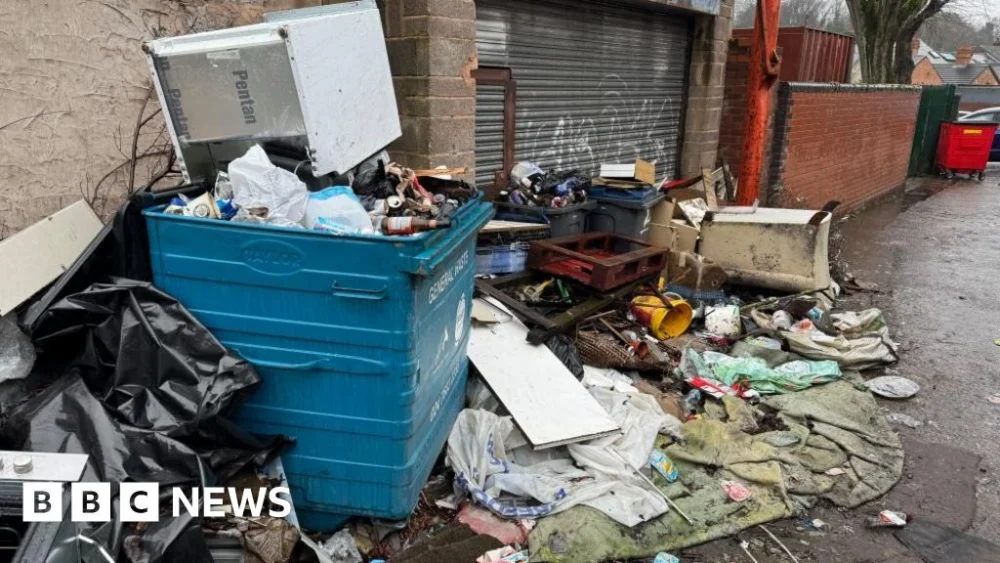
In a significant move to combat the persistent scourge of illegal waste dumping, the UK government has unveiled plans to grant Environment Agency (EA) officials a suite of police-style powers, dramatically enhancing their capacity to tackle fly-tipping and sophisticated waste crime networks across England. This proposed legislative shift aims to empower environment officers with tools traditionally reserved for law enforcement, including the ability to search premises without a warrant, seize assets linked to illicit activities, and arrest individuals suspected of environmental criminality. The announcement comes ahead of the eagerly anticipated release of the government’s comprehensive Waste Crime Action Plan, signaling a robust and multi-faceted approach to an issue that blights landscapes, endangers public health, and costs the economy hundreds of millions annually.
The scale of fly-tipping in England remains a pressing concern. According to government figures spanning 2024 to 2025, local authorities grappled with a staggering 1.26 million incidents of illegal waste disposal. A substantial 62% of these incidents involved household waste, highlighting the widespread nature of the problem, from discarded mattresses and broken appliances to bags of domestic rubbish. The financial burden of clearing this illegally dumped waste falls heavily on local councils, draining vital public funds that could otherwise be allocated to essential services. Environmental charity Keep Britain Tidy defines fly-tipping as the illegal deposit of any waste onto land that does not possess the requisite license to accept it. Beyond the immediate clean-up costs, the Environmental Services Association estimates the broader economic impact of waste crime in England to be approximately £1 billion per year, a figure encompassing not just clearance but also the costs of investigation, prosecution, and the lost revenue from legitimate waste operators.
Currently, fly-tipping is a criminal offence under the Environmental Protection Act 1990. While the Environment Agency already plays a crucial role in bringing prosecutions against offenders, and has achieved significant successes – including 10 immediate custodial sentences and the shutdown of over 1,000 illegal waste sites in the last year alone – ministers contend that existing powers are insufficient to adequately tackle the evolving sophistication of organised waste crime. These criminal enterprises often operate across multiple jurisdictions, exploiting loopholes and operating under the radar, making it challenging for environment officers to gather evidence and apprehend perpetrators effectively with their current remit. The proposed expansion of powers seeks to close these gaps, allowing officers to proactively disrupt criminal operations rather than merely reacting to their aftermath.
The new legislation would significantly broaden the powers available to Environment Agency enforcement officers, drawing upon existing frameworks such such as the Police and Criminal Evidence Act (PACE) and the Proceeds of Crime Act 2002 (POCA). Granting powers under PACE would enable environment officers to carry out arrests, conduct searches of individuals and properties (in certain circumstances without a warrant), and seize evidence more directly and efficiently. This is a fundamental shift, moving beyond their current investigative and prosecutorial functions to a more direct enforcement role. Similarly, extending powers under POCA would be a game-changer in tackling the financial incentives behind waste crime. This legislation allows for the confiscation of assets and money gained through illegal activities, effectively removing the profit motive that drives organised fly-tipping. By targeting the financial underpinnings of these operations, the government aims to dismantle criminal networks and deter future offences more effectively than through fines or short custodial sentences alone.
Environment Secretary Emma Reynolds emphasized the government’s unwavering commitment to tackling this issue head-on. "We are taking decisive action to stop waste criminals in their tracks and bring those responsible swiftly to justice," Reynolds stated, underscoring the severity with which the government views environmental crime. She added that ministers would seek to introduce these crucial changes when parliamentary time allows, indicating a clear legislative intent. The move signifies a recognition that environmental protection requires a robust enforcement arm capable of operating with the agility and authority typically associated with police forces.
This proposed strengthening of powers for Environment Agency officials is not an isolated measure but forms part of a broader government strategy to clamp down on environmental offenders. Only recently, the Department for Environment, Food and Rural Affairs (Defra) also put forward new measures that could see drivers in England, Scotland, and Wales accrue penalty points on their licences if caught fly-tipping. Accumulating 12 or more penalty points within a three-year period can lead to disqualification from driving, a significant deterrent for individuals who use vehicles to transport and dump waste illegally. Together, these initiatives represent a multi-pronged offensive, targeting both the individuals directly involved in fly-tipping and the organised criminal gangs that orchestrate larger-scale illegal dumping.
The implications of granting police-style powers to Environment Agency officers are far-reaching. For environmental charities and local authorities, the news has largely been met with cautious optimism. A spokesperson for Keep Britain Tidy commented, "Fly-tipping is a blight on our communities and a huge drain on public resources. Empowering the Environment Agency with greater enforcement capabilities is a welcome step towards holding perpetrators accountable and cleaning up our country. However, it will be crucial to ensure these officers receive adequate training, resources, and oversight to exercise these new powers responsibly and effectively." Similarly, representatives from the Local Government Association have long called for stronger enforcement tools, highlighting the immense pressure fly-tipping places on council budgets and staff. They anticipate that these enhanced powers will provide much-needed support in confronting hardened criminals who often intimidate local enforcement officers.
From an industry perspective, the Environmental Services Association (ESA) has consistently advocated for a tougher stance against waste crime. Their members, legitimate waste management companies, suffer significant losses due to illegal operators who undercut prices by avoiding environmental regulations and taxes. "This move will help level the playing field," an ESA representative noted. "Illegal dumping undermines legitimate businesses, stifles investment in proper infrastructure, and harms the environment. Giving the EA the teeth they need to tackle organised crime is essential for a fair and sustainable waste sector."
Legal experts, while acknowledging the need to tackle environmental crime, have also raised points regarding the extension of police powers to non-police entities. Discussions will likely focus on the precise scope of these powers, the training protocols for EA officers, accountability mechanisms, and potential safeguards to prevent misuse. The balance between effective enforcement and civil liberties will be a key consideration during the legislative process. However, proponents argue that the specific nature of environmental crime, which often involves clandestine operations, vast quantities of illegally handled materials, and significant financial gains, necessitates a robust response akin to that used against other forms of organised crime.
The ongoing battle against fly-tipping is starkly illustrated by scenes like the one captured in January 2025, where contractors painstakingly worked to remove a massive pile of waste from Watery Lane on the outskirts of Lichfield, Staffordshire. Such incidents are not isolated; they represent a pervasive problem that impacts rural landscapes, urban alleyways, and even sensitive natural habitats. The types of waste found range from construction debris and hazardous materials to household rubbish and discarded commercial goods, posing risks of pollution, pest infestations, and public safety hazards. The proposed new powers for Environment Agency officials are intended to prevent such scenes from occurring in the first place, by making the act of fly-tipping far more risky and less profitable for criminals.
Ultimately, the government’s plan to equip Environment Agency officials with police-style powers marks a significant escalation in the fight against environmental crime. By providing the tools for proactive investigation, asset seizure, and arrest, ministers aim to transform the EA into a formidable force capable of dismantling sophisticated waste crime operations. This, coupled with other deterrents like penalty points for drivers, underscores a firm commitment to protecting England’s environment, supporting legitimate businesses, and ensuring that those who pollute our country face severe and unavoidable consequences for their actions. The coming Waste Crime Action Plan is expected to elaborate further on these measures, charting a new course for environmental enforcement in the UK.


 Ramos Leo
 atisusanti
 Roy Suryo
 George Anjay