George Anjay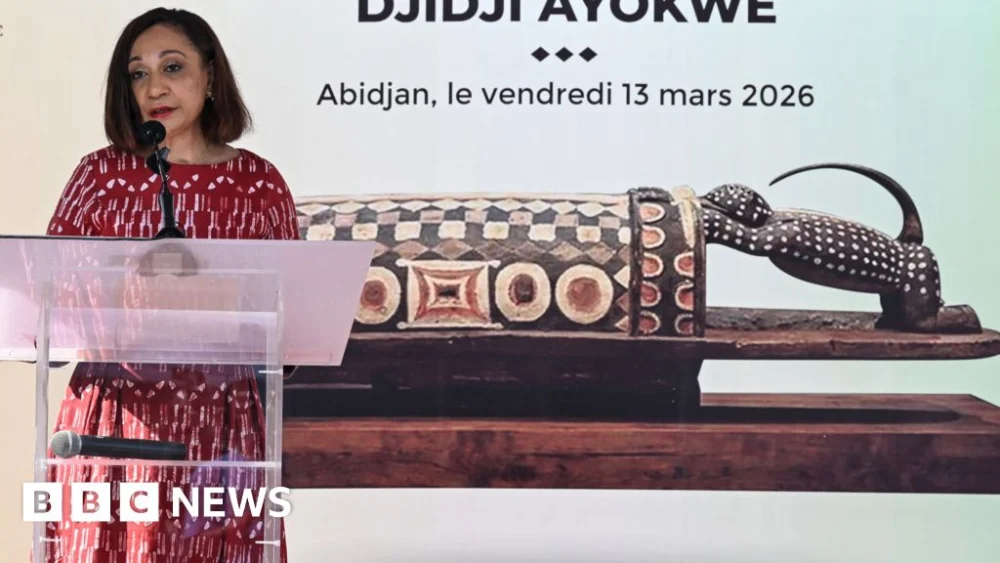
France has officially returned a sacred "talking drum," known as the Djidji Ayékwé (Panther Lion), to Ivory Coast, marking a significant moment in the repatriation of cultural heritage looted during the colonial era. This monumental artifact, more than three meters long and weighing approximately 430 kilograms, was seized by French colonial authorities in 1916 and subsequently transported to France in 1929. For over a century, it was a centerpiece of French ethnographic collections, first displayed at the Trocadéro Museum and later at the prestigious Quai Branly Museum in Paris, far from its ancestral home.
The return of the Djidji Ayékwé is a pivotal development within a broader French initiative to repatriate African cultural artifacts, a process that gained momentum in 2017. The drum, intricately carved from iroko wood, is not merely an object of historical significance; it is a vital spiritual and cultural symbol for the Ebrié community, its original custodians. Its arrival in Abidjan was met with profound emotion and ceremony, underscoring its deep cultural resonance. A specially chartered plane carried the drum, which remained securely housed in a large, carefully marked wooden crate labeled "fragile," a testament to its delicate nature and immense value.
At Abidjan International Airport, a vibrant reception awaited the sacred artifact. Members of the Ebrié community, alongside traditional dancers and esteemed local chiefs, gathered to witness its homecoming. Ivory Coast’s Minister of Culture and Francophonie, Françoise Remarck, articulated the profound significance of the moment, telling the BBC, "This is a historic day with a lot of emotions. We are living through a moment of justice and remembrance that finally marks the return of the Djidji Ayékwé to its land of origin." Her words encapsulated the collective sense of relief and triumph felt by many.
Francis Tagro, director of the Museum of Civilizations in Abidjan, expressed the nation’s elation. He stated that the drum would be afforded "a place of honor in the heart of the national museum," ensuring its visibility and accessibility to the Ivorian people. Tagro emphasized the drum’s profound meaning, asserting, "We are deeply happy and proud to receive this sacred drum. It means so much to us; it will elevate the sense of culture of the young generation." This sentiment highlights the educational and inspirational role the Djidji Ayékwé is expected to play in fostering cultural identity among Ivorians.
The Djidji Ayékwé holds immense historical and spiritual importance for the Ebrié ethnic group, who are primarily based in Abidjan, the country’s largest city. Traditionally, this "talking drum" served as a crucial communication tool, capable of conveying complex messages across distances. It was used to issue warnings of impending danger, mobilize communities for warfare, and summon villagers to important ceremonies and gatherings. Its intricate carvings and imposing size are indicative of its status as a central piece of Ebrié heritage, a tangible link to their ancestral past and their rich cultural traditions.
The official handover of the drum by Paris was formalized on February 20th, following the passage of a special law by the French parliament specifically authorizing its restitution. This legislative act signifies a growing recognition within France of the ethical imperative to address the legacies of colonial plunder. The Djidji Ayékwé represents the first item on a list of 148 works that Ivory Coast is actively seeking to have returned from France and other nations. This list is a testament to the vast scale of cultural appropriation that occurred during the colonial period and the ongoing efforts by African nations to reclaim their heritage.
The increasing number of restitution requests from former colonies has prompted a broader re-evaluation of France’s cultural policies. In response to this evolving landscape, the French Senate adopted a framework law on January 29th. This proposed legislation is designed to streamline the process of removing colonial-era artifacts from French national collections, thereby facilitating further repatriations. The bill is slated for discussion in the National Assembly, signaling a potential shift in French policy that could unlock the return of numerous other significant cultural objects.
The repatriation of the Djidji Ayékwé is more than just the return of an object; it is a symbolic act of reconciliation and a recognition of the profound injustice inflicted during colonial rule. It underscores the inherent value of cultural heritage to national identity and the importance of allowing communities to safeguard and celebrate their own history. The drum’s journey back to Ivory Coast is a powerful testament to the persistent efforts of post-colonial nations to reclaim their narratives and to the evolving international discourse on cultural property and colonial legacies.
The historical context of the drum’s seizure is crucial to understanding the significance of its return. During the colonial period, European powers systematically looted vast quantities of cultural artifacts from their colonies, often under duress or through outright theft. These objects were then displayed in European museums, contributing to a narrative that often marginalized or distorted the cultures from which they originated. The Djidji Ayékwé, once used to communicate vital information and preserve cultural practices within the Ebrié community, was transformed into an ethnographic specimen, removed from its living context and its spiritual significance diminished.
The process leading to the drum’s return was complex, involving extensive negotiations, research, and legal procedures. It highlights the challenges and triumphs associated with cultural restitution. The involvement of the Quai Branly Museum, which has been at the forefront of debates surrounding the return of African artifacts, is noteworthy. While some institutions have been hesitant to part with their collections, the French government’s legislative efforts indicate a growing willingness to address these historical grievances.
The Djidji Ayékwé’s return is expected to have a ripple effect, encouraging other African nations to pursue their own restitution claims. It also serves as a potent reminder of the ongoing work required to decolonize museum collections and to foster a more equitable and respectful approach to the preservation and display of cultural heritage worldwide. The drum’s new home at the Museum of Civilizations in Abidjan will undoubtedly be a place of reverence, learning, and cultural pride, allowing its stories and its sacred purpose to resonate once more within the heart of the Ebrié people and the nation of Ivory Coast. The presence of this magnificent artifact will serve as a beacon of cultural resilience and a tangible symbol of a nation reclaiming its rightful heritage after a long and arduous journey. The successful repatriation of the Djidji Ayékwé is a beacon of hope, illuminating the path towards a future where cultural artifacts are returned to their rightful custodians, fostering understanding, respect, and a more accurate representation of global history.




 Roy Suryo

 Nakalama John
 atisusanti
 Ramos Leo