
 Nana Banana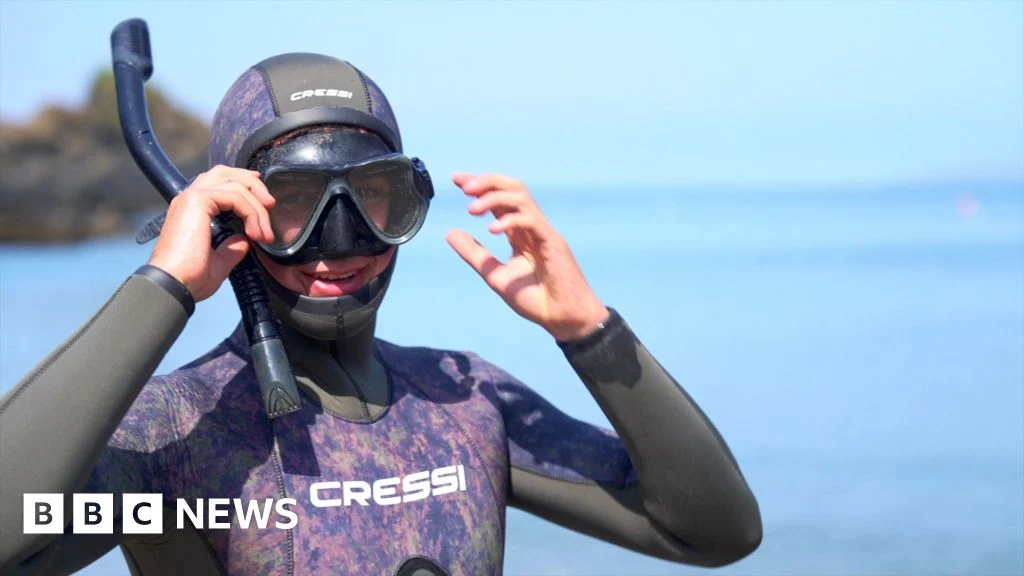
Morgan’s connection to the ocean began early, fostered by the dramatic coastline of Pembrokeshire, a region renowned for its natural beauty and rich marine biodiversity. What started as a childhood fascination with rock pools and coastal exploration evolved into a disciplined pursuit of freediving, a practice that strips away mechanical aids, relying solely on breath-hold techniques and the diver’s intrinsic connection to the water. For Morgan, each dive is a meditative journey, a descent into a world of muted colours, ethereal light, and profound silence. The conventional sounds of the terrestrial world vanish, replaced by the gentle murmur of currents, the subtle clicks of crustaceans, and occasionally, the distant, haunting calls of marine mammals. It is in this profound quietude that he finds his peace, a complete immersion that grounds him while simultaneously lifting him from the anxieties of daily life.
The "otherworldly" experiences he describes are not merely aesthetic; they are deeply spiritual. Drifting through kelp forests, observing vibrant anemones clinging to ancient rocks, or encountering the watchful gaze of a grey seal, Morgan witnesses life in its most primal, unadulterated form. He speaks of moments suspended in the water column, watching shoals of silver fish move in mesmerising unison, or encountering the slow, deliberate movements of a spider crab camouflaged against the seabed. These encounters foster a deep empathy and respect for marine life, transforming abstract notions of biodiversity into tangible, personal experiences. The mental health benefits are manifold: the intense focus required for breath-hold diving acts as a powerful form of mindfulness, stripping away distractions and centring the mind. The physical exertion, combined with the meditative state, releases stress and promotes a profound sense of calm and clarity that lingers long after he surfaces. It’s a natural therapy, offering an escape and a reconnection to something fundamental and wild.
However, this intimate perspective also grants Morgan a unique vantage point on the degradation affecting Welsh coastal ecosystems. He observes firsthand the subtle, and sometimes overt, signs of environmental stress. "Welsh waters are under severe pressure," he states, a sentiment echoed by marine biologists and conservationists across the region. This pressure manifests in various forms: persistent plastic pollution, agricultural runoff leading to nutrient enrichment and algal blooms, habitat destruction from coastal development and unsustainable fishing practices, and the overarching impacts of climate change. Pembrokeshire, with its designated Marine Protected Areas (MPAs) and status as a National Park coastline, is ostensibly protected, yet even here, the challenges are formidable. Morgan often encounters discarded fishing gear, plastic bags, and microplastics caught in the kelp, stark reminders of humanity’s indelible footprint.
The Celtic Sea, bordering Wales, is a vital nursery ground and migration route for numerous species, from juvenile fish to majestic whales and dolphins. The delicate balance of these ecosystems is being disrupted by rising sea temperatures, which force species to migrate further north, altering food webs and potentially devastating local populations. Ocean acidification, a direct consequence of increased carbon dioxide absorption, threatens shellfish and plankton, the very base of the marine food chain. Furthermore, industrial activities, such as those around Milford Haven, while economically vital, present ongoing risks of chemical pollution and habitat disturbance. Morgan’s observations are not just personal anecdotes; they are visual confirmations of scientific data, making the abstract reality of environmental decline tangible and immediate.
His commitment to "giving back" to the sea is rooted in a belief that visual storytelling can bridge the gap between scientific reports and public consciousness. By "showing people what’s out there," Morgan aims to cultivate a sense of wonder and responsibility. This involves sharing his underwater photography and videography, captured during his extensive dives, which vividly portray the vibrant, often unseen, life beneath the waves. His images reveal the intricate beauty of seagrass meadows, the bustling activity around rocky reefs, and the graceful movements of species like the spiny dogfish or the enigmatic conger eel. These visual narratives serve as powerful advocacy tools, transforming abstract conservation pleas into compelling invitations to protect something precious and tangible.
The collaboration with filmmaker Greg Davies amplifies this mission significantly. Davies, who filmed and edited the initial piece highlighting Morgan’s work, plays a crucial role in translating Morgan’s raw experiences into accessible and impactful media. Underwater filmmaking presents its own set of challenges, from managing light and buoyancy to capturing wildlife without disturbance. Davies’ skill ensures that Morgan’s message is not only seen but felt, bringing the "otherworldly" beauty of Welsh waters directly to an audience that may never have the opportunity to experience it firsthand. Their combined efforts create a powerful platform, allowing Morgan to reach a wider audience through social media, documentaries, and public awareness campaigns. This visual advocacy encourages individuals to consider their own impact on the marine environment, from reducing single-use plastics to supporting sustainable seafood choices.
Conservation efforts in Wales are multifaceted, involving government agencies like Natural Resources Wales, local authorities, and a network of dedicated charities and community groups. Organisations such as the Wildlife Trust of South and West Wales and the Marine Conservation Society are at the forefront, conducting research, organising beach clean-ups, and lobbying for stronger environmental protections. However, there remains a critical need for more robust enforcement within existing MPAs and the designation of new, highly protected marine areas. Education is also key; fostering a deeper understanding of marine ecosystems from a young age can cultivate a generation more attuned to environmental stewardship. Morgan’s work directly contributes to this educational outreach, providing captivating content that inspires curiosity and care.
Morgan envisions a future where Welsh waters are not just protected but allowed to thrive, where the "otherworldly" experiences he cherishes are accessible to future generations. He believes that by consistently showcasing the breathtaking beauty and fragility of the marine environment, he can ignite a collective passion for its preservation. His dives are not just personal journeys; they are acts of profound advocacy, each breath-hold a silent testament to his unwavering commitment. The urgent call for more ocean conservation effort in Wales is not merely an ecological imperative; it is a plea for the continued existence of a world that offers solace, wonder, and a vital connection to the wild heart of our planet. As Iestyn Morgan continues his silent descents, his images and passion serve as a powerful reminder that the health of our oceans is inextricably linked to our own well-being, and that protecting what lies beneath is a responsibility we all share.


 atisusanti
 George Anjay
 Nakalama John

 Ramos Leo