Roy Suryo
Flip-flops have always been a perennial favourite for combating sweaty, uncomfortable feet during scorching summer weather, and this year, they’ve received a fashionable upgrade. According to fashion expert and trend forecaster Angela Baidoo, the most stylish way to sport them this summer involves a subtle kitten heel. "It’s not a high heel and it’s really kind of easy to just slip in and slip out of," she explains. However, whether elevated or flat, the flip-flop has long carried a reputation for offering inadequate support and potentially harming our feet. But is this critique entirely fair?
The seemingly innocuous flip-flop, a symbol of relaxed summer days, has come under scrutiny from health professionals and fashion critics alike. While their ease of wear and breathability make them an attractive option for warm weather, their minimalist design raises concerns about foot health and long-term impact. Podiatrists often highlight the lack of arch and ankle support inherent in traditional flip-flops, which can lead to a range of ailments from plantar fasciitis to stress fractures.
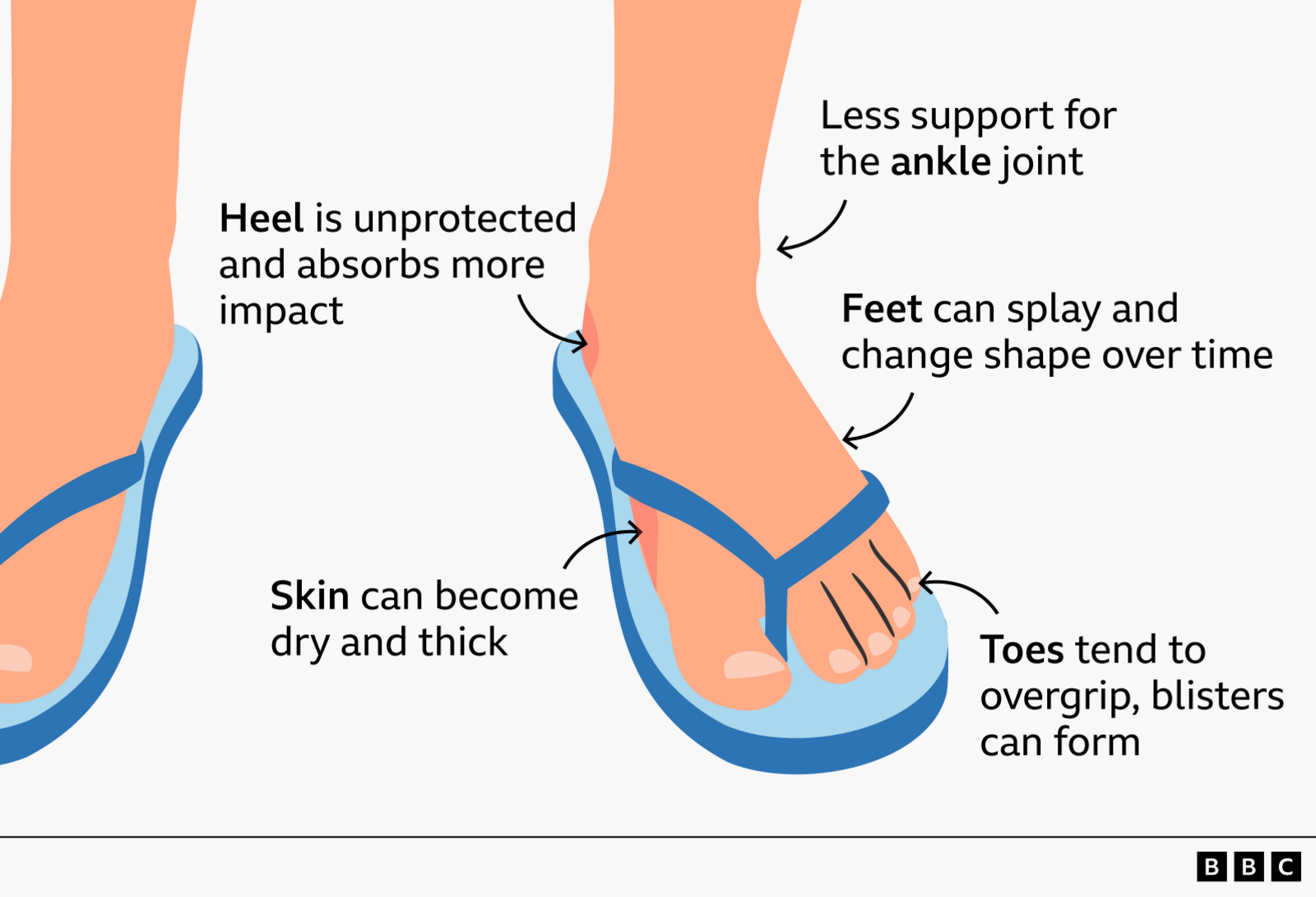
Podiatrist Dr. Helen Branthwaite, who also serves as the chief clinical advisor at the Royal College of Podiatry, offers a more nuanced perspective, stating that it is "not accurate" to broadly label flip-flops as detrimental to foot health. The key, she explains, lies in the transition and duration of wear. Problems often arise when individuals abruptly switch from wearing highly structured, supportive footwear to exclusively donning flip-flops for extended periods. This drastic change places an unusual amount of strain on the feet, making them more susceptible to injury.
"The foot does start to change shape and tends to splay a little bit over time," Dr. Branthwaite elaborates, drawing an insightful analogy. "A good analogy is if you were to wear a corset all the time and then took the corset off, everything would sort of all hang out, so to speak." This illustrates how prolonged reliance on minimal support can alter the natural structure and function of the foot. The toes, for instance, may begin to spread outwards to compensate for the lack of an encompassing shoe structure, and the arch can flatten due to insufficient support.
This phenomenon is particularly relevant for casual flip-flops, often constructed from thin sheets of foam with minimal cushioning or contouring. These offer virtually no support for the arch, which is crucial for distributing body weight evenly and absorbing shock during movement. Without this support, the ligaments and tendons in the foot are forced to work harder, increasing the risk of inflammation and pain. Furthermore, the constant need to grip the flip-flop with the toes to keep it on the foot can lead to strain in the toes, ankles, and even the lower legs, potentially contributing to conditions like Achilles tendinitis.
The fashion world, however, is not entirely disregarding the practical concerns. Baidoo points to the emergence of more sophisticated flip-flop designs that aim to bridge the gap between style and comfort. Brands like FitFlop are cited as examples, offering flip-flops that are sturdier, ergonomically contoured, and provide significantly more support than their basic counterparts. These are a far cry from the flimsy, flat flip-flops that were once cut from large sheets of foam, offering a more robust and foot-friendly alternative.
Beyond the evolving flip-flop, a wider array of summer sandal options are gaining traction, catering to diverse needs for comfort and support. For the younger generation, particularly Gen Z, the humble Croc has experienced a resurgence, moving beyond its utilitarian origins to become a fashion statement. Baidoo describes them as "anti-fashion shoes" that are "really comfy" and "designed orthopaedically," mirroring the advantages offered by established footbed sandals like Birkenstocks. These brands have long been recognized for their anatomical footbeds, which are designed to cradle the foot, provide arch support, and distribute pressure evenly.
The classic wooden clog is also making a notable comeback, a testament to its enduring practicality and comfort. Traditionally worn by professionals who spend long hours on their feet, such as doctors and chefs, these shoes offer a unique blend of sturdiness and ventilation. Baidoo highlights the Scholl slider mules as the original orthopaedic shoe, even admitting to having owned a pair in vibrant pink suede herself, underscoring their historical significance in promoting foot health. The substantial sole of the clog provides a stable base, while the wooden material, though seemingly rigid, can offer surprising comfort and support over time.
Wedges are also presented as a viable option for navigating the summer heat with both style and comfort, particularly for individuals seeking enhanced support. Baidoo notes that within the plus-size fashion community, wedges are often favored for their ability to provide a comfortable footwear solution while also creating a flattering silhouette for the ankle. The continuous support offered by the wedge design, from the heel to the toe, ensures a more even distribution of weight compared to shoes with a significant heel-to-toe drop.
The trend of minimalist barefoot shoes, which aim to mimic the sensation of walking barefoot while offering some protection, is also gaining attention. However, Dr. Branthwaite advises a cautious approach to adopting this footwear style. "In other words, don’t buy a pair and then decide to go on a 5-mile hike," she cautions. Gradual acclimatization is crucial, allowing the feet and supporting muscles to adapt to the minimal structure and increased ground feel. This approach helps to prevent the type of strain that can occur when the body is not accustomed to such a direct connection with the terrain.
The fisherman-style sandal, evoking a retro aesthetic reminiscent of 1970s history teachers, is another intriguing option. Often paired with socks, these sandals offer a more structured alternative to the casual flip-flop, making them suitable for a wider range of environments where flip-flops might be deemed too informal. Baidoo suggests that men can wear them as a sophisticated alternative to loafers, while women can also embrace this "really cool kind of style to adopt." Their woven or strapped construction typically provides more stability and coverage than a traditional sandal, offering a balance between open-air comfort and secure foot support.
For those seeking the ultimate in foot health, Dr. Helen Branthwaite offers a set of expert tips to ensure happy feet throughout the summer and beyond:
Expert Tips for Happy Feet:
- Prioritize Support: Always look for sandals that offer adequate arch support. This is crucial for distributing weight evenly and preventing strain on the foot’s natural structure. Contoured footbeds, as found in brands like Birkenstock and some advanced flip-flops, are highly beneficial.
- Consider Heel Height: While very high heels are generally discouraged for prolonged wear, a slight heel, like a kitten heel or a modest wedge, can sometimes be more supportive than a completely flat shoe. The key is to avoid excessive elevation that throws off the body’s natural alignment.
- Ensure a Secure Fit: Sandals should fit snugly without being tight. Avoid styles where your foot constantly slides or requires excessive effort to stay in place. Straps, buckles, or adjustable fastenings can help achieve a secure and personalized fit.
- Understand Material Matters: The material of your sandals can impact comfort and foot health. Breathable materials like leather or canvas are preferable in warm weather to prevent excessive sweating and reduce the risk of fungal infections. While rubber and foam are common in flip-flops, seek out those with denser, more supportive compounds.
- Transition Gradually: If switching to a different type of footwear, such as barefoot shoes or even just more supportive sandals after a period of wearing minimal footwear, do so gradually. Allow your feet and supporting muscles time to adapt to avoid injury.
- Listen to Your Body: Pay attention to any discomfort or pain you experience. Persistent aches and pains are signals that your footwear may not be suitable or that you may be overdoing it.
- Maintain Foot Hygiene: Regardless of the type of sandal worn, proper foot hygiene is essential. Wash and dry your feet thoroughly, especially between the toes, to prevent skin issues and infections.
- Regular Stretching and Exercise: Incorporating regular foot and ankle stretching exercises can help maintain flexibility and strengthen the muscles that support your feet, regardless of the footwear you choose.
By considering these factors and exploring the diverse range of stylish and supportive summer sandal options available, individuals can enjoy the warmth and freedom of open footwear without compromising their foot health. The days of purely aesthetic, yet potentially damaging, summer shoes are slowly giving way to a more informed approach where comfort and well-being are seamlessly integrated with fashion.




 George Anjay
 Nakalama John
 Ramos Leo
 Nana Banana