Ramos Leo
Across the United Kingdom, a profound and deeply divisive debate over assisted dying is reaching critical junctures, with various legislative proposals moving through parliaments in Scotland, England, Wales, and the Crown Dependencies. These initiatives reflect a growing societal discussion about individual autonomy, end-of-life care, and the role of the state in personal choices, setting the stage for potentially significant legal reforms.
In Scotland, Members of the Scottish Parliament (MSPs) are poised to cast a pivotal vote on Tuesday on whether to advance legislation that would legalise assisted dying. This comes as a separate assisted dying bill in England and Wales, which garnered significant support from MPs in November 2024, faces an uncertain future in the House of Lords, with fears it may run out of parliamentary time. Meanwhile, the island of Jersey, one of the self-governing Channel Islands, approved its own landmark legislation in February, granting terminally ill adults the right to end their lives under strict conditions. These diverse legislative paths underscore the complexity and passionate arguments surrounding the issue across the British Isles.
How the Proposed Assisted Dying Law Would Work in Scotland
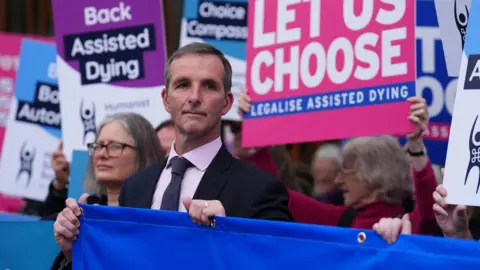
The bill currently under consideration by MSPs, titled the Assisted Dying for Terminally Ill Adults (Scotland) Bill, was formally introduced on 27 March 2024 by Liberal Democrat MSP Liam McArthur. It is designed to apply exclusively within Scotland, highlighting the devolved nature of healthcare and justice in the nation. MSPs have been granted a free vote on the matter, a crucial aspect that allows them to vote according to their conscience rather than along party lines, reflecting the deeply personal and ethical considerations involved.
Following its introduction, the bill has undergone extensive scrutiny and debate within the Scottish Parliament, leading to numerous amendments to its initial proposals. If passed by MSPs, the law would establish a rigorous framework for eligibility. Applicants would need to be terminally ill, diagnosed by two independent doctors as having a progressive condition that cannot be reversed and is expected to cause death. They must also be mentally competent, capable of making an informed decision, and have expressed a clear, persistent wish to end their life. A crucial safeguard dictates that individuals suffering from a mental disorder that might impair their ability to make such a request would be deemed ineligible. The process would also mandate self-administration of the lethal medication, ensuring that the final act remains with the individual.

The Proposed Law on Assisted Dying in England and Wales
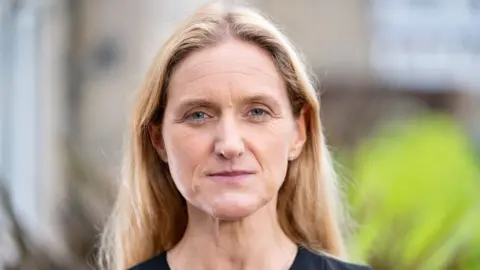
In England and Wales, the legislative effort is spearheaded by Labour MP Kim Leadbeater, who has passionately argued that the current system forces too many individuals to endure "horrible, harrowing deaths." Her private member’s bill, which received a significant backing from MPs, seeks to create a pathway for terminally ill people to end their lives.
Under Leadbeater’s proposed bill, eligible individuals would be those diagnosed with a terminal illness with a prognosis of six months or less to live. They must be mentally competent to make an informed decision and have their request supported by two independent doctors. The bill is designed with what Leadbeater describes as "the strictest safeguards anywhere in the world." Once an application has been approved, a mandatory 14-day waiting period would be imposed before the patient could proceed. A doctor would be responsible for preparing the substance used to end the patient’s life, but critically, the patient would be required to administer it themselves. The bill defines the coordinating doctor as a registered medical practitioner with specific training, qualifications, and experience to be determined by the health secretary, though it does not specify the drug to be used. Furthermore, the legislation includes severe penalties for coercion, making it illegal to pressure someone into declaring a wish to end their life, with a potential prison sentence of up to 14 years.
Evolution of the UK Assisted Dying Bill
The Leadbeater bill has undergone significant modifications since its initial introduction, reflecting the detailed parliamentary process and the sensitivity of the issue. A parliamentary committee, tasked with reviewing the original proposals, suggested a number of key changes to enhance safeguards and clarify eligibility. These included establishing a minimum age for applicants, mandating a comprehensive mental capacity assessment by a specialist, and implementing an independent review mechanism for each assisted dying request.
Similar to the Scottish process, MPs were afforded a free vote throughout the bill’s progression, allowing for genuine individual conviction rather than party allegiance to guide their decisions. After clearing the House of Commons, the bill then moved to the House of Lords for further scrutiny. Adding another layer of regional support, Welsh politicians in the Senedd overwhelmingly backed the Leadbeater bill on 24 February 2026, with 28 members voting in favour, 23 against, and two abstentions. While the bill would automatically become law in Wales if it receives final approval in the UK Parliament, the Welsh government would retain the power to establish specific rules and guidelines for assisted dying services, including whether they would be available through the NHS or solely via private providers. A rejection by the Senedd could have restricted access to private services only.

Will Assisted Dying Become Law in England and Wales?
Despite the significant support received from MPs in Westminster and the endorsement from the Welsh Senedd, the path to becoming law for the Leadbeater bill is far from guaranteed. Private Members’ Bills, introduced by backbench MPs rather than the government, face considerable challenges. They typically require passage through both the House of Commons and the House of Lords within a single parliamentary session to become law. With the current parliamentary session expected to conclude in May, supporters of the bill express grave concerns that it may simply run out of time.
The primary bottleneck appears to be the House of Lords, where peers have tabled an extraordinary number of amendments – over 1,200 in total. These proposed changes cover a wide range of issues, including broadening eligibility criteria to include individuals with non-terminal but irremediable conditions, introducing more stringent safeguards, and exploring alternative models of palliative care. Unlike the House of Commons, where debate can be curtailed, peers in the Lords typically debate every amendment tabled, which has led to a painstakingly slow progression of the bill.
In January, former justice secretary Lord Falconer, a key figure who collaborated with Leadbeater on the bill, voiced his frustration, stating it was "very, very difficult" to foresee its passage without a "fundamental change" in the House of Lords’ approach. He accused a minority of peers of deliberate time-wasting tactics, urging them to "stop all this smoke and mirrors and focus on making the bill better." Lord Falconer even suggested the government could invoke the rarely used Parliament Act to override peers’ objections, given the democratic backing from elected MPs. However, Nikki Da Costa, a former Downing Street adviser and staunch opponent of the bill, countered that peers were "doing their best to patch the holes" in what she described as an "unsafe, deficient bill which has no electoral mandate," arguing that Lord Falconer sought to bypass legitimate parliamentary scrutiny.
Leadbeater herself has appealed to the government, stating it has a "duty" to facilitate the bill’s passage and "respect the will of the democratically-elected members of Parliament." Her call is echoed by approximately 150 MPs, including 100 from the Labour Party, who have collectively warned Prime Minister Sir Keir Starmer that a failure to ensure adequate parliamentary time for the legislation risks eroding public trust in politics.
Legal Changes in Jersey and the Isle of Man
The Channel Island of Jersey, a self-governing Crown Dependency within the British Isles, has taken its own legislative path. Its States Assembly, the island’s elected parliament, first approved the principle of assisted dying in 2021. This was followed by the backing of more detailed proposals in May 2024, culminating in the final legislation passing on 26 February 2026. Under Jersey’s new law, eligibility is granted to individuals with terminal illnesses causing unbearable suffering who are expected to die within six months. For those with neurodegenerative conditions such as Parkinson’s and motor neurone disease (MND), the prognosis period is extended to 12 months. The bill now awaits Royal Assent, formal approval from the UK, before it can take effect, with the first legal assisted deaths potentially occurring as early as summer 2027.
Jersey’s decision follows a similar move by another British Isle, the Isle of Man, which passed its own assisted dying bill in March 2025. However, the Isle of Man’s bill has not yet received final approval, as the UK Ministry of Justice has raised concerns about the robustness of its safeguards, illustrating the intricate legal and ethical considerations involved even for smaller jurisdictions within the British framework.
Why Supporters Want to Legalise Assisted Dying
Advocates for legalising assisted dying emphasize compassion, choice, and dignity in the face of terminal illness. The Dignity in Dying campaign group, for instance, hailed the Leadbeater bill as providing the "most detailed, robust proposals" Westminster had ever considered. Chief executive Sarah Wootton highlighted the tragic statistic that "up to 650 terminally ill people end their own lives every year, often in lonely and traumatic ways," as compelling evidence for the urgent need for reform.
Cancer patient Nathaniel Dye, who collaborated with Leadbeater on the bill, shared his personal motivation, stating that such legislation would allow people to have a death that is "as kind and compassionate as possible." Broadcaster Dame Esther Rantzen, who is living with stage-four lung cancer, has been a prominent and vocal campaigner for change, articulating the core demand: "All I’m asking for is that we be given the dignity of choice." Public sentiment also reflects this division, with BBC research revealing that family doctors in England are deeply divided on the issue; out of over 1,000 GPs who responded to a questionnaire, approximately 400 were in favour, while 500 were opposed, underscoring the complexity even within the medical community.
Who Opposes Assisted Dying?
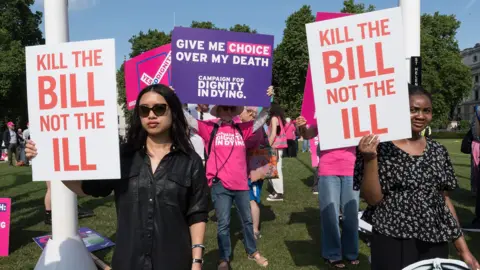
Opponents of legalising assisted dying raise serious ethical and practical concerns, often focusing on the protection of vulnerable individuals and the potential for unintended consequences. Independent crossbench peer and former Paralympian Baroness Grey-Thompson is one of the most vocal critics. She expresses profound worries that disabled individuals and other vulnerable people could be subjected to undue pressure to end their lives. She also questions the ability of doctors to make consistently accurate six-month prognoses, especially given the inherent uncertainties in medical predictions. "Some of us have very real fears based on our lived experience and based on what has happened in other countries where it’s legal," she articulated on social media platform X, pointing to international examples as cautionary tales.
Dr Gordon Macdonald, from the campaign group Care Not Killing, argues that the proposed bills fundamentally ignore the wider "deep-seated problems in the UK’s broken and patchy palliative care system." Opponents often contend that resources should instead be directed towards improving end-of-life care, ensuring that all individuals can live their final days free from pain and suffering, thereby removing any perceived ‘need’ for assisted dying. They also raise concerns about the "slippery slope" argument, fearing that initial legislation could eventually be expanded to include broader categories of people, and the sanctity of life principle, which holds that all human life is inherently valuable and should not be intentionally ended.
Defining Assisted Dying, Assisted Suicide, and Euthanasia
The terminology surrounding end-of-life choices is crucial for clarity in this complex debate:
- Assisted Dying: Generally refers to a situation where a terminally ill person, with a clear prognosis of a limited time to live, receives lethal drugs from a medical practitioner, which they then administer themselves. The emphasis is on the patient’s self-determination in the final act. This is the model being proposed in the current UK bills.
- Assisted Suicide: This is a broader term encompassing intentionally helping another person to end their life, regardless of whether they are terminally ill. This could involve providing lethal medication or facilitating travel to a jurisdiction where assisted dying or suicide is legal. In the UK, assisting suicide is currently illegal and carries a maximum sentence of 14 years imprisonment.
- Euthanasia: This involves the deliberate act of ending a person’s life to relieve suffering, where a lethal drug is administered by a physician (or another person), rather than self-administered by the patient. Euthanasia can be voluntary (with the patient’s consent) or non-voluntary (when the patient is unable to consent, e.g., in a coma). This is distinct from assisted dying, as the act of administration is performed by a third party.
Global Landscape of Euthanasia and Assisted Dying Laws
The UK’s debate takes place within a broader international context where various models of end-of-life legislation exist:
- Switzerland: Has permitted assisted suicide since 1942, famously hosting organisations like Dignitas which accept foreign patients. Between 1998 and 2024, Dignitas reports having assisted 608 Britons to die.
- United States: Ten states (including Oregon, Washington, California, and Vermont) and the federal district of Washington D.C. have "physician-assisted dying" laws, allowing doctors to prescribe lethal drugs for self-administration by terminally ill patients.
- Canada: Has a comprehensive "medical aid in dying" (MAID) system, which includes both voluntary euthanasia (where a doctor or nurse practitioner administers the drugs) and assisted dying (where drugs are prescribed for self-administration). Eligibility has been expanded to include individuals with serious and incurable illnesses, not just those with a foreseeable natural death.
- Australia and New Zealand: Both countries have legalised assisted dying for terminally ill people, with strict safeguards and eligibility criteria.
- Europe: A number of European countries also permit forms of assisted dying or euthanasia. Belgium, the Netherlands, and Luxembourg have some of the most liberal laws, allowing for euthanasia under specific conditions, which can include non-terminal conditions and, in some cases, even minors. Spain and Portugal have more recently legalised medically assisted death, typically for adults with serious and incurable diseases causing unbearable suffering.
As the UK navigates these complex moral, ethical, and legal waters, the outcomes of the ongoing parliamentary processes in Scotland, England, and Wales, alongside the implementation in Jersey, will profoundly shape the future of end-of-life care and individual choice across the nation. The debate remains intensely personal, with deeply held convictions on all sides, ensuring that any legislative changes will continue to be closely watched and hotly contested.



 Roy Suryo
 Nakalama John
 atisusanti