Roy Suryo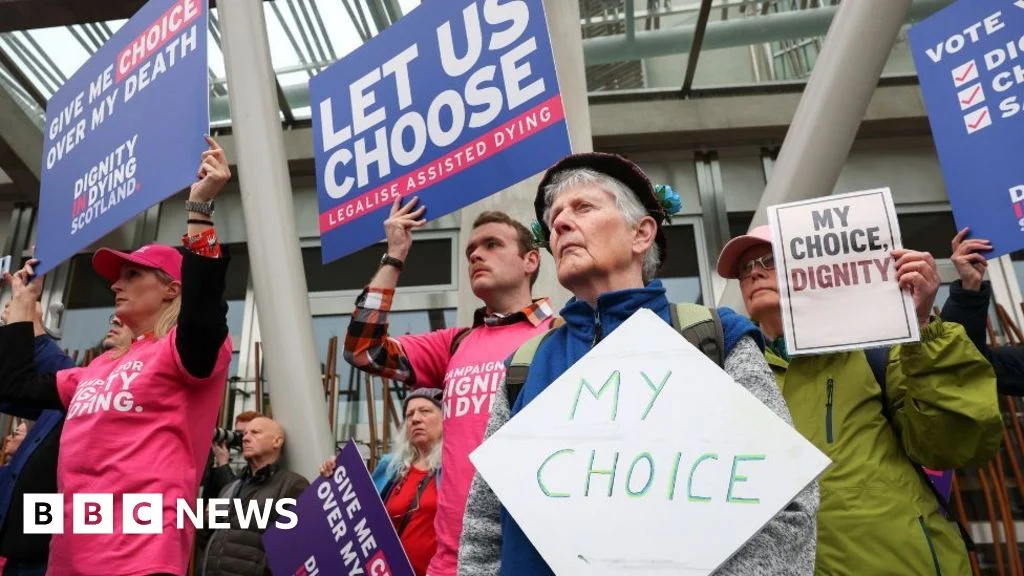
Scotland is on the precipice of a historic decision as its Parliament prepares for a pivotal vote on assisted dying. The Assisted Dying for Terminally Ill Adults (Scotland) Bill, spearheaded by Liberal Democrat MSP Liam McArthur, has already garnered significant support, having passed its general principles in May after a deeply emotional debate. This week’s final vote will determine whether this legislation, which has seen extensive scrutiny and amendment, will become law.
The proposed bill outlines a rigorous framework for assisted dying, focusing on ensuring eligibility, autonomy, and robust safeguards against coercion. At its core, the bill mandates that an applicant must be an adult, aged 18 or over, and ordinarily resident in Scotland for at least 12 months. Crucially, they must have been diagnosed with a terminal illness that is expected to cause their premature death, and this condition must be advanced, progressive, and incurable, with no reasonable prospect of recovery. Furthermore, the individual must be capable of making and communicating their decision, understanding the information and advice provided, and remembering their choice. A key safeguard is that individuals suffering from a mental disorder that might impair their decision-making capacity would be ineligible. This definition of capacity is a nuanced point of discussion, with the bill leaning towards a more explicit assessment than some other legislative approaches, sparking debate on its suitability for assisted dying.
The Scottish bill distinguishes itself in several ways from the Terminally Ill Adults (End of Life) Bill, a Private Members’ Bill introduced by Labour MP Kim Leadbeater at Westminster. The UK bill, which has faced significant hurdles in the House of Lords and is unlikely to pass, also requires applicants to be terminally ill, with a prognosis of less than six months to live. Once an application is approved under the UK bill, a 14-day waiting period is stipulated before the patient can proceed. A doctor would prepare the lethal substance, but the patient would be responsible for self-administration. The UK bill defines a "coordinating doctor" as a registered medical practitioner with specified training and experience, but it does not explicitly name the drug to be used. Coercion into seeking an assisted death under the UK bill carries a severe penalty of up to 14 years imprisonment.
Beyond Westminster, other parts of the British Isles have been advancing their own legislation. The Isle of Man made history by becoming the first place in the British Isles to pass an assisted dying bill in March of last year. Their legislation grants terminally ill adults with less than 12 months to live the right to choose to end their lives, provided they meet specific criteria, including a five-year residency requirement on the island. The Isle of Man’s health minister has confirmed engagement with the UK Ministry of Justice regarding protections against coercion and safeguards for capacity within their bill. Similarly, Jersey, which operates with its own legislative framework, voted to pass its assisted dying bill last month. Eligibility in Jersey extends to individuals with terminal illnesses causing unbearable suffering, expected to die within six months, or 12 months for those with neurodegenerative conditions like Parkinson’s and motor neurone disease. However, both the Isle of Man and Jersey’s bills require Royal Assent, formal approval from the UK, before they can take effect, with potential commencement dates as early as summer 2027.
Returning to the specifics of Scotland’s proposed law, the process for an individual wishing to end their life would commence with an initial declaration. This would be followed by a rigorous assessment by two medical professionals. These doctors would verify the applicant’s eligibility and critically, assess for any signs of pressure or coercion. A mandatory 14-day period of reflection would then follow this initial assessment. In urgent cases, where a patient’s death is imminent, this reflection period could be significantly shortened to as little as 48 hours. If the individual still wishes to proceed, they would make a second declaration. At this stage, doctors are mandated to speak with the patient in private, once again ensuring the absence of any undue influence or coercion. Discussions about palliative care options would also be a mandatory part of this consultation. Should the patient remain resolute in their decision, a designated medical practitioner or authorised health professional would then administer an "approved substance" for the patient to self-administer, thereby ending their life. The specific lethal drug to be used has yet to be determined, but the bill firmly states that it must be self-administered.
The legislation also incorporates provisions for a proxy to sign a declaration on behalf of individuals who are physically unable to do so themselves. Furthermore, it establishes a new criminal offence specifically targeting the coercion or pressure of a terminally ill adult into an assisted death, carrying substantial penalties. Medics involved in the assisted dying process would be granted exemption from criminal and civil liability, a common feature in such legislation to ensure healthcare professionals can act without fear of reprsecution. Echoing provisions in the UK bill, the Scottish proposal clearly states that no individual is obliged to participate in assisted dying. An important distinction from the original UK bill was the inclusion of a conscientious objection provision in the Holyrood bill, which stipulated that individuals or organisations should not face detriment for opting out. However, this clause was removed after the Scottish government highlighted that employment protections fall under the purview of the UK government. Health Secretary Neil Gray has indicated that such protections could be retrospectively added with Westminster’s consent, and the UK government has expressed willingness to collaborate with Holyrood ministers should the bill pass. Consequently, the bill was amended to stipulate that its commencement would be contingent upon the establishment of these protections via regulations at Westminster. The UK government’s approval would also be required for the use of lethal drugs for assisted dying in Scotland.
The debate surrounding the Assisted Dying Bill has been marked by considerable passion and differing viewpoints among MSPs, who have been granted a free vote on the matter, allowing them to cast their ballots without party directives. A recurring concern voiced by several MSPs is the potential for legal challenges on human rights grounds, which could lead to an eventual expansion of eligibility, a concept often referred to as the "slippery slope" argument. This argument suggests that initial leniency could pave the way for broader access over time. Beyond this, concerns have been raised regarding the practicalities of residency requirements, the fair assessment of decision-making capacity in individuals with mental disorders, the precise duration of the reflection period, the methods for assessing coercion, and the specific types of professionals who would be authorised to provide end-of-life assistance.
A central point of contention has been the definition of a terminally ill person. The Westminster bill defines this as someone with a prognosis of less than six months to live. Initially, the Scottish bill did not include a specific life expectancy timescale, instead defining terminal illness as an "advanced and progressive disease, illness or condition from which they are unable to recover and that can reasonably be expected to cause their premature death." Opponents argued that this definition was too broad, while McArthur contended that life expectancy should not be the sole determinant, citing advice from medical experts. However, in an effort to assuage the concerns of undecided MSPs and align with legislation in other jurisdictions, including the UK bill, McArthur agreed to incorporate a life expectancy timeframe. Further refinements to the bill now explicitly state that disability and mental illness alone do not constitute terminal illness. The risk of coercion remains a significant worry for some MSPs, with former health secretary Michael Matheson warning that it would be an "inevitable" consequence of the bill. McArthur, however, maintains that the bill will empower dying individuals with the autonomy to choose the manner of their death.
Beyond the ethical considerations, questions have been raised about the capacity and financial resources of the NHS to effectively implement assisted dying. The costings associated with the bill estimate an initial 25 assisted deaths in the first year, potentially rising to 400 deaths annually within two decades. These projections assume that approximately one-third of individuals who apply for assisted dying will ultimately not proceed. The NHS is anticipated to bear the majority of the financial burden, with estimated costs ranging from £200,000 in the first year to over £342,000 after 20 years. These costs primarily encompass clinician fees, staff training, and the procurement of lethal drugs. Despite these figures, supporting documents for the bill argue that the legislation could be "effectively cost neutral" due to projected savings from reduced long-term care costs and decreased expenditure on accessing services such as Dignitas. The Scottish government, however, has contested this claim, suggesting that introducing assisted dying would necessitate a significant "reprioritisation" of existing budget plans. Assisted dying bills have been presented in Holyrood on previous occasions, but none have progressed as far as the current proposal. Regardless of the outcome, the impending vote represents a moment of profound historical significance for the Scottish Parliament.



 Nakalama John
 atisusanti
 Ramos Leo