
 Nana Banana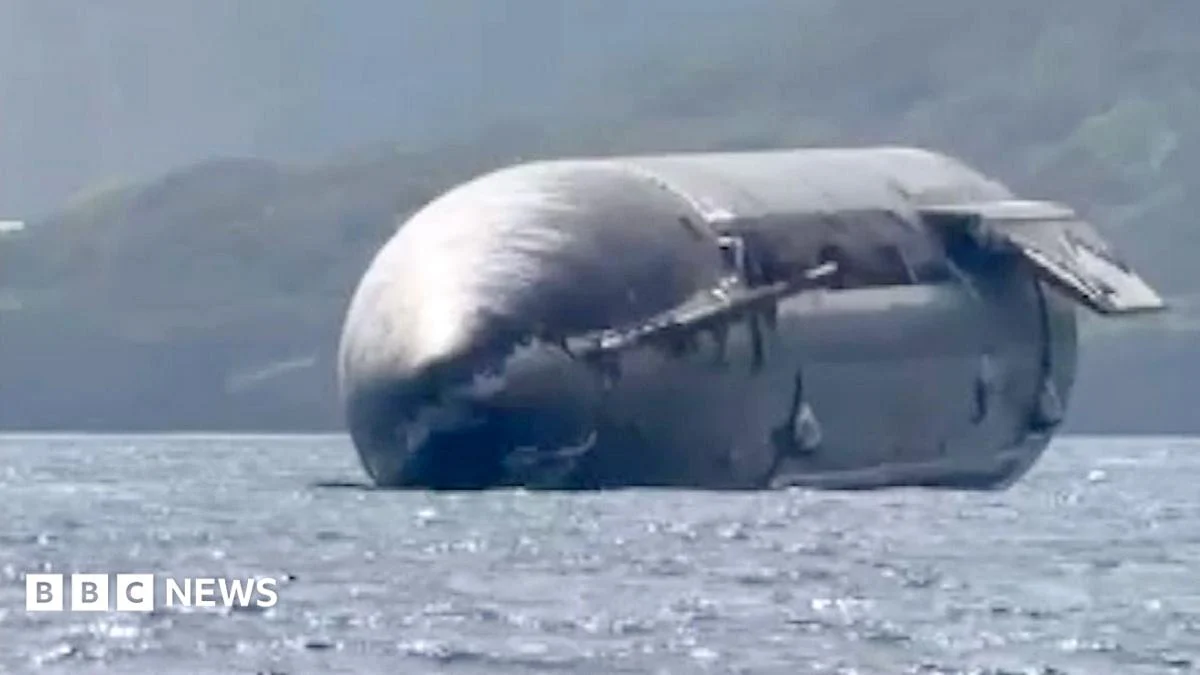
A SpaceX rocket, a monumental piece of advanced aerospace engineering, made an astonishing and unexpected appearance off the remote shores of Christmas Island, deep in the Indian Ocean. This colossal artefact of humanity’s ambition touched down in the vast expanse of the Indian Ocean following a rigorous test flight from SpaceX’s Starbase facility in Boca Chica, Texas, on July 24th. The sheer scale and unexpected proximity of the 52-metre-long vehicle, believed to be a Starship prototype upper stage, instantly captivated the small island community, transforming a routine day into an extraordinary spectacle.
David Watchorn, the enthusiastic Chair of the Christmas Island Tourism Association, recounted his initial bewilderment as he journeyed to work. His morning commute took an unprecedented turn as he observed an unusual silhouette on the horizon, initially dismissing it as a cluster of ships. The familiar maritime traffic around the island typically comprises cargo vessels or fishing trawlers, but as he drew closer, the distinct, futuristic profile of the object began to resolve itself. The dawning realisation that it was "a rocket, a space rocket" being carefully towed through the tranquil waters was a moment of profound awe and disbelief, an encounter that defied the everyday reality of island life.
The sight of the colossal stainless-steel structure, scarred by the fiery crucible of atmospheric re-entry and the subsequent ocean landing, caused an immediate and widespread stir among the island’s approximately 1,800 residents. News of the unexpected visitor spread like wildfire, rapidly disseminated through word-of-mouth and the island’s close-knit social networks. For many, the allure of witnessing such a tangible piece of space history proved irresistible. Reports emerged of individuals "sneaking out" of their workplaces, driven by an insatiable curiosity to catch a glimpse of the spacecraft that had journeyed from the edge of space. Others, more adventurous, began preparing their personal boats, eager to venture out into the shimmering blue waters for an unparalleled, up-close inspection of the space-faring "debris," which, despite its post-flight condition, remained a testament to human ingenuity.
Watchorn’s reflection encapsulated the sentiment pervading the island: "It’s really incredible to think about what it’s been through." This sentiment speaks to the rocket’s arduous journey, from its thunderous ascent from a Texan launchpad, propelled by the immense power of its Raptor engines, through the vacuum of space, and its controlled descent back into Earth’s atmosphere. The scorching and charring visible on its exterior served as silent witnesses to the extreme temperatures and immense aerodynamic forces it endured during re-entry – a brutal gauntlet designed to test the limits of materials and engineering. The subsequent splashdown in the vast, unforgiving Indian Ocean marked the culmination of its mission, a testament to its structural integrity and the precision of its flight trajectory. As Watchorn further articulated to the BBC, "The more and more you look at it, the more fascinating it’s becoming." Its presence invited contemplation not just about its physical journey, but the broader narrative of humanity’s relentless push beyond Earth’s confines.
The specific vehicle, a 52-metre-long prototype, strongly indicates it was a Starship upper stage, a crucial component of SpaceX’s ambitious Starship program. Designed to be a fully reusable transportation system, Starship aims to carry humans and cargo to the Moon, Mars, and beyond. These early test flights from Starbase are vital steps in its development, pushing the boundaries of rocket design and reusability. Each prototype undergoes rigorous testing, including high-altitude flights culminating in complex aerodynamic manoeuvres and a controlled descent, often targeting a soft ocean landing. While some later Starship prototypes successfully executed propulsive landings back on a landing pad, earlier iterations frequently concluded with a controlled splashdown, often with an intention for post-flight analysis, if not full recovery for reuse. The July 24th test likely involved such an ocean landing, and the presence of a recovery vessel suggests that SpaceX or its partners were actively engaged in retrieving or monitoring the vehicle.
Christmas Island itself, a small Australian territory located approximately 2,600 kilometres northwest of Perth, is a marvel of biodiversity and geological uniqueness. Known for its annual red crab migration and pristine rainforests, its isolation typically ensures a tranquil existence, far removed from the hustle of global technological advancements. The unexpected arrival of a space rocket in its waters presented a stark and intriguing contrast between advanced space technology and untouched natural beauty. The logistics of the rocket’s journey from its landing site in the Indian Ocean to the vicinity of Christmas Island remain a point of interest. It’s plausible that ocean currents played a role in its drift, or more likely, it was intercepted by a recovery vessel and was being towed, potentially towards a port for detailed inspection or eventual dismantling. The sight of it being towed implies a planned, albeit perhaps circuitous, recovery operation.
For the local community, the event transcended mere curiosity; it became a unique educational opportunity and a topic of animated discussion. Children marvelled at the thought of a machine that had touched the sky, while adults pondered the implications of space travel and the unexpected ways it can intersect with daily life. The island’s maritime authorities and local government would have undoubtedly been involved in managing the situation, ensuring safety around the colossal structure and addressing any potential environmental concerns, although given it was a controlled landing and likely a recovery operation, significant hazards would have been mitigated. The sheer scale of the object and its remote location presented unique challenges for any recovery or transport operation, underscoring the complexities involved in retrieving space hardware from the high seas.
The presence of the Starship prototype off Christmas Island serves as a powerful reminder of the relentless pace of space exploration and the global reach of human technological ambition. It illustrates how the quest to conquer space, driven by visionary companies like SpaceX, can unexpectedly touch the lives of those in the most remote corners of the world. The rocket, a silent witness to its own incredible journey, became a temporary landmark, sparking conversations about the future of space travel, the challenges of engineering, and the profound sense of wonder that space exploration continues to inspire. It highlighted the intricate dance between advanced technology and the natural world, a fleeting but unforgettable moment where the cosmos quite literally came knocking on Christmas Island’s door. This extraordinary event will undoubtedly be etched into the island’s history, a captivating anecdote passed down through generations, forever linking this secluded paradise with the cutting edge of humanity’s reach for the stars.




 Ramos Leo
 Nakalama John
 Roy Suryo
 atisusanti
 George Anjay