Nana Banana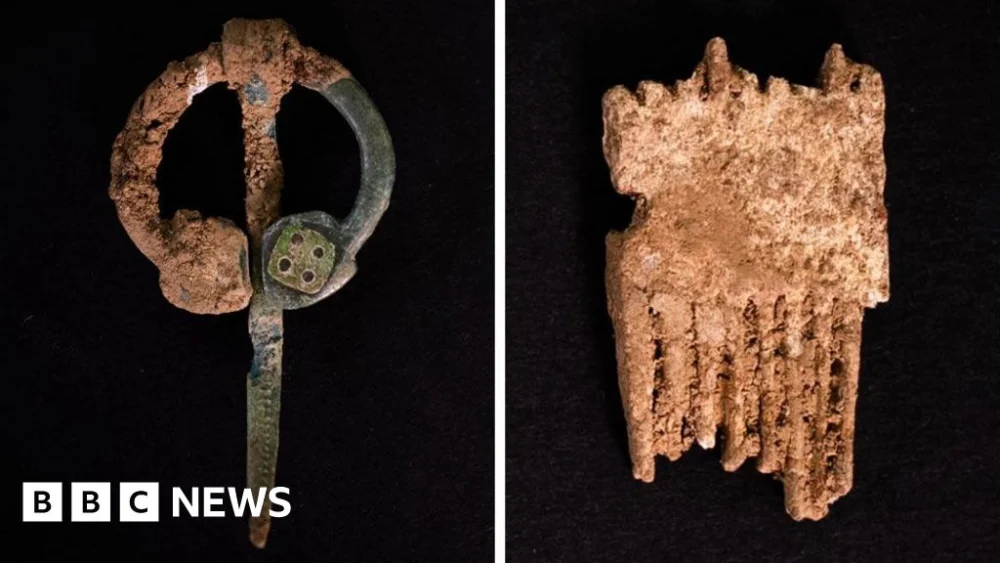
To date, a remarkable 58 skeletons have been unearthed at the site, located in the historic grounds of Fonmon Castle, nestled near the end of the runway at Cardiff Airport. What makes this discovery particularly compelling is the striking demographic imbalance: nearly all of the skeletal remains belong to women. This unusual composition has puzzled experts for years, but the latest finds are providing compelling evidence to support the growing hypothesis that the burial ground was once an integral part of an early female religious community.
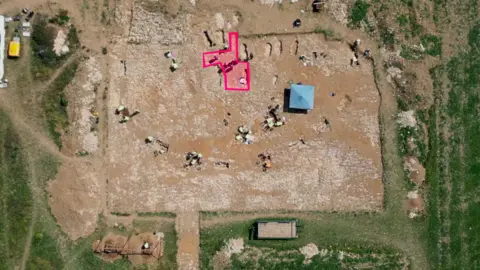
For the past four years, archaeological teams have meticulously excavated this fascinating site. The skeletons, remarkably intact and well-preserved despite their 1,500-year age, are laid to rest in shallow graves carefully carved into the underlying limestone bedrock. While forensic analysis of their bones and teeth indicates that these individuals lived lives marked by physical hardship, the objects accompanying them in their final resting places hint at a world of unexpected wealth and luxury for the period. This juxtaposition of austere existence and opulent possessions has been a central question for researchers.
Now, the most recent phase of the dig has delivered a pivotal clue: the clear outline of what appears to be a small, ancient structure. Dr. Andy Seaman, the lead archaeologist from Cardiff University overseeing the excavations, elaborates on its potential significance. "It’s producing fragments of building stone, suggesting it might be structural. We could be looking at a small shrine or perhaps even a chapel," he states. "I strongly believe that what we have here is a site that once hosted an early religious community."

This potential building is strategically located in the very heart of the cemetery, with graves clustered intimately around it. This arrangement suggests a profound desire among the community members to be interred as close as possible to this central feature. Cardiff University archaeologist Tudur Davies points out the extreme measures taken to achieve this proximity. "It’s a highly desired location for people to be buried in," he explains. "Sometimes two, three, four individuals have been buried on the same spot, again and again. There doesn’t appear to be as much of a taboo over putting bodies in the same place and just moving those still there to one side." This practice of multiple interments in a single grave cut underscores the spiritual importance of the building and its immediate vicinity to the community.
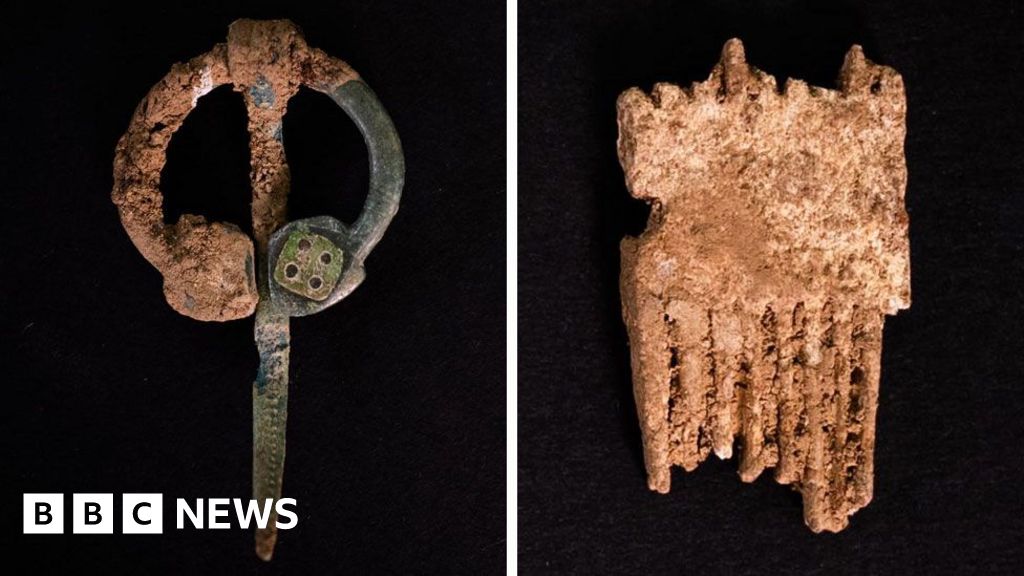
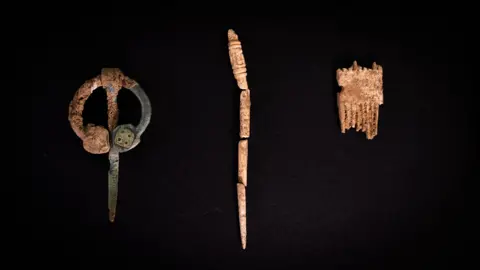
The array of artifacts recovered from the site offers further insights into the lives and identities of these medieval women. These precious objects have been carefully transported to Cardiff University’s specialized lab for conservation and analysis. Among the most striking finds is an ornate copper brooch. Conservator Nicola Emmerson is painstakingly cleaning layers of ancient dirt from its surface, revealing its intricate details. "We’d have to do some more analysis, but it’s probably bronze," she observes. "Also, we think it was possibly gilded, which would be a coating of gold over the top." She further explains that the brooch’s terminals were once adorned with vibrant green enamel. "This would have been a very decorative brooch. I think it’s a very special find for the site," Emmerson concludes, highlighting its likely status as a luxury item. Such an artifact speaks volumes about the status, aesthetic sensibilities, or external connections of the individual it accompanied.

Beyond this piece of medieval "bling," the team has also unearthed a meticulously crafted pin made from bone, featuring a detailed, intricate pattern, and a comb delicately carved from antler. These personal items, though utilitarian, demonstrate a degree of craftsmanship and attention to detail that elevates them beyond mere necessities. They provide glimpses into daily life, personal adornment, and the resources available to the community.
Perhaps the most visually captivating finds are the exquisite, multicoloured glass beads. Measuring a mere 3mm across, each bead is a miniature marvel of ancient artistry. Their vibrant hues suggest sophisticated glassmaking techniques and potentially long-distance trade routes. These tiny treasures could have been painstakingly stitched onto clothing, adding a splash of color and luxury, or incorporated into pieces of jewellery, signifying status or personal devotion. Fragments of glassware found among the graves further reinforce the presence of fine goods and potentially a wider network of trade or cultural exchange.
However, it’s not just the luxury items that are telling the story. The discovery of numerous domestic artifacts paints a vivid picture of a self-sufficient, thriving community. Dr. Andy Seaman points to these everyday objects: "We have a quern stone for grinding flour for bread. We’ve got pottery and glass for eating and drinking." These functional items fundamentally alter the perception of the site. "It’s clearly not just a place for the dead. There’s a living community here as well," he asserts. Seaman theorizes that this community was likely enclosed, living in close proximity to the cemetery, effectively separated from the wider medieval society. This enclosed nature would be consistent with many early monastic or religious settlements.
The pieces of this compelling medieval puzzle are steadily falling into place, but as with any significant archaeological discovery, new answers often lead to new questions. The presence of a few male remains and several children among the predominantly female burials sparks further inquiry. Who were these men? Were they spiritual leaders, family members, or perhaps servants of the community? And the children – were they related to the women, perhaps young novices, or children who died young within the community’s care?
Furthermore, two burials stand in stark contrast to the careful interments seen elsewhere in the cemetery. The remains of two women were found unceremoniously "tossed in a ditch," with one even having her hands and feet tied. This raises profound questions about social order, justice, and deviance within this early community. What transgressions could have led to such a dishonorable burial? Were they outcasts, criminals, victims of violence, or perhaps individuals who simply did not conform to the community’s strictures? This dark anomaly adds a layer of complexity to the otherwise serene picture of a religious settlement.
The team is now intensely focused on determining if this site represents an example of very early Christianity in Wales. "It’s a period where the history is not yet written," Dr. Seaman emphasizes, highlighting the scarcity of detailed records from this era. "We don’t really understand early church sites… how they functioned, what they looked like, how they were organized." He explains that while later periods of Christian history are well-documented, this "formative period" remains largely enigmatic. "So it’s a really exciting opportunity," he concludes, underscoring the immense potential of the Fonmon Castle site to rewrite our understanding of early Christianity and the role of women within it in medieval Britain. The archaeologists are scheduled to resume their excavations later this year, hopeful that future digs will continue to yield secrets and bring the lives of these mysterious women into sharper focus.



 Roy Suryo
 George Anjay
 Ramos Leo