George Anjay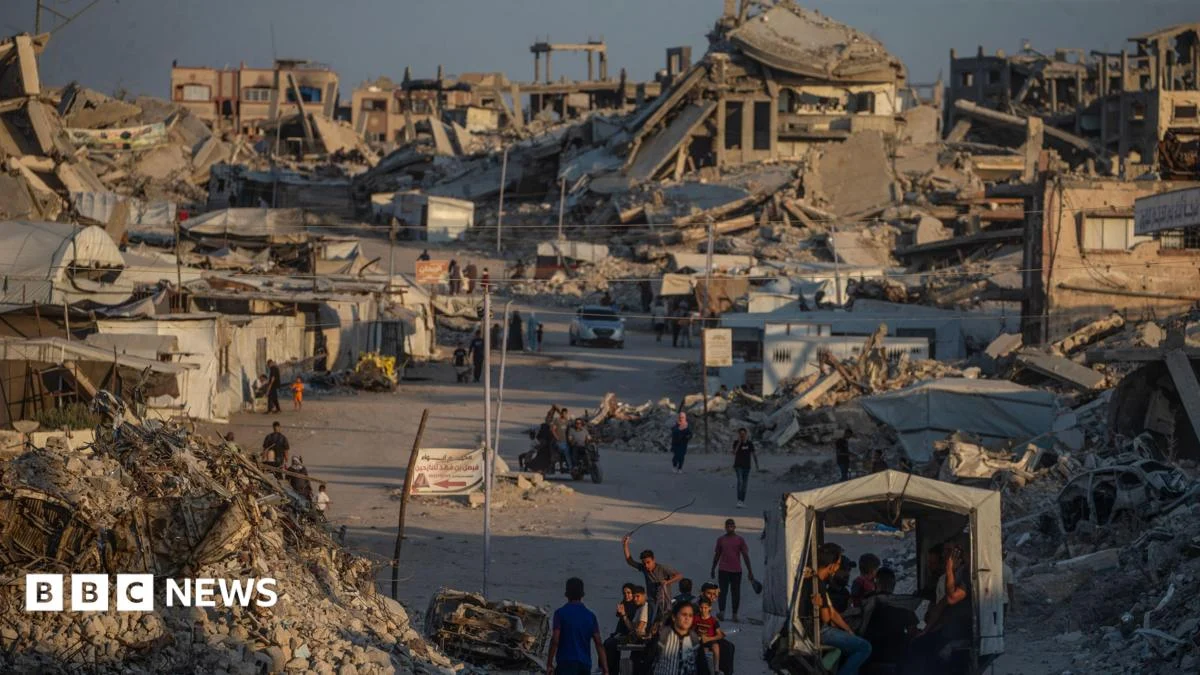
Israeli Prime Minister Benjamin Netanyahu has firmly rejected a 15-point peace plan proposed by former US President Donald Trump for the Gaza Strip, asserting that any Israeli military withdrawal from the territory is contingent upon the "genuine" disarmament of Hamas. The announcement, made during a cabinet meeting on Sunday, signals a significant setback for Trump’s initiative, which was presented last month as a pathway to complete disarmament of Hamas and other armed factions operating in Gaza. This development underscores the deep-seated complexities and conflicting demands surrounding the Israeli-Palestinian conflict, particularly concerning the future of Gaza.
The Trump administration’s "Board of Peace," a body established to oversee the implementation of the plan, had claimed to have secured an agreement for the "complete disarmament" of armed groups. However, Hamas, the de facto governing authority in Gaza, had previously stated that its willingness to relinquish heavy weaponry was directly linked to Israel’s commitment to ending "all forms of aggression" and withdrawing its forces from the territory. Israel has maintained a significant military presence and continued to conduct strikes in Gaza, even following an initial ceasefire agreement brokered last October.
Netanyahu’s unequivocal rejection of the 15-point document at the cabinet meeting highlighted Israel’s unwavering stance on security. He declared that the Israeli military "will not carry out any withdrawal until Hamas is genuinely disarmed and will continue to thwart threats against our forces and our citizens." This pronouncement directly challenges the sequencing of events outlined in Trump’s plan, which appeared to link withdrawal and disarmament.
In contrast, a Hamas official, speaking to the BBC on Sunday, reaffirmed the group’s commitment to the agreement and expressed readiness to "engage seriously and responsibly in implementing" the 15-point plan. This official also urged mediators to ensure that "all parties comply with what has been agreed," implying a belief that Hamas had met its obligations or was prepared to do so. The contrasting positions of Israel and Hamas reveal a fundamental divergence in their interpretations of the proposed agreement and their respective preconditions for peace.
Israel’s rejection represents a significant blow to the Trump-backed Gaza peace plan, which was unveiled in September of the previous year. The ambitious proposal included the establishment of the Board of Peace to manage the agreement’s execution, the crucial disarmament of Hamas, the withdrawal of Israeli troops, and the extensive reconstruction of Gaza. The plan aimed to address the multifaceted challenges plaguing the region, from security concerns to humanitarian needs.
The Prime Minister’s delayed but firm rejection of the plan, while perhaps not entirely surprising given Israel’s long-standing security concerns, suggests a delicate balancing act. Netanyahu appears to be navigating the difficult terrain of appeasing his closest ally, the United States under Trump, while simultaneously satisfying the demands of his right-wing coalition government. His public statement on Sunday underscored his commitment to a robust security posture, emphasizing that any disarmament must be "genuine" and not merely a "fictitious disarmament."
The reality of achieving disarmament and a subsequent Israeli withdrawal is inherently complex, likely requiring a phased approach. Netanyahu indicated that discussions with US officials regarding the path forward are ongoing. He acknowledged that while some of the ideas presented by the US are acceptable, others are not, and Israel is prepared to "stand our ground on these matters." This suggests that while dialogue persists, Israel is unwilling to compromise on its core security interests.
With Israeli elections looming and under considerable pressure from the more hawkish factions within his coalition, Netanyahu is unlikely to entertain concessions that could be perceived as weakness. Ministers such as National Security Minister Itamar Ben Gvir have vocally criticized the draft plan, dismissing it as "not acceptable" and calling for a new cabinet vote to formally end it. This internal political pressure undoubtedly influences Netanyahu’s public pronouncements and his negotiating stance.
Despite Israel’s rejection, Nickolay Mladenov, a senior diplomat tasked with facilitating the implementation of Trump’s peace plan, defended the initiative on Sunday. He asserted that discussions are ongoing with the hope of achieving a "positive outcome." Mladenov, who serves as the board’s high representative for Gaza, implored Israel to "give the process a chance," emphasizing that the plan is "the only way forward" to prevent a recurrence of the devastating Hamas-led attack on October 7, 2023.
Mladenov further elaborated that the plan is built upon a framework that is "verifiable, that is reversible, that at each stage can be stopped, and that we have built up with a very clear-eyed understanding of what are the challenges ahead." Crucially, he stated that Israel would not be required to withdraw its forces until it could be verifiably confirmed that Hamas was actively taking steps towards disarmament. This assurance attempts to address Israel’s primary security concerns.
The ongoing conflict in Gaza has had catastrophic humanitarian consequences. According to the United Nations, approximately 1.9 million people, representing 90% of Gaza’s population, have been displaced since the war began. The conflict was ignited by the Hamas-led attack on southern Israel on October 7, 2023, which resulted in the deaths of approximately 1,200 people and the taking of 251 hostages. Israel’s subsequent military campaign in Gaza has led to a devastating death toll, with the territory’s health ministry, whose figures are considered reliable by the UN, reporting that over 73,000 people have been killed. The stark humanitarian reality underscores the urgent need for a sustainable resolution to the conflict. The rejection of Trump’s plan, while a setback, highlights the persistent challenges in finding common ground between the parties involved and their international partners. Additional reporting was provided by Jack Burgess.



 Nakalama John
 Ramos Leo
 Nana Banana